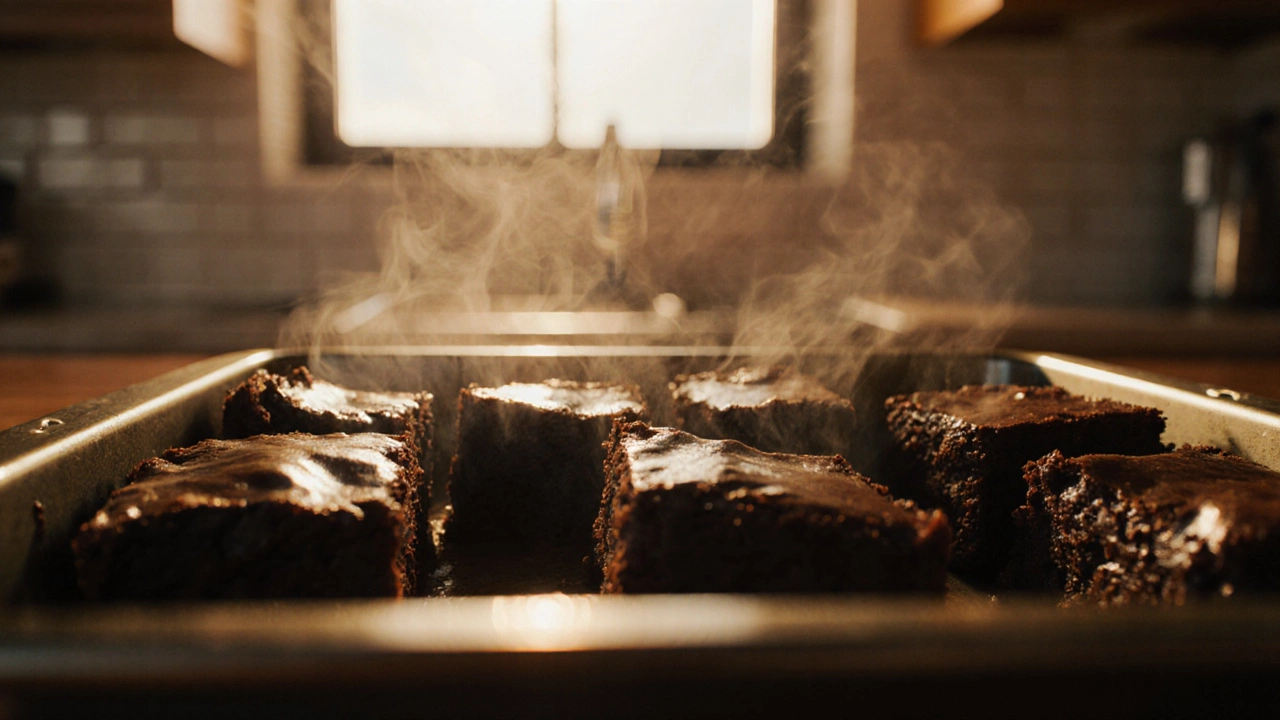
How Long Should Brownies Rest Before Cutting?
Learn the ideal resting time for brownies, why cooling is crucial, and practical tips for perfect texture every time.
Read MoreWhen working with Brownie texture tips, practical guidelines that help you control the chew, moisture, and crumb of a brownie. Also known as brownie texture, it bridges the gap between a dense fudge bar and a light cake slice. Understanding the role of Chocolate, the base flavor and fat source that defines richness, the impact of Oven temperature, the heat level that sets structure and moisture, and the importance of the Cooling process, how the brownie rests before slicing is essential for consistent results.
Brownie texture encompasses two main families: fudgy brownies and cakey brownies. Fudgy versions lean on high butter or oil content, a rich cocoa profile, and minimal leavening. Cakey brownies, by contrast, add more flour, a pinch of baking powder, and often an extra egg to create lift and a lighter crumb. The balance of moisture versus structure is the core attribute that decides which family your batch belongs to.
The next attribute is ingredient ratios. A typical fudgy recipe might use a 2:1 ratio of butter to flour, while a cakey one flips that to about 1:1.5, letting the gluten network develop enough to hold air bubbles. Cocoa powder type also matters; Dutch‑processed cocoa adds deeper color and less acidity, which can affect how the batter firms up in the oven.
Temperature control is the third pillar. Baking at 325°F (163°C) generally yields a moist interior with a crisp top, perfect for fudgy brownies. Raising the heat to 375°F (191°C) speeds up the crust formation, pushing the crumb toward a cake‑like texture. If you own a convection oven, reduce the temperature by 25°F to avoid over‑drying. Remember, the oven is the engine that transforms liquid batter into solid delight, so a steady heat source is non‑negotiable.
After the timer dings, the cooling stage decides the final bite. Let the pan sit on a wire rack for at least 15 minutes; this lets steam escape and the crumb set without becoming gummy. Cutting too early often results in crumbly edges or a soggy center. Some bakers chill the brownies for 30 minutes to lock in a firm slice, especially when aiming for that classic fudgy snap.
All these pieces—chocolate quality, ratio tweaks, oven settings, and cooling time—interact to shape the final texture. Below you’ll find a hand‑picked collection of articles that dive deeper into each factor, from how to choose the right cocoa to mastering oven thermometers. Whether you crave a dense, melt‑in‑your‑mouth bite or a light, airy square, the tips ahead will give you the tools to get exactly what you want from your brownie pan.
Learn the ideal resting time for brownies, why cooling is crucial, and practical tips for perfect texture every time.
Read More