Why Won't My Homemade Fudge Harden? Common Fixes & Tips
Discover why homemade fudge stays soft, learn the science behind setting, and get practical fixes, tips, and a reliable recipe for perfect fudge every time.
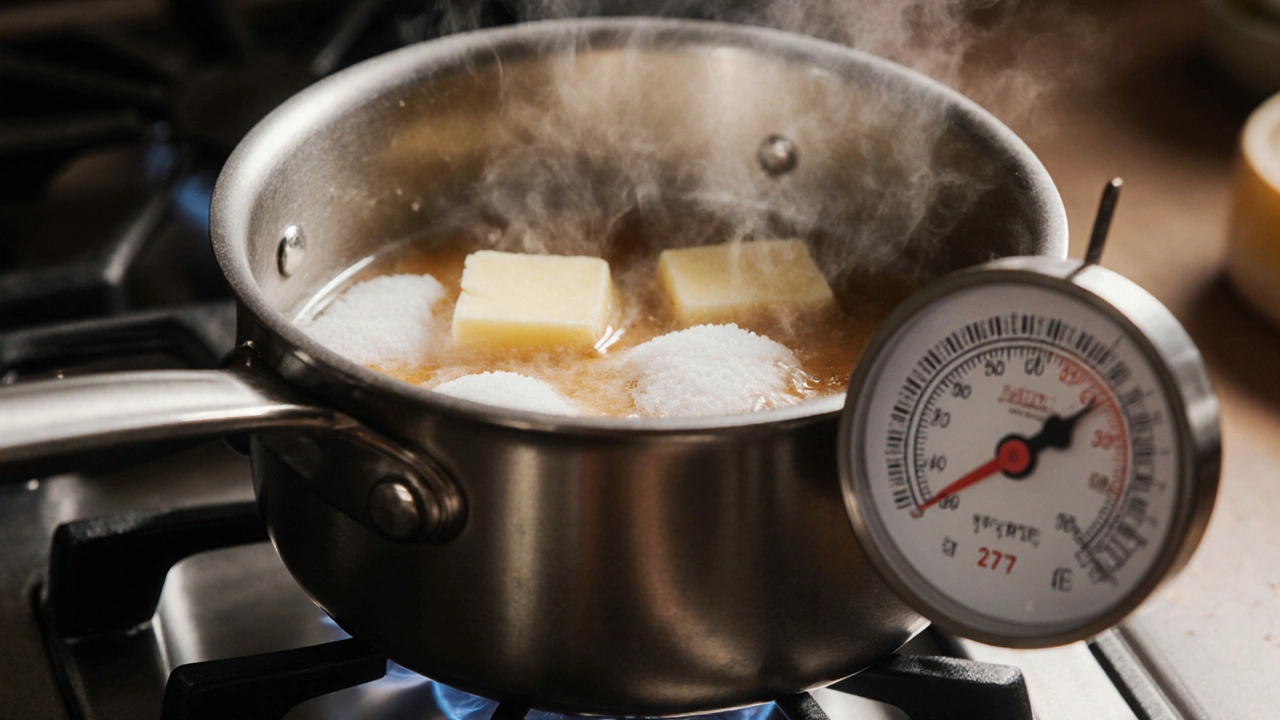
Read MoreWhen working with Candy Thermometer, a heat‑proof device that measures the temperature of sugar‑based mixtures while you cook. Also known as cooking thermometer, it helps bakers hit the right sugar stage so treats turn out perfect. Whether you’re pulling a velvety Fudge, a low‑heat, creamy confection or crisp Toffee, a high‑heat caramel that snaps, the thermometer guides you through each step. In short, it bridges the gap between guesswork and reliable results.
Every type of candy follows a specific sugar stage – soft ball, firm ball, hard ball, soft crack, and hard crack. These stages are defined by temperature ranges, typically from 112°F (soft ball) up to 300°F (hard crack). A good candy thermometer is the difference between glossy caramel and burnt sugar. It lets you see the exact moment the syrup reaches the "soft crack" stage for perfect toffee, or the "firm ball" stage for smooth fudge. Without it, you’re left watching the pot and hoping for the best, which often ends in overcooked or undercooked candy.
Beyond the classic stages, modern recipes add twists like "boiling point reduction" for sugar‑free options or "temperature holding" for tempered chocolate. In each case, the thermometer does the heavy lifting: it gives you a numeric readout so you can adjust heat, stir, or remove the pan at precisely the right instant. This precision also helps you avoid common pitfalls like grainy fudge caused by overheating or brittle toffee that snaps too early.
Temperature isn’t the only factor the thermometer influences. It also works hand‑in‑hand with other tools and techniques. For example, using a heavy‑bottomed saucepan distributes heat evenly, while a silicone spatula keeps the mixture moving without sticking. Pairing these with a reliable thermometer creates a predictable environment, letting you experiment with flavors – think sea‑salt caramel, espresso fudge, or spiced toffee – without worrying about the base cooking correctly.
Many bakers wonder if they need a fancy digital model or if a basic analog tool will suffice. The answer depends on how precise you want to be. Digital thermometers often read to the nearest degree and have quick response times, making them great for the fast‑changing temperatures of hard crack candy. Analog models, while a bit slower, are sturdy and don’t need batteries, which works fine for slower stages like soft ball fudge. Either way, the key is to calibrate the device regularly – a quick ice‑water test (32°F) or boiling water test (212°F) keeps it accurate.
Once you’ve mastered the temperature basics, you’ll notice a shift in how you approach candy projects. Instead of "watching for color" – a vague cue that can mislead, especially in low‑light kitchens – you’ll rely on the thermometer’s clear numbers. This change turns candy making from a high‑risk gamble into a repeatable craft, letting you scale recipes for parties, gift baskets, or even a small home‑based business.
Below you’ll find a curated collection of articles that dive deeper into each sweet topic. From detailed guides on achieving the perfect fudge texture to tips on reading sugar stages for toffee, these posts give you actionable steps to put your candy thermometer to work. Explore the list and start turning your kitchen into a confectionery lab today.
Discover why homemade fudge stays soft, learn the science behind setting, and get practical fixes, tips, and a reliable recipe for perfect fudge every time.
Read More