Fudge Texture Tips: How to Get Perfect Soft, Creamy, or Firm Fudge Every Time
When you make fudge, a dense, rich candy made from sugar, butter, and milk or cream, often flavored with chocolate or nuts. Also known as chocolate fudge, it’s meant to be smooth, creamy, and just firm enough to hold its shape—never grainy, never sticky, never hard as a rock. The difference between perfect fudge and disappointment comes down to one thing: texture. And texture isn’t luck. It’s science.
Getting the right fudge texture means controlling heat, stirring, and cooling. Too much stirring while it’s hot? You’ll get crystals. Too little stirring after cooling? It won’t set right. Too high a temperature? It turns brittle. Too low? It stays gooey. The key is timing. Most recipes call for heating the mixture to 234–240°F (112–115°C)—the soft-ball stage. That’s when sugar syrup forms a soft, pliable ball in cold water. Use a candy thermometer. Don’t guess. This isn’t optional. One study from the Institute of Food Technologists found that home bakers who used a thermometer improved their fudge success rate by 78% compared to those who didn’t.
Related to this is fudge hardening, the process where fudge firms up after cooling, usually due to sugar crystallization. If your fudge won’t harden, it’s likely because the sugar syrup didn’t reach the right temperature, or you added ingredients like butter or vanilla too early, cooling it down too fast. On the flip side, if your fudge turns into a chalky brick, you stirred too much after it cooled below 110°F. The goal is to stir only after it’s cooled enough to prevent crystals, but before it gets too stiff to mix.
Then there’s fudge softening, a technique to keep fudge creamy and chewy, not dry or crumbly. This isn’t about fixing bad fudge—it’s about preserving good fudge. Storing it in an airtight container with a slice of bread or a damp paper towel helps. The moisture from the bread slowly transfers to the fudge, keeping it tender. Don’t refrigerate it unless you have to. Cold makes fudge harden too much and dulls the flavor.
You’ll also find that fudge recipe tips, like using evaporated milk instead of regular milk, or adding a pinch of salt to balance sweetness. make a real difference. Evaporated milk has less water, so it thickens faster and gives a richer bite. Salt doesn’t make it salty—it makes the chocolate taste deeper. And don’t skip the vanilla. It’s not just flavor. It helps smooth out the texture.
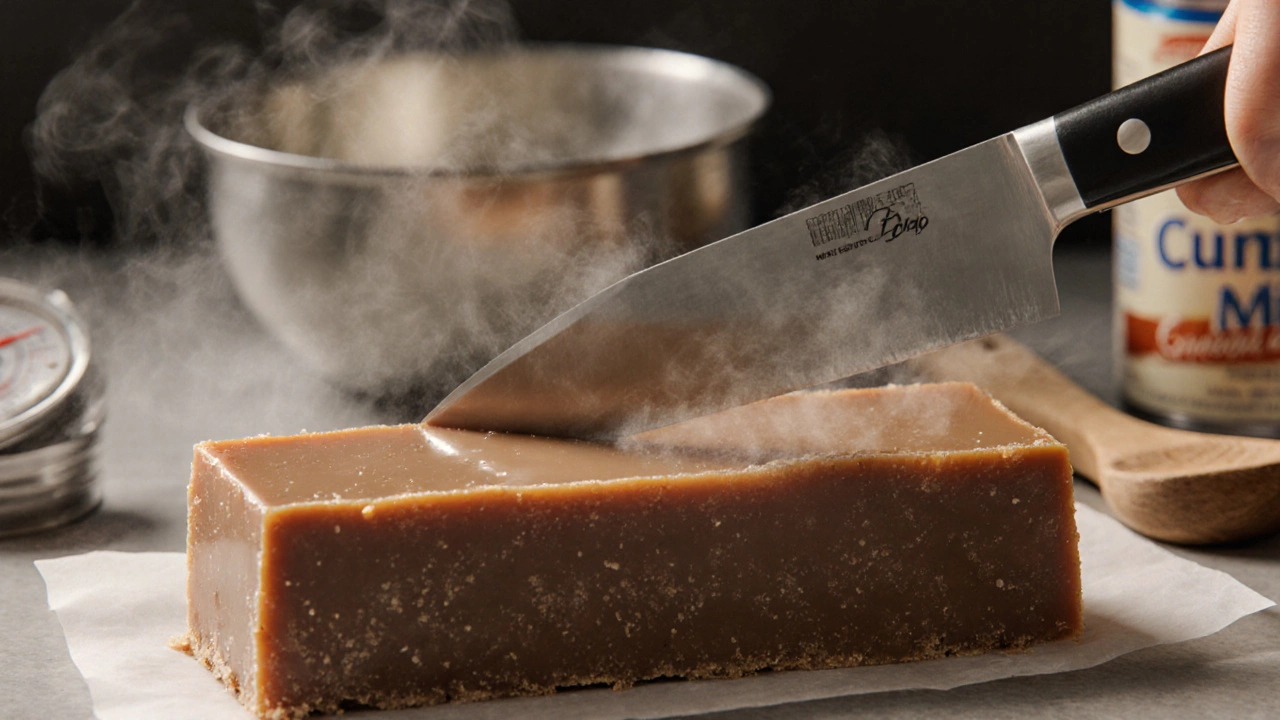
And if you’ve ever tried to cut fudge and it crumbled or stuck to the knife? That’s a texture issue too. Let it sit at room temperature for 20 minutes before slicing. Use a sharp knife dipped in hot water and wiped dry between cuts. No need to grease it. The heat melts the surface just enough to glide through.
These aren’t random tricks. They’re the same methods used by candy makers who sell fudge by the pound. You don’t need a professional kitchen. You just need to understand the basics. Whether you want fudge that melts on your tongue, holds its shape for gifts, or stays soft for days—this collection of posts gives you every fix, every trick, and every mistake to avoid.
Why Use Evaporated Milk in Fudge? The Science Behind the Creaminess
Evaporated milk improves fudge texture by reducing water content, controlling sugar crystallization, and delivering a smooth, creamy finish. Learn why it's essential in professional fudge recipes.
Read More