Why Won't My Homemade Fudge Harden? Common Fixes & Tips
Discover why homemade fudge stays soft, learn the science behind setting, and get practical fixes, tips, and a reliable recipe for perfect fudge every time.
Read MoreWhen working with homemade fudge, a buttery, sugary confection that should firm up as it cools. Also known as fudge, it relies on precise chemistry to transition from a glossy syrup to a smooth, slice‑able candy. If you’ve ever ended up with a glossy puddle instead of a firm bar, you’re dealing with the classic homemade fudge not setting problem. Below we break down the key players that make fudge set – and the common missteps that keep it liquid.
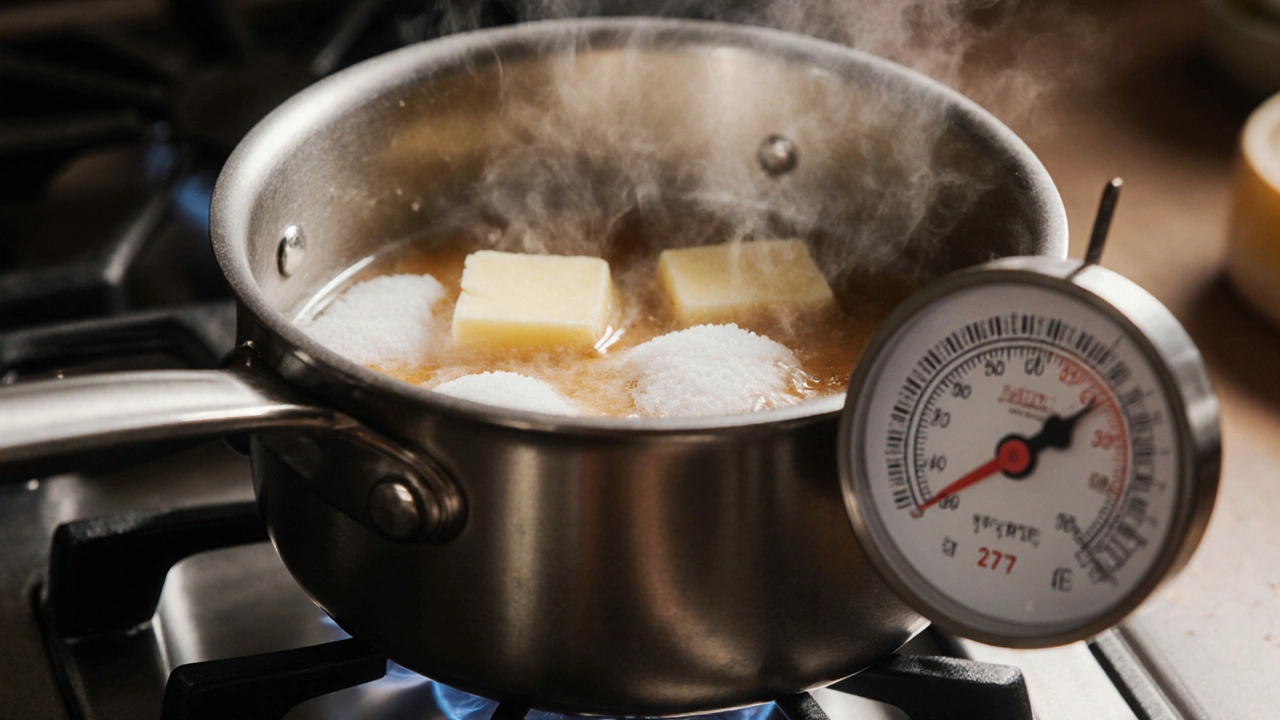
The first culprit is cooking temperature, the exact heat level reached during the boil. Fudge needs to hit the "soft‑ball" stage, typically around 236‑240°F (113‑115°C). Too low and the sugar molecules never reach the right size to form a stable matrix; too high and you risk a grainy texture. A reliable candy thermometer is worth its weight in gold – it eliminates guesswork and lets you stop the boil at the precise moment. Many home bakers rely on visual cues like a thickened syrup, but those can be misleading, especially with dark chocolate or cocoa in the mix.
Once the temperature is spot on, the next factor is sugar crystallization, the process where dissolved sugar molecules re‑arrange into crystals. The goal is to create a large‑grain crystal network that gives fudge its creamy bite. If you stir too early, you seed millions of tiny crystals, resulting in a grainy, unmixed mess that never firms. The trick is to let the boiled mixture sit undisturbed until it cools to about 110°F (43°C), then start a gentle, steady stir. This delayed stirring encourages the formation of fewer, larger crystals, producing that melt‑in‑your‑mouth texture.
Finally, consider the stirring technique, the way you beat the mixture after cooling. A wooden spoon or heat‑proof spatula works best; electric mixers can over‑whip and introduce excess air, which interferes with crystal formation. Stir in a consistent, circular motion until the mixture thickens and loses its shine – you’ll notice it pulling away from the sides of the pan. At this point, pour the fudge into a prepared pan, let it set at room temperature, and avoid refrigeration unless you plan to serve it within a few days. Improper storage can re‑liquify the candy, especially in humid climates.
By mastering temperature, timing, and stirring, you’ll turn that frustrating liquid into firm, velvety fudge every time. Below you’ll find a curated list of articles that dive deeper into each of these aspects, from troubleshooting the sugar stage to storage hacks that keep your fudge fresh. Ready to see your fudge finally set? Keep reading for detailed guides and expert tips.
Discover why homemade fudge stays soft, learn the science behind setting, and get practical fixes, tips, and a reliable recipe for perfect fudge every time.
Read More