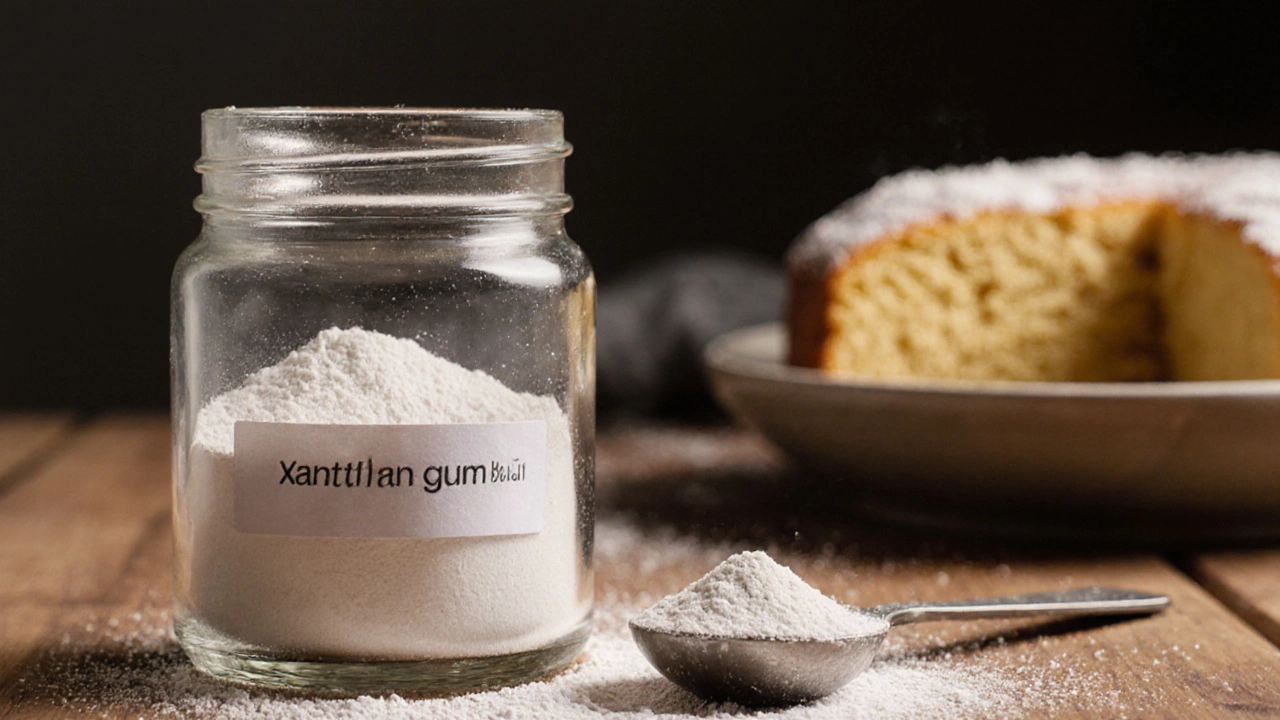
Is Xanthan Gum Gluten-Free? A Clear Answer for Bakers
Xanthan gum is naturally gluten-free and safe for baking gluten-free cakes, but cross-contamination can be a risk. Learn how to choose safe brands and alternatives if you're sensitive.
Read MoreWhen you bake a cake without wheat flour, something’s missing—structure. That’s where xanthan gum, a powdered thickener made from fermented sugar. It’s not a flour, but it acts like one by holding air and moisture in place. Without it, gluten-free cakes often crumble, sink, or turn out dry. You can’t just swap regular flour for almond or rice flour and expect the same result. gluten-free baking, the practice of making baked goods without wheat, barley, or rye. It requires more than ingredient substitution—it needs science. And xanthan gum is one of the few tools that actually works for home bakers.
Think of xanthan gum like the invisible glue in your cake. It binds water and fat, traps bubbles from baking powder, and gives that soft, springy texture you get in regular cakes. Skip it, and your cake might taste fine but fall apart when you slice it. That’s why recipes for gluten-free cake, a cake made without gluten-containing grains. Often list xanthan gum as non-negotiable. It’s not about being fancy—it’s about function. Even some commercial gluten-free mixes include it because, without it, the cake just doesn’t hold up. You don’t need much—usually just 1/4 to 1 teaspoon per cup of flour blend. Too much, and your cake turns gummy. Too little, and it turns to dust.
It’s not just about avoiding gluten. People with egg allergies, dairy sensitivities, or those baking vegan cakes also rely on xanthan gum to replace the binding power eggs and butter normally provide. It’s the reason your vegan chocolate cake stays moist instead of turning into a brick. And if you’ve ever tried to frost a cake that crumbled under the knife, you know why this tiny ingredient matters. It’s not magic, but it’s close.
What you’ll find in the posts below are real, tested insights from bakers who’ve been there—trying to fix sunken cakes, dry textures, or crumbly layers. You’ll learn why skipping xanthan gum is one of the biggest mistakes in gluten-free baking, how to measure it right, and what happens when you use the wrong kind. There are no fluff tips or vague advice. Just straight talk on what works, what doesn’t, and how to make your cakes actually taste like cake—not just gluten-free filler.
Xanthan gum is naturally gluten-free and safe for baking gluten-free cakes, but cross-contamination can be a risk. Learn how to choose safe brands and alternatives if you're sensitive.
Read More