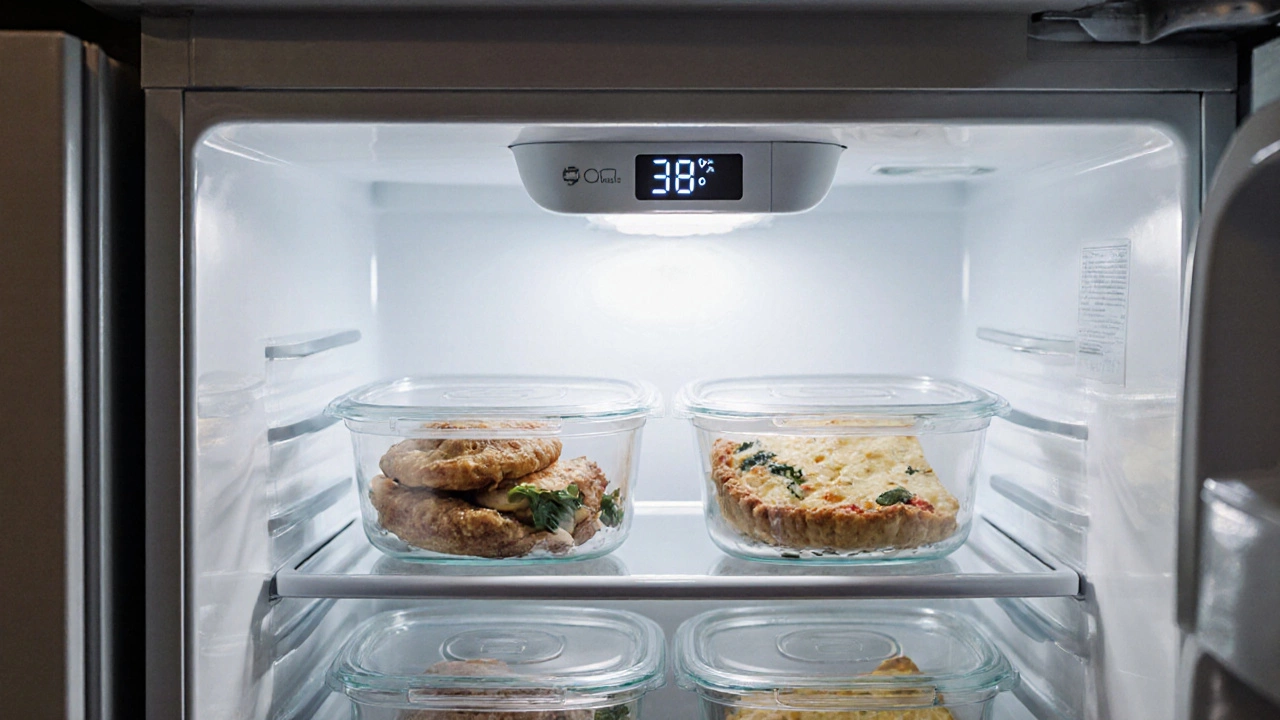
How Long Can Salgado Stay Fresh in the Fridge? A Food Safety Guide
Learn how long different salgado (savory pastries) stay fresh in the fridge, safety tips, storage best practices, and how tiramisu differs.
Read MoreWhen dealing with Bacterial Growth, the rapid multiplication of bacteria in food when temperature, moisture, and nutrients align, you’re stepping into the core of Food Safety, practices that keep what we eat free from harmful microbes. This process also drives Fermentation, a controlled bacterial activity that creates flavor and texture in breads, yogurts, and certain cakes, and determines the Shelf Life, how long a baked good stays safe and tasty before spoilage sets in. Understanding these links lets you bake treats that are both delicious and low‑risk.
Temperature is the biggest driver. Most pathogens thrive between 40°F (4°C) and 140°F (60°C)—the classic "danger zone." When you pull a cheesecake out of the oven and let it sit on the counter for an hour, you’re giving bacteria a chance to multiply. That’s why professional bakeries cool cakes quickly, using blast chillers or simply moving them to a refrigerated rack. Even a simple brownie, which looks solid when it leaves the oven, can become a breeding ground if it’s left warm for too long.
Moisture and sugar act like fuel. High‑moisture desserts—think fudgy brownies or creamy fudge—hold more water, which bacteria love. Sugar, while a preservative at very high concentrations, can also protect microbes by drawing water out of them, letting them survive longer in a sweet environment. That’s why you’ll see recipes for fudge that call for a candy thermometer; hitting the right temperature stops unwanted microbes while giving the right texture.
Acidity is another natural guard. A splash of lemon juice in a frosting or the tang of sour cream in a cheesecake can lower pH enough to slow many bacteria. However, some acid‑loving microbes, like certain lactobacilli, actually thrive and are the reason sourdough starters work. Knowing which microbes you want (good ones for fermentation) and which you don’t (harmful pathogens) helps you tweak recipes for safety and flavor.
Cross‑contamination creeps in through equipment, hands, or even shared storage spaces. When you whisk gluten‑free batter on the same bowl used for a wheat‑based cake without a proper clean, you risk not just gluten exposure but also bacterial transfer. That’s why the site’s guide on gluten‑free baking stresses thorough cleaning, and why peanut butter—normally gluten‑free—can become a risk if processed in a facility that also handles wheat.
Storage methods dictate the final shelf life. Refrigeration stalls bacterial multiplication dramatically, extending the safe window for cakes, cheesecakes, and even toffee. Freezing goes a step further, essentially pausing any growth. The trick is to wrap desserts tightly to avoid freezer burn and moisture loss, which can create pockets where bacteria later thrive once thawed.
Understanding bacterial growth helps you bake smarter. If you’re whipping up a batch of fudge, keep the temperature above 240°F (115°C) long enough to kill unwanted microbes, then cool quickly. For a no‑bake cheesecake, use a chilled crust and refrigerate the filling for at least four hours. When making gluten‑free brownies, remember that the absence of gluten doesn’t eliminate bacterial risks—proper mixing, baking, and cooling still matter.
The articles below dive deep into the specifics you’ll need: from checking if tahini is truly gluten‑free, to mastering the rest time for brownies, to learning why fudge sometimes refuses to set. Each post touches on at least one of the factors we’ve discussed—temperature, moisture, acidity, or storage—giving you concrete steps to keep bacterial growth under control while still enjoying the sweet bliss of home‑baked treats. Ready to explore the practical tips and tasty tricks? Let’s get into the collection and turn theory into delicious, safe desserts.
Learn how long different salgado (savory pastries) stay fresh in the fridge, safety tips, storage best practices, and how tiramisu differs.
Read More