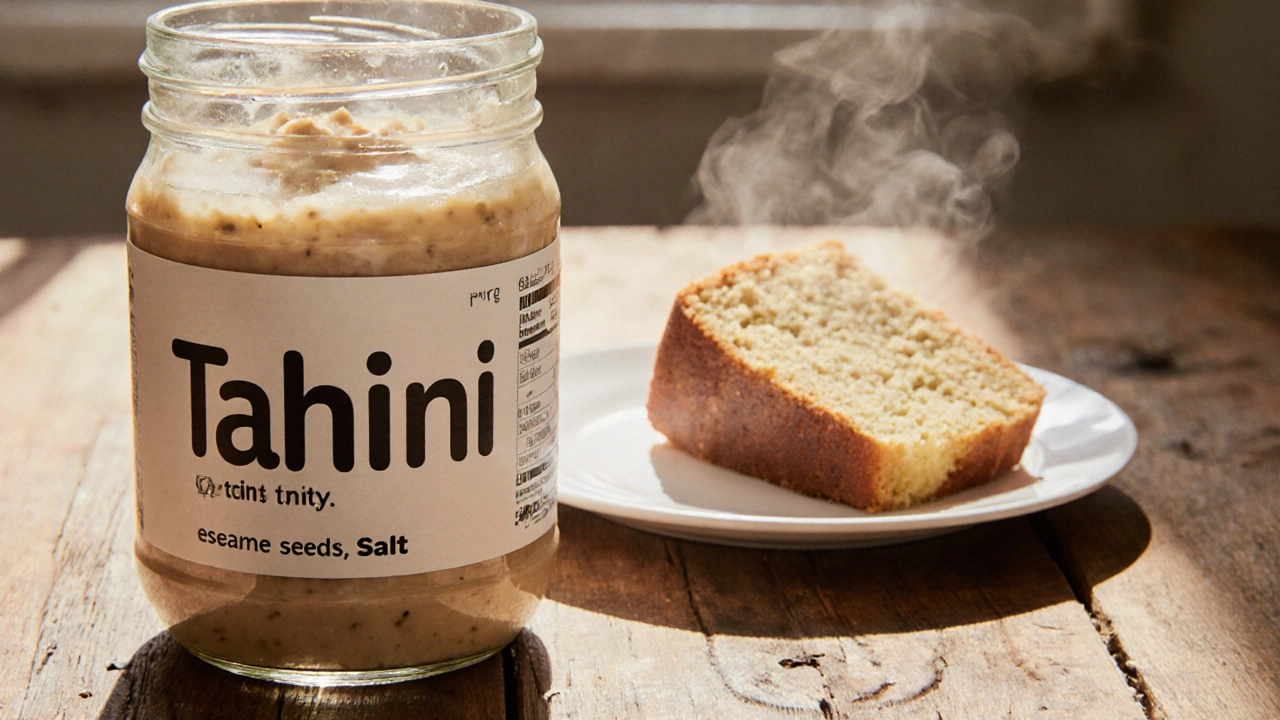
Tahini and Gluten: Is Tahini Gluten-Free?
Learn if tahini contains gluten, how to spot safe products, and tips for using it in gluten‑free cakes. Includes label guide, contamination risks, and a handy FAQ.
Read MoreWhen working with Tahini, a smooth paste made from ground sesame seeds. Also known as sesame butter, it adds a nutty, creamy richness to both sweet and savory dishes. Sesame paste is the same ingredient, but the name varies by region. Knowing that they’re interchangeable lets you swap it into any recipe without a wobble.
The first thing many bakers discover is that Vegan baking, desserts that skip dairy and eggs benefits hugely from tahini’s healthy fats. Those fats create moisture, improve crumb structure, and give a subtle earthy note that plain oil can’t match. If you’ve ever tried a vegan chocolate cake that felt dry, a couple of tablespoons of tahini can turn it into a moist, glossy masterpiece.
For those avoiding gluten, Gluten‑free desserts, treats made without wheat, barley, or rye often struggle with binding. Tahini steps in as a natural binder, helping almond flour or oat flour hold together without a gummy texture. It also adds a depth of flavor that compensates for the milder taste of many gluten‑free flours.
Imagine a classic Middle Eastern spread—Middle Eastern cuisine, the culinary traditions of countries like Lebanon, Israel, and Turkey. Here tahini shines in everything from hummus to halva. The same paste that drizzles over a salad can be whisked into a sweet sesame candy, proving that its versatility spans the entire flavor spectrum.
When you pair tahini with chocolate, something magical happens. The bitter cocoa meets the nutty cream, creating a flavor bridge that works perfectly in chocolate fudge. A swirl of tahini in fudge cuts the sweetness, adds a silkier mouthfeel, and gives a subtle savory twist that keeps the palate intrigued.
Even cheesecake lovers can benefit. A tahini‑infused crust, using crushed graham or pretzel crumbs bound with a bit of melted butter, offers a healthier, lower‑sugar alternative to traditional butter bases. The result is a crust that’s crisp, slightly salty, and richly aromatic—perfect for both classic baked cheesecakes and no‑bake versions.
Beyond desserts, think about sauces and dressings. A splash of tahini blended with lemon juice, garlic, and a dash of maple syrup creates a creamy vinaigrette that brightens roasted vegetables or salads. The same blend can become a dip for raw veggies, a topping for grain bowls, or a glaze for grilled tofu, proving that tahini isn’t limited to sweets.
Cooking with tahini also means paying attention to its texture. Because it’s oil‑rich, it can separate over time. Give it a quick stir before measuring, and store it in a cool, dark place to keep it stable. If you notice a bitter edge, it may be over‑roasted; a gentle warm‑up in a saucepan will restore its mellow sweetness.
Below you’ll find a curated list of articles that dive deeper into specific uses—whether you’re curious about swapping butter for tahini in brownies, making a vegan fudge that stays soft, or mastering the perfect Middle Eastern dessert. These guides will give you hands‑on tips, ingredient ratios, and troubleshooting advice so you can start experimenting right away.
Learn if tahini contains gluten, how to spot safe products, and tips for using it in gluten‑free cakes. Includes label guide, contamination risks, and a handy FAQ.
Read More