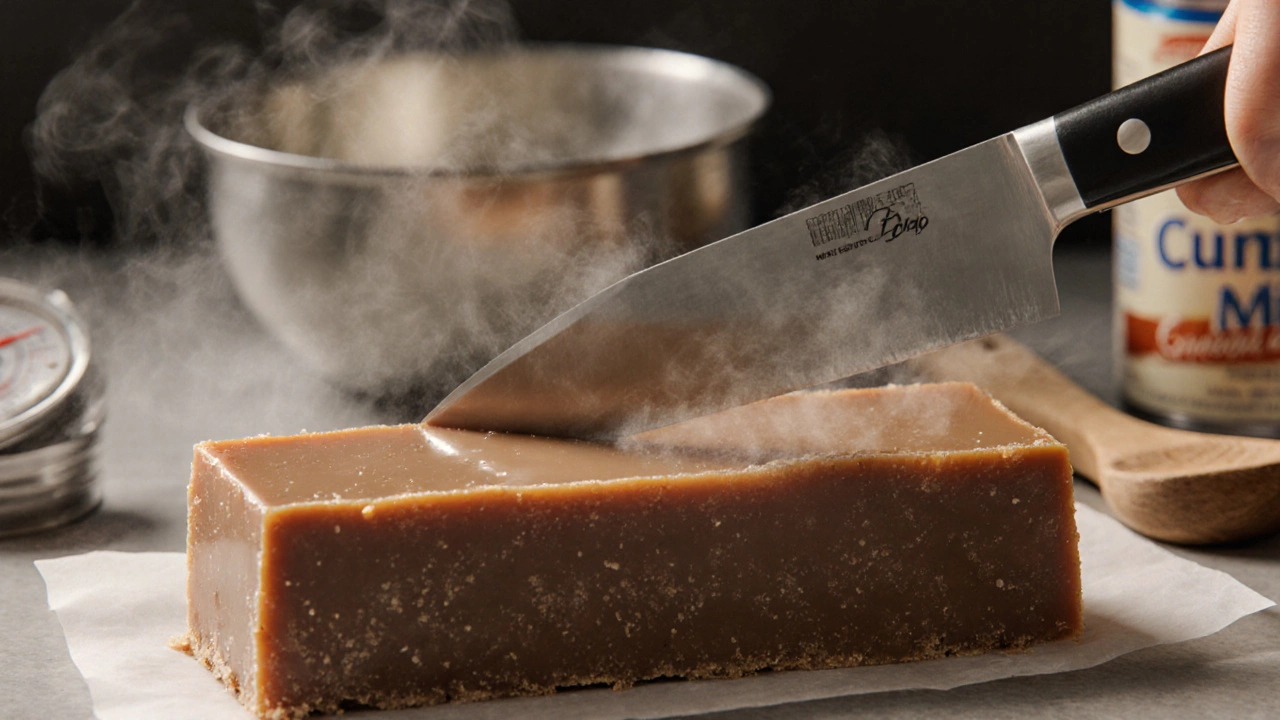
Evaporated Milk in Fudge: Why It Works and How to Use It
When you make evaporated milk, a concentrated form of milk with about 60% of the water removed, often used in baking and candy making. Also known as concentrated milk, it’s not just a pantry staple—it’s a game-changer for fudge that stays creamy without graininess. Unlike regular milk, which can cause fudge to separate or turn grainy when boiled, evaporated milk has less water and more milk solids. That means it thickens faster, caramelizes better, and gives fudge a rich, smooth mouthfeel without needing heavy cream or corn syrup.
Why does this matter? Because fudge, a dense, chewy candy made by boiling sugar, butter, and milk to the soft-ball stage. Also known as cooked fudge, it’s all about control—temperature, stirring, and ingredients needs stable fats and proteins to set properly. Evaporated milk delivers both, naturally. It’s why so many trusted recipes—from classic chocolate fudge to peanut butter and maple varieties—rely on it. You don’t need fancy equipment. Just a saucepan, a candy thermometer (or the cold water test), and patience. Too much stirring? Your fudge turns grainy. Too little heat? It won’t harden. Evaporated milk helps buffer these mistakes.
It’s also a smart swap if you’re avoiding cream or dairy alternatives. Many people try almond milk or coconut milk in fudge and end up with soft, oily results. Evaporated milk behaves like dairy but with more consistency. It’s why you’ll find it in recipes from old cookbooks, Amish kitchens, and even commercial candy makers. It’s not magic—it’s chemistry. The proteins and sugars in evaporated milk bind with the sugar crystals as they cool, preventing them from growing too large and creating that gritty texture.
And if you’ve ever wondered why your fudge won’t harden, the culprit isn’t always the sugar. Sometimes it’s the liquid you’re using. Water-based liquids evaporate too fast and leave fudge too soft. Evaporated milk holds its structure longer, letting the sugar crystallize evenly. Pair it with butter and chocolate, and you’ve got a balanced base that sets beautifully at room temperature.
There’s a reason this ingredient shows up in nearly every fudge troubleshooting guide. If your fudge is too soft, too hard, or too grainy, switching to evaporated milk might be the fix you didn’t know you needed. It’s simple, affordable, and works every time—if you follow the basics: don’t stir after boiling, let it cool slightly before beating, and use a clean pan. No shortcuts. No tricks. Just good, old-fashioned candy science.
Below, you’ll find real recipes, common mistakes, and fixes from bakers who’ve been there. Whether you’re making your first batch or trying to perfect a family favorite, the answers are here—no guesswork needed.
Why Use Evaporated Milk in Fudge? The Science Behind the Creaminess
Evaporated milk improves fudge texture by reducing water content, controlling sugar crystallization, and delivering a smooth, creamy finish. Learn why it's essential in professional fudge recipes.
Read More