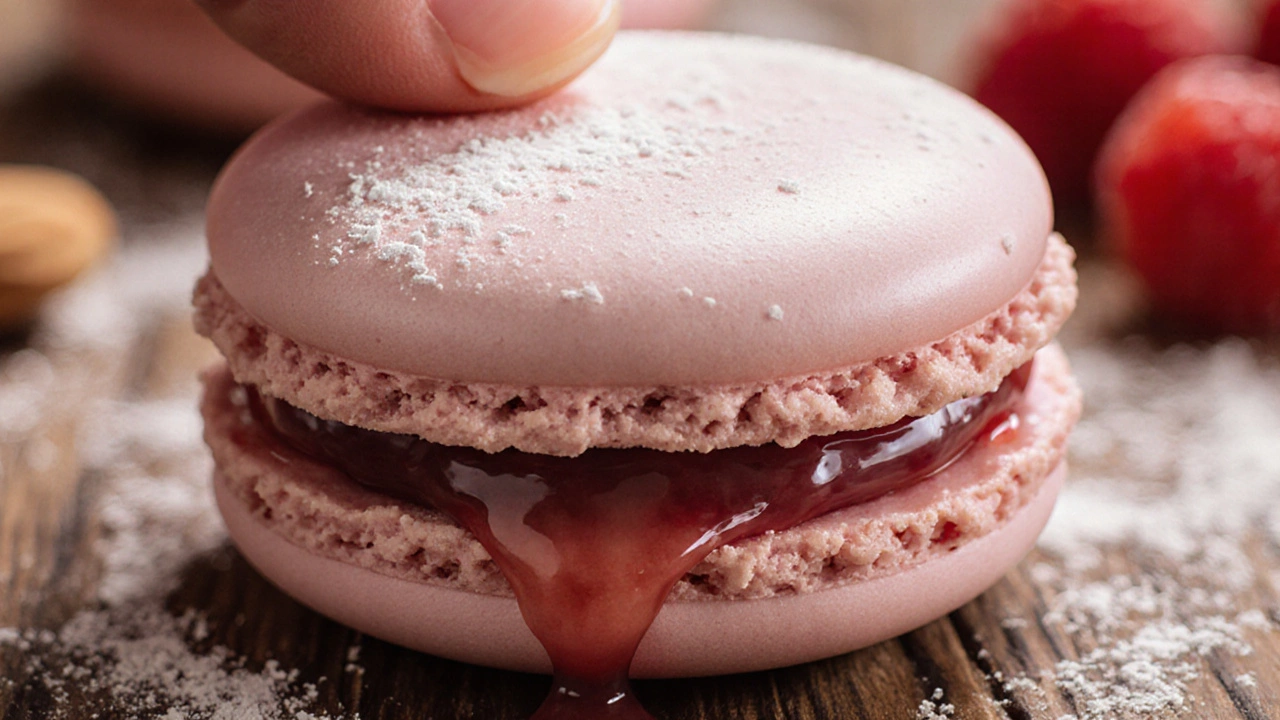
French Macaron: What It Is, How It’s Made, and Why It’s So Hard to Get Right
When you think of a French macaron, a delicate, colorful almond cookie with a smooth shell and chewy center, often filled with buttercream or ganache. Also known as macaron, it’s not just a cookie—it’s a pastry that tests patience, precision, and timing. Unlike regular cookies, a true French macaron has a ruffled edge called a "foot," a crisp outer shell, and a soft, slightly chewy interior. Get one thing wrong—temperature, humidity, mixing time—and the whole batch can crack, collapse, or turn out hollow.
Behind every perfect macaron is a science lesson. The base is simple: almond flour, finely ground almonds that give macarons their nutty flavor and structure, powdered sugar, and egg whites whipped into a meringue. But it’s the technique that makes all the difference. You need to fold the batter just right—not too much, not too little. Too much and the shells won’t rise; too little and they’ll be lumpy. Then there’s the resting time. Letting the piped shells sit before baking lets a skin form, which is what creates that signature foot. Skip this step, and you’re just baking flat, cracked discs.
People often confuse macarons with macaroons, but they’re totally different. A macaroon, a coconut-based cookie, dense and chewy, often dipped in chocolate is easy to make. A French macaron? That’s a whole other level. It’s why even experienced bakers keep a notebook of failed batches. Temperature, humidity, even the brand of almond flour can change the outcome. Some swear by aged egg whites. Others use a digital scale to the gram. There’s no single "right" way—but there are plenty of ways to fail.
What you’ll find in the posts below isn’t just recipes. It’s the real talk bakers wish they’d heard before their first attempt. You’ll learn why some macarons don’t develop feet, how to fix cracked tops, what makes fillings slide off, and why the color fades if you use the wrong food coloring. There’s also a post on the origin of the name—turns out, it’s not even French at first. And yes, we’ve got the one about why your macarons stick to the parchment. No fluff. Just the fixes that work.
What Does a Macaron Taste Like? A Complete Guide to Flavor, Texture, and Experience
Macarons aren't just sweet cookies - they're delicate shells with flavorful fillings that offer a balance of crunch, chew, and taste. Discover what they really taste like and why quality matters.
Read More