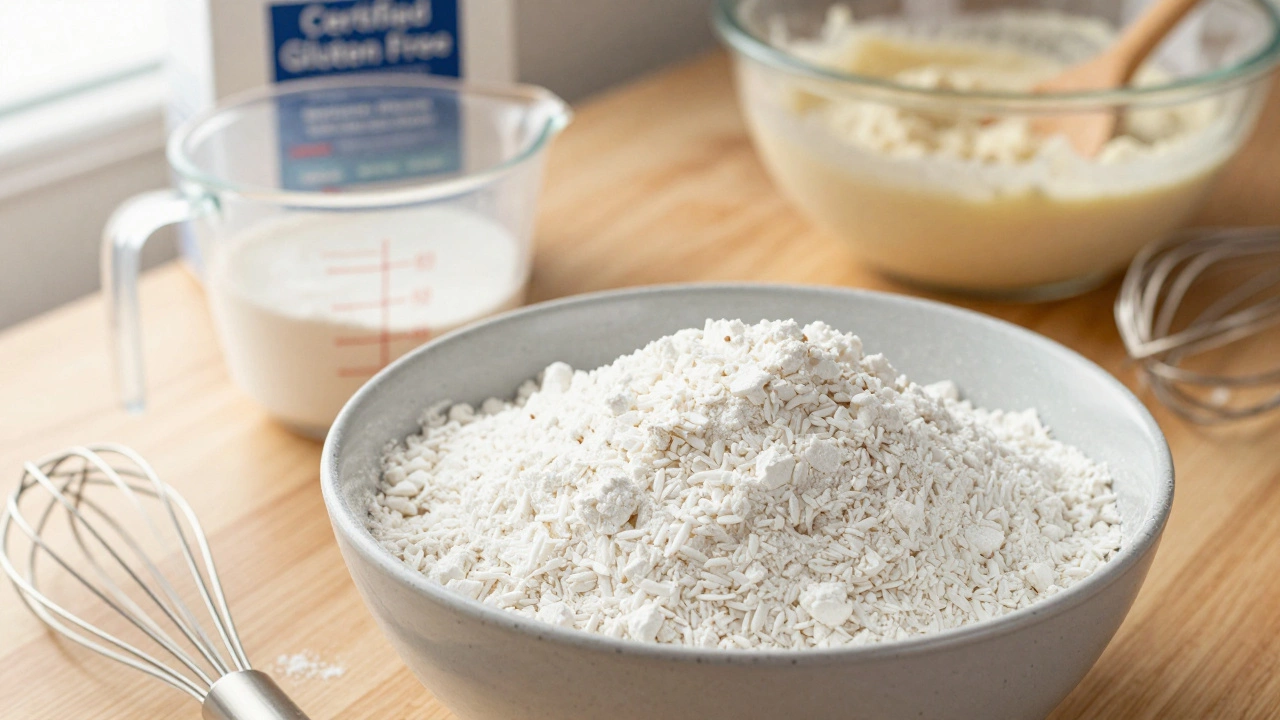
Gluten-Free Rice Flour Calculator
Calculate Your Cake Flour Blend
Based on industry-standard gluten-free baking ratios. Always use certified gluten-free rice flour for safety.
per cup of flour
Your Gluten-Free Cake Blend
Certified GFIngredients for 1 cup of flour
- White Rice Flour: 0.5 cups
- Tapioca Starch: 0.3 cups
- Potato Starch: 0.2 cups
- Xanthan Gum: 0.5 tsp
Why this blend works:
Rice flour provides structure, tapioca adds lightness, potato starch improves texture, and xanthan gum replaces gluten's binding properties. Using superfine rice flour prevents grittiness.
Common Mistakes
Never use coarse rice flour for cakes. It causes gritty texture. Always clean tools to avoid cross-contamination. Store rice flour refrigerated to prevent rancidity.
If you’re baking gluten-free cakes and wondering whether rice is safe to use, you’re not alone. Many people assume that because rice is a grain, it must contain gluten. But that’s not true. Rice doesn’t have gluten. Not a trace. Not in white, brown, black, or wild rice. It’s naturally gluten-free, which makes it one of the most reliable staples in gluten-free baking.
Why This Matters for Gluten-Free Cakes
When you’re making gluten-free cakes, finding the right flour is half the battle. Wheat flour gives structure, chew, and rise. Without it, cakes can turn out dense, crumbly, or flat. That’s why bakers turn to alternatives like almond flour, tapioca starch, and rice flour. Rice flour, especially white rice flour, is a go-to because it’s neutral in flavor and blends well with other ingredients. It’s also widely available and affordable compared to some specialty gluten-free flours.But here’s the catch: just because rice is gluten-free doesn’t mean every rice product is. Cross-contamination is real. If your rice flour was processed in a facility that also handles wheat, barley, or rye, it could have gluten traces. That’s why, for sensitive people - especially those with celiac disease - you need to look for certified gluten-free labels on rice flour packages. Brands like Bob’s Red Mill, King Arthur, and Anthony’s offer certified gluten-free rice flours that are tested to under 10 parts per million of gluten.
Rice Flour in Gluten-Free Cake Recipes
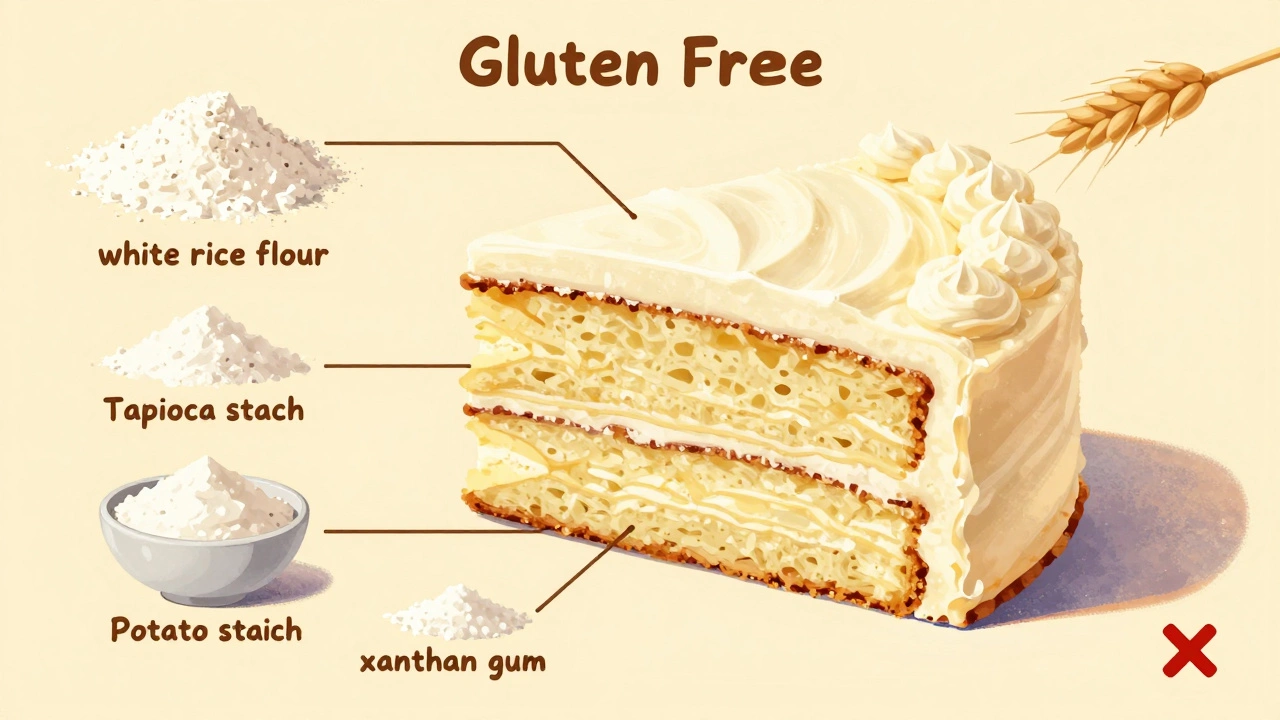
Rice flour isn’t a one-to-one swap for wheat flour. It doesn’t have gluten proteins, so it won’t form the elastic network that traps air and gives structure. That’s why most gluten-free cake recipes use a blend. A common mix includes:- White rice flour (for structure)
- Starchy flours like tapioca or potato starch (for lightness)
- Binding agents like xanthan gum or guar gum (to replace gluten’s stickiness)
For example, a basic gluten-free cake flour blend might be 50% white rice flour, 30% tapioca starch, and 20% potato starch, with 1/2 teaspoon of xanthan gum per cup of flour. This blend mimics the texture of wheat-based cakes better than rice flour alone.
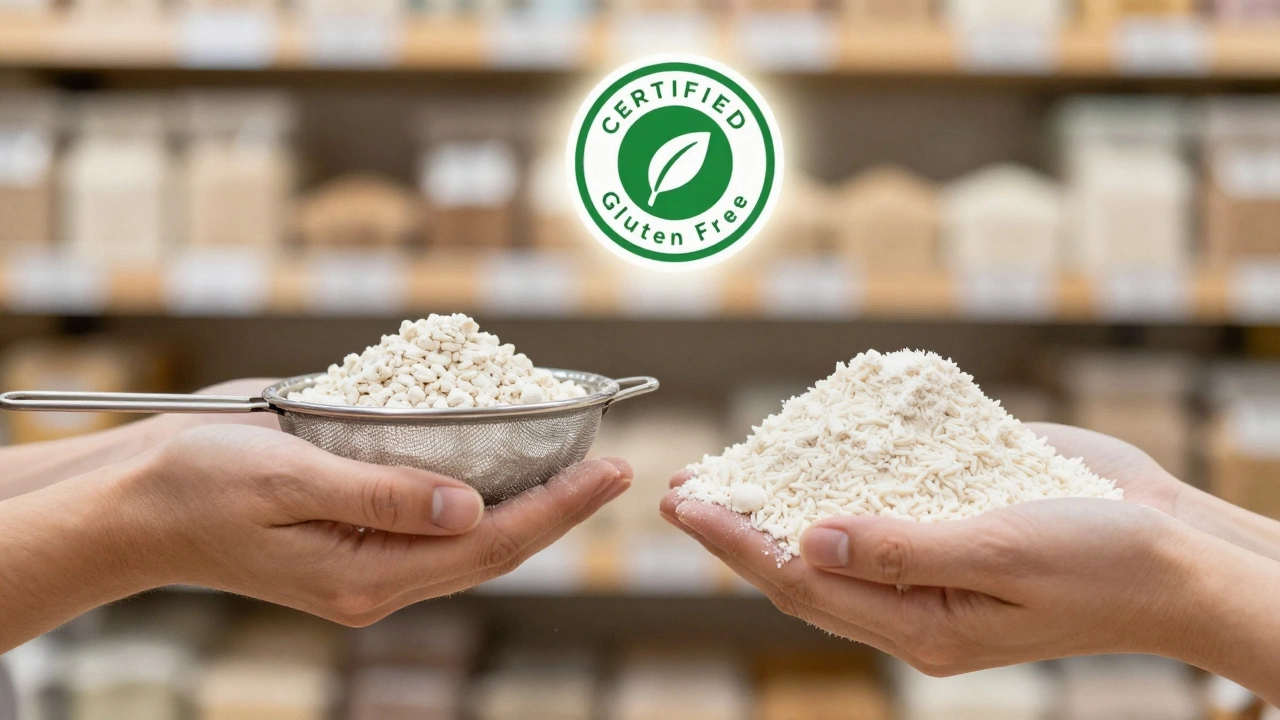
Real bakers know that rice flour can sometimes leave a gritty texture if it’s not finely ground. That’s why many prefer superfine rice flour - it’s milled to a powder-like consistency. You’ll notice the difference in your cake’s crumb. Coarse rice flour gives you a sandy mouthfeel. Fine rice flour? Smooth and tender.
What About Other Rice Products?
Rice isn’t just flour. You might also use rice syrup, rice milk, or rice paper in desserts. Here’s the quick breakdown:- Rice syrup: Naturally gluten-free, but check labels - some brands add barley malt.
- Rice milk: Usually gluten-free, but again, always read the ingredient list. Some brands add flavorings or stabilizers that may contain gluten.
- Rice paper: Used in spring rolls, but sometimes used in decorative cake toppers. Pure rice paper is gluten-free. If it’s blended with wheat starch, it’s not.
Even if you’re not baking with rice flour, if you’re using rice-based ingredients in your gluten-free cakes, always double-check. Gluten hides in unexpected places.
Common Myths About Rice and Gluten
There are a lot of myths floating around. Let’s clear a few up:- Myth: Brown rice has more gluten than white rice. Truth: Neither has any. The bran and germ in brown rice don’t add gluten - they just add fiber and nutrients.
- Myth: Rice grown in certain countries has gluten. Truth: Gluten is a protein found only in wheat, barley, and rye. It doesn’t grow in rice plants, no matter where they’re farmed.
- Myth: Rice noodles contain gluten. Truth: Pure rice noodles are gluten-free. But some brands mix in wheat flour to improve texture. Always check the label.
One real-world example: A Melbourne bakery switched from a wheat-based sponge cake to a rice flour-based version for their gluten-free customers. The first batch was too dry. Why? They used coarse rice flour and skipped the xanthan gum. After switching to superfine, certified gluten-free rice flour and adding 1 tsp of xanthan gum per cup of flour blend, their sales doubled. Customers said it tasted just like the real thing.
How to Choose the Best Rice Flour for Baking
Not all rice flours are created equal. Here’s what to look for:- Label: Must say “certified gluten-free.”
- Texture: Fine, powdery, not gritty. If it feels like sand, it’s not right.
- Brand reputation: Stick with brands that test for gluten contamination. Avoid bulk-bin flours unless you know the source.
- Shelf life: Rice flour can go rancid faster than wheat flour because of its natural oils. Store it in the fridge or freezer, especially if you don’t use it often.
For cakes, white rice flour is usually the best starting point. Brown rice flour has a nuttier flavor and more fiber, but it can overpower delicate cake flavors. If you want to experiment, try blending 25% brown rice flour with 75% white for added nutrition without sacrificing texture.
What to Avoid
Even if you’re careful, mistakes happen. Here’s what to watch out for:- Pre-mixed cake mixes labeled “gluten-free” that list rice flour - but also contain modified food starch from wheat.
- Flavor extracts or food coloring that use grain alcohol derived from wheat.
- Shared baking tools. If your mixer, spatula, or measuring cup was used for wheat flour, clean it thoroughly. Gluten residues can linger.
One baker in Sydney had her gluten-free cake rejected by a customer with celiac disease. Turned out, she’d used the same sifter for wheat flour and rice flour. A quick wash fixed it, but the lesson stuck: cross-contamination doesn’t need much to cause a reaction.
Final Word: Rice Is Your Friend
Rice is safe. Rice flour is safe. And when used right, it makes excellent gluten-free cakes. It’s not magic - it’s science. You need the right blend, the right grind, and the right care to avoid contamination. But once you get it, you’ve got a reliable, affordable, and widely available base for cakes that taste great and are safe for people with gluten sensitivity.If you’re just starting out, try a simple rice flour cake recipe with certified gluten-free flour, xanthan gum, and a little extra egg or applesauce for moisture. Bake it once, taste it, adjust next time. You’ll get there.
Does rice naturally contain gluten?
No, rice does not naturally contain gluten. Gluten is a protein found only in wheat, barley, and rye. Rice is a different type of grain and is inherently gluten-free. This applies to all varieties - white, brown, black, and wild rice.
Can rice flour be used in gluten-free cakes?
Yes, rice flour is commonly used in gluten-free cake recipes. It’s neutral in flavor and blends well with other gluten-free flours and starches. However, it doesn’t provide structure on its own, so it’s usually mixed with tapioca starch, potato starch, and a binding agent like xanthan gum to mimic the texture of wheat flour.
Is all rice flour gluten-free?
Not necessarily. While rice itself is gluten-free, rice flour can become contaminated during processing if it’s made in a facility that also handles wheat, barley, or rye. Always choose rice flour labeled “certified gluten-free” to ensure safety, especially if you have celiac disease or severe gluten sensitivity.
Why does my gluten-free cake made with rice flour taste gritty?
Grittiness usually comes from using coarse rice flour. Superfine rice flour is ground much finer and gives cakes a smoother, more tender crumb. If your cake feels sandy, switch to a finely milled, certified gluten-free rice flour. You’ll notice a big difference in texture.
Can I substitute rice flour 1:1 for wheat flour in cake recipes?
No, you cannot substitute rice flour 1:1 for wheat flour. Wheat flour contains gluten, which gives structure and elasticity. Rice flour lacks this, so using it alone will result in a dense, crumbly cake. Always use a gluten-free flour blend designed for baking, typically including starches and a binder like xanthan gum.
How should I store rice flour for baking?
Rice flour has natural oils that can go rancid over time, especially in warm climates. Store it in an airtight container in the refrigerator or freezer to extend its shelf life. For frequent bakers, keeping a small amount in the pantry is fine, but buy in smaller quantities if you don’t use it often.