Fudge Fails: Why Your Fudge Won't Harden and How to Fix It
When your fudge fails, a soft, grainy, or sticky candy that doesn’t set properly after cooling. Also known as soft fudge, it’s one of the most common frustrations in home candy-making. You followed the recipe, stirred just right, even used a candy thermometer—but it still won’t harden. It’s not you. It’s the science. Fudge is a delicate balance of sugar, fat, and moisture. Too much water, not enough heat, or a single wrong step, and your batch turns into sweet goo instead of smooth, sliceable candy.
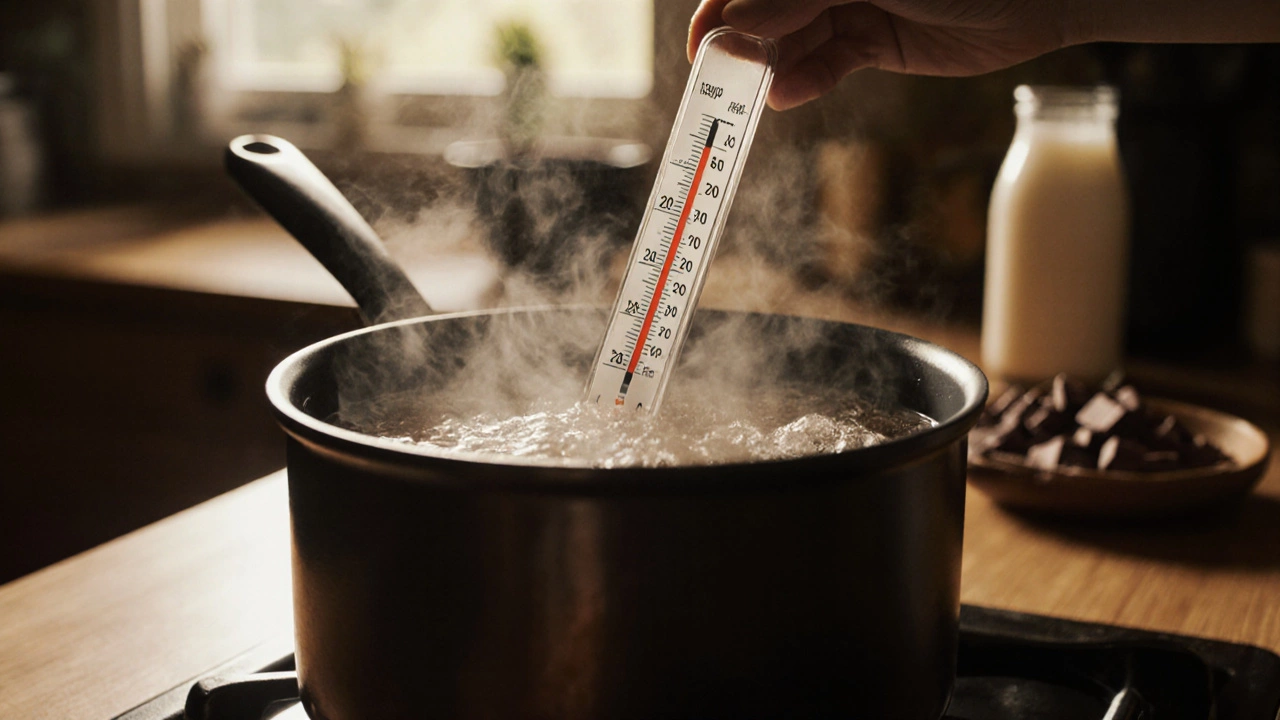
The real culprit behind most fudge fails, the failure of fudge to set due to improper sugar crystallization or excess moisture is usually one of three things: undercooking, over-stirring, or using the wrong ingredients. If your mixture doesn’t reach 234°F (112°C)—the soft-ball stage—the sugar syrup won’t crystallize properly once cooled. That’s why a candy thermometer isn’t optional; it’s your best friend. And stirring too much after removing from heat? That’s like shaking a soda before opening. It triggers tiny sugar crystals to multiply, turning your fudge grainy instead of creamy. Then there’s the milk. Evaporated milk isn’t just a fancy choice—it’s a game-changer because it’s already reduced, meaning less water to evaporate. Using regular milk? You’re fighting an uphill battle.
Related issues like fudge texture, the smooth, dense, melt-in-your-mouth quality that defines good fudge often come down to how you handle the cooling phase. Letting the mixture cool undisturbed to 110°F before stirring is non-negotiable. Rush it, and you’ll get clumps. Skip the butter or use margarine? You’ll end up with oily, separated fudge. And don’t even think about doubling the recipe unless you’re ready to manage twice the heat control. Fudge doesn’t scale well—it’s a precise dance, not a free-for-all.
You’re not alone. Thousands of home bakers face the same problem every holiday season. But the fix isn’t complicated. It’s just specific. Get the temperature right. Use the right pan. Don’t stir until it’s cool. And if you’re still stuck? You’re not out of options—you’re just missing one key step. Below, you’ll find real fixes from real failures. No fluff. No guesswork. Just what works.
Why Is Fudge Difficult to Make? The Science Behind the Sweet Struggle
Fudge is tricky because it's not just a recipe-it's a science. Learn why temperature, stirring, and chocolate type make or break your batch, and how to fix common mistakes for perfect results every time.
Read More