Fudge Making: How to Get Perfect Texture, Avoid Common Mistakes, and Choose the Right Ingredients
When you’re making fudge making, the process of creating a smooth, dense, melt-in-your-mouth chocolate candy by carefully controlling sugar crystallization. Also known as homemade chocolate fudge, it’s one of those treats that seems simple but can go wrong in surprising ways. You’ve measured the sugar, stirred it slowly, maybe even used a candy thermometer—but the fudge still won’t set. Or it turns grainy. Or it’s too soft to slice. It’s not your fault. Fudge making is less about following a recipe and more about understanding what’s happening at the molecular level.
The key players in fudge making are sugar, fat, and liquid. Sugar crystals form when the mixture cools, and if they grow too big, you get that gritty texture. That’s why evaporated milk, a concentrated milk product with most water removed, used to control crystallization and add creaminess is so popular in professional recipes. It reduces the water content, which means fewer large crystals form. Regular milk? Too much water. Condensed milk? Too sweet and thick. Evaporated milk strikes the balance. And if you’re wondering why some recipes call for butter or cream, it’s because fat coats the sugar crystals, keeping them small and the texture smooth.
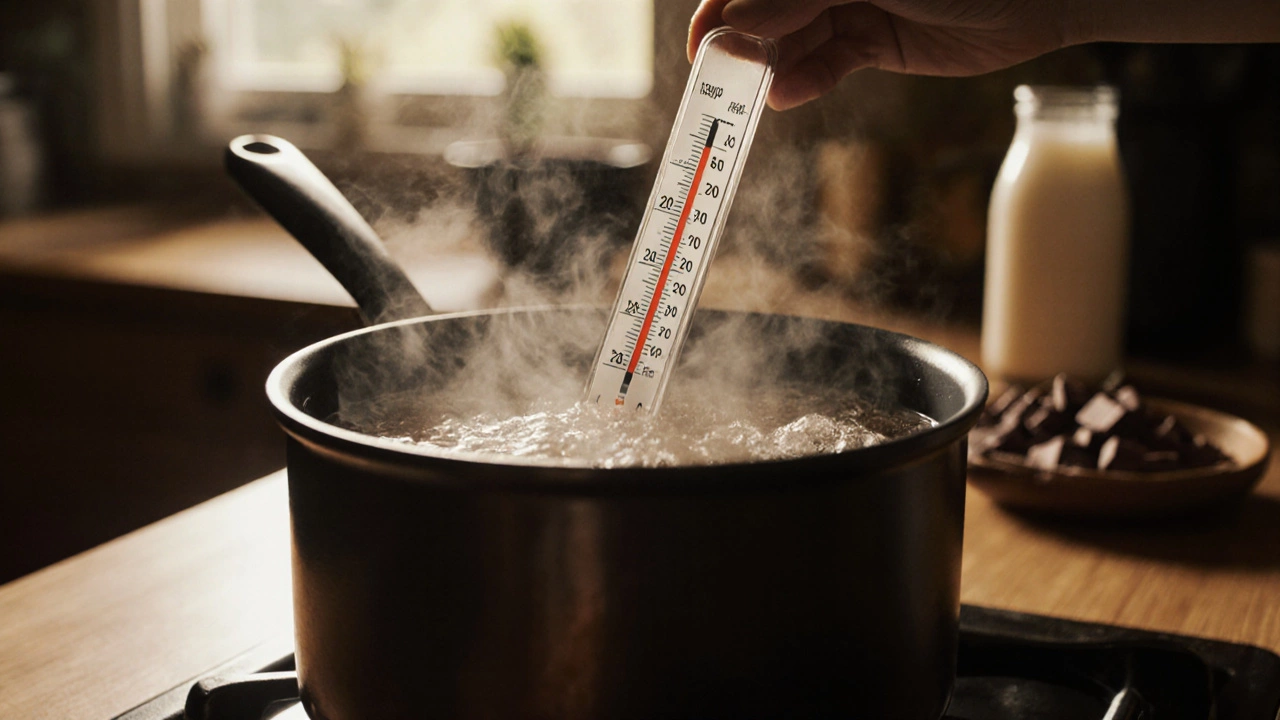
But here’s the thing: fudge making isn’t just about milk. Temperature matters. If you boil it too long, you’ll get toffee. toffee vs fudge, a comparison of two sugar-based candies that differ in cooking temperature, texture, and ingredients—toffee is cooked to the hard-crack stage (300°F+), so it snaps. Fudge stops at the soft-ball stage (234–240°F), so it’s chewy. Use the wrong thermometer or guess the time, and you’re not making fudge—you’re making candy rock. That’s why most failed batches come down to one thing: not using a candy thermometer.
And then there’s the cooling step. Stirring too early? You’ll seed crystals all over the place. Don’t stir at all? The fudge might set unevenly. The right move is to let it cool to about 110°F without touching it, then stir slowly until it loses its shine. That’s when the tiny crystals form evenly. No magic. Just physics.
People ask why their fudge won’t harden. It’s rarely the recipe. It’s usually the heat control, the ingredients, or the cooling. You can fix it. Reheat the batch, bring it back to the soft-ball stage, cool again, and stir properly. Most people don’t know that. And if you’re vegan? You can swap dairy for coconut milk or cashew cream—but you’ll need to adjust the sugar and fat ratios. It’s not plug-and-play.
Below, you’ll find real solutions from people who’ve been there—failed batches, sticky pans, grainy results, and how they turned them around. Whether you’re trying to nail your first batch or fix a recurring problem, the posts here cut through the noise. No fluff. Just what works.
Why Is Fudge Difficult to Make? The Science Behind the Sweet Struggle
Fudge is tricky because it's not just a recipe-it's a science. Learn why temperature, stirring, and chocolate type make or break your batch, and how to fix common mistakes for perfect results every time.
Read More