M&Ms Ingredients: What’s Really in Your Favorite Candy
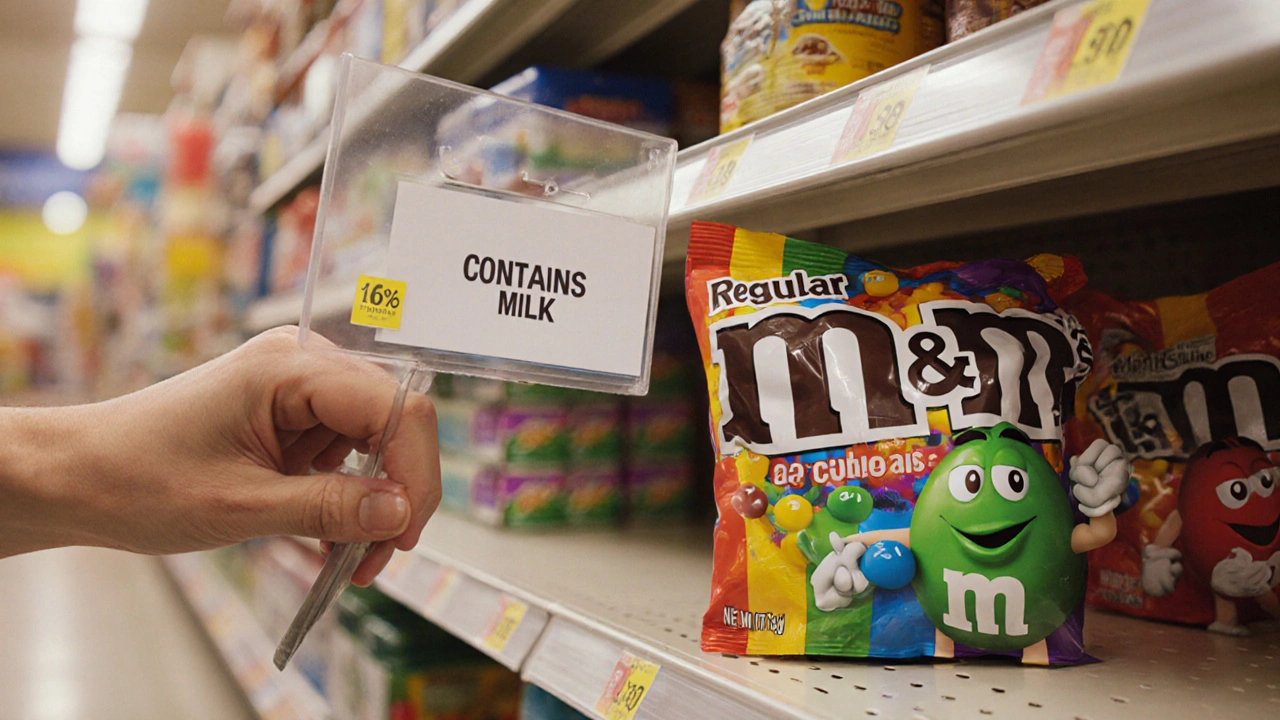
When you bite into a colorful M&Ms, a popular candy coated chocolate treat made by Mars, Inc., also known as M&M's Chocolate Candies, you’re not just tasting sugar—you’re consuming a carefully engineered mix of ingredients designed for shelf life, color, and crunch. Most people assume M&Ms are just chocolate and candy shell, but the full list tells a more complex story. The chocolate center? It’s not pure cocoa. The shell? It’s not just sugar. And no, it’s not vegan—despite what some social media posts claim.
Let’s break it down. The main ingredients in plain M&Ms include sugar, a crystalline sweetener used as the primary bulk ingredient in most candies, corn syrup, a liquid sweetener that prevents crystallization and adds chewiness, and dried whole milk, a dairy product that gives M&Ms their creamy chocolate base. Then there’s chocolate liquor (cocoa mass), cocoa butter, and soy lecithin—an emulsifier that keeps everything smooth. The colorful shell? It’s made of sugar, cornstarch, and artificial colors like Red 40, Yellow 5, and Blue 1. And yes, some of those colors are derived from petroleum. No wonder they don’t dissolve easily in your mouth.
Now, about the big questions. Are M&Ms gluten-free? Yes, according to Mars’ official label, plain M&Ms don’t contain gluten ingredients. But they’re made in facilities that also process wheat, so cross-contamination is possible. If you have celiac disease, check the packaging for a gluten-free certification. What about vegan? No. The milk and dairy derivatives make them off-limits. Even the sugar? It’s often processed with bone char. That’s why vegan alternatives like UnReal M&Ms or homemade versions with coconut oil and beet sugar are gaining traction. And if you’re watching additives, you’ll find artificial colors, hydrogenated oils, and preservatives that most home bakers avoid.
These ingredients aren’t just random—they’re chosen for function. Sugar and corn syrup control texture. Lecithin keeps the chocolate from separating. Colors last through heat and light. That’s why your M&Ms stay bright even after sitting in a pantry for months. But if you bake with them—say, in cookies or cakes—you’re adding all of this, not just flavor. That’s why some bakers swap M&Ms for chopped chocolate bars or vegan candy chips when they want cleaner ingredients.
Below, you’ll find real posts that dig into the hidden details of candy ingredients—from why fudge fails when sugar crystals form, to whether tahini or peanut butter can sneak gluten into your treats. You’ll learn how to read labels like a pro, spot non-vegan additives, and understand why some candies that look innocent are anything but. Whether you’re baking for someone with allergies, going vegan, or just tired of mystery ingredients, this collection gives you the facts you need—no fluff, no marketing spin, just what’s really in the bag.
Are There Vegan M&Ms? The Truth About Chocolate Candies and Plant-Based Diets
No, there are no vegan M&Ms on the market-even dark chocolate versions contain dairy. But better, plant-based alternatives exist that taste just as good. Learn what's really in M&Ms and find the top vegan swaps.
Read More