How to Stop Your Pavlova from Getting Soggy: Expert Tips
Stop your pavlova from collapsing! Learn professional secrets to prevent a soggy bottom, fight humidity, and time your toppings for a perfectly crisp meringue.
Read MoreIf you’ve ever wanted a dessert that’s crisp on the outside and fluffy inside, pavlova is the answer. It’s basically a big meringue topped with fresh fruit and whipped cream. The good news? You don’t need a pastry chef’s skill to nail it. Follow the steps below, add a few shortcuts, and you’ll have a show‑stopping treat in under an hour.
Here’s what you’ll need:
1. Preheat your oven to 150 °C (300 °F) and line a baking sheet with parchment paper. Draw a 20 cm (8‑inch) circle on the paper – this is your guide.
2. Beat the egg whites on medium speed until they form soft peaks. This means the peaks droop a little when you lift the whisk.
3. Gradually add the caster sugar, a tablespoon at a time. Keep beating until the mixture is glossy and stiff peaks form. The batter should look like a thick, glossy snow.
4. Gently fold in the vinegar, cornstarch, and vanilla. The cornstarch keeps the centre soft while the vinegar adds stability.
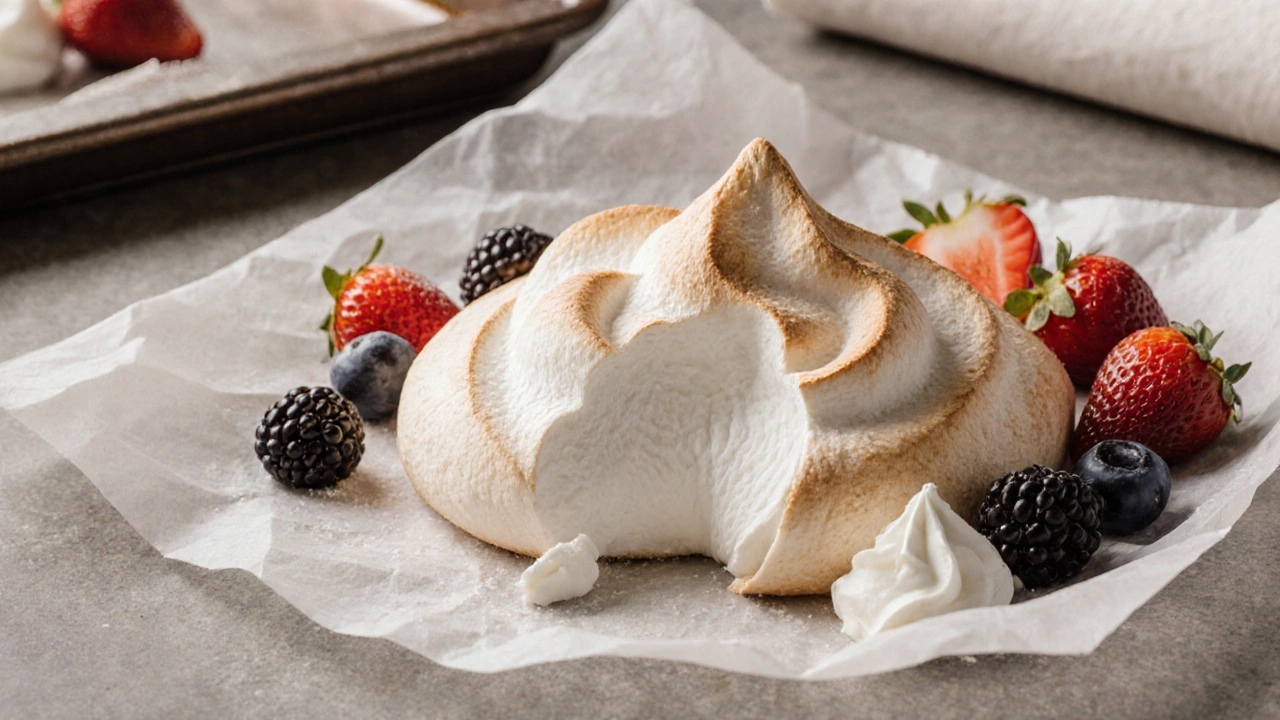
5. Spoon the meringue onto the circle you drew, smoothing the edges with a spatula. Create a small well in the centre for the cream.
6. Bake for 1 hour, then turn the oven off and let the pavlova cool inside with the door slightly open. This slow cooling prevents cracks.
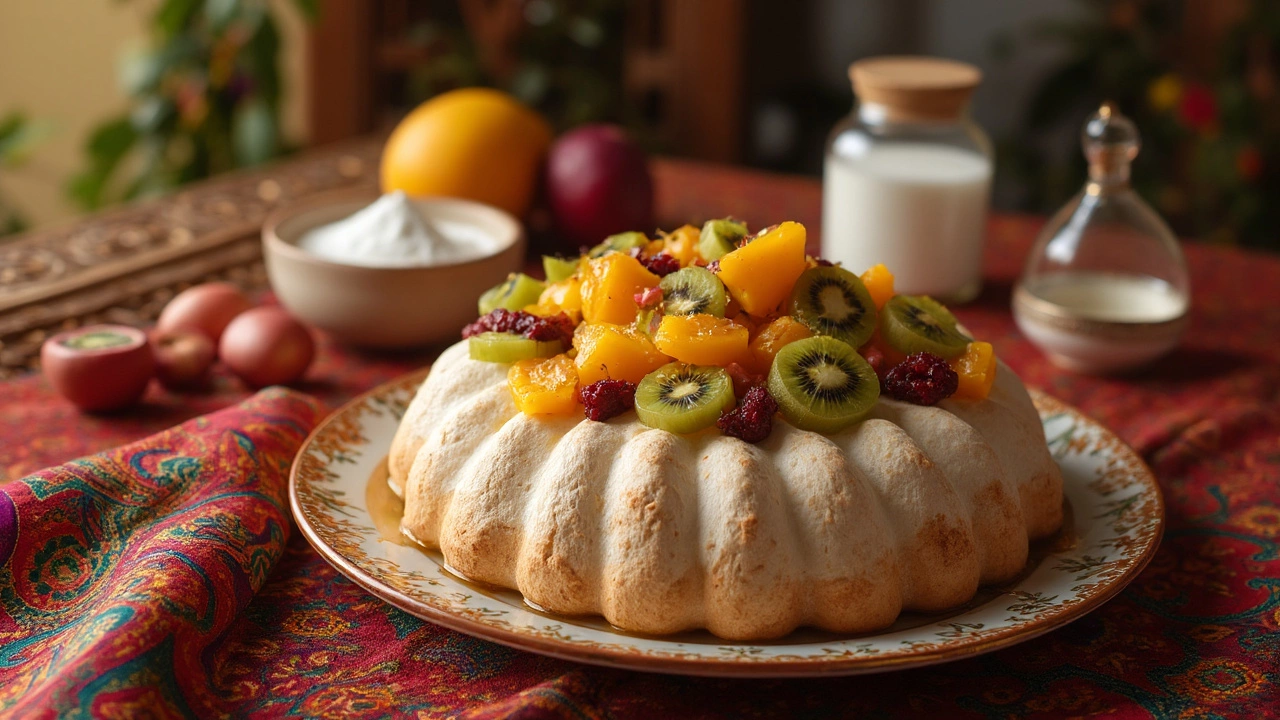
7. Once cool, top with a dollop of whipped cream and a generous handful of fresh fruit – kiwi, berries, passion fruit, whatever you like.
Don’t over‑beat the egg whites. Too much air makes the meringue fragile and prone to cracks.
Use superfine (caster) sugar. It dissolves completely, giving a smooth texture.
Keep the oven door closed while baking. Any rush of cool air can cause the meringue to collapse.
Cool it slowly. Leaving the door ajar lets the pavlova adjust to room temperature without shocking it.
Store properly. If you need to make it ahead, keep the meringue in an airtight container. Add the cream and fruit right before serving.
Once you’ve mastered the classic version, experiment with these ideas:
These tweaks keep the dessert exciting without adding complexity.
Now you have everything you need to bake a pavlova that looks bakery‑good and tastes even better. Grab your whisk, preheat the oven, and treat yourself to a light, airy dessert that’s perfect for any season.
Stop your pavlova from collapsing! Learn professional secrets to prevent a soggy bottom, fight humidity, and time your toppings for a perfectly crisp meringue.
Read MoreBaking paper is the only reliable surface for pavlova - foil causes sticking, uneven cooking, and ruined texture. Learn why parchment paper works every time and how to get perfect results.
Read MoreEver mixed up meringue and pavlova? It happens to the best of us. This article breaks down what really sets these two apart, so you never have to wonder again. You'll get facts, pro tips, and clear answers to avoid kitchen flops. If you want a perfect pavlova, understanding this simple difference is key.
Read MoreCraving a classic pavlova? This article breaks down the essential ingredients that make this meringue-based dessert a treat to relish. Discover interesting facts about each component and get tips to perfect your baking game. From egg whites to the all-important sugar, learn what makes pavlova a beloved dish in homes around Australia and beyond. Uncover the secrets to its crispy exterior and marshmallow-soft interior for the ultimate pavlova experience.
Read MoreCreating the perfect pavlova without cracks can be a culinary masterpiece. This article explores the secrets behind a smooth meringue, from understanding the science of egg whites to selecting the optimum baking conditions. With these practical tips and intriguing facts, bakers can confidently create a flawless pavlova. Learn to avoid common mistakes that lead to cracking and keep your dessert stunning and flawless.
Read More