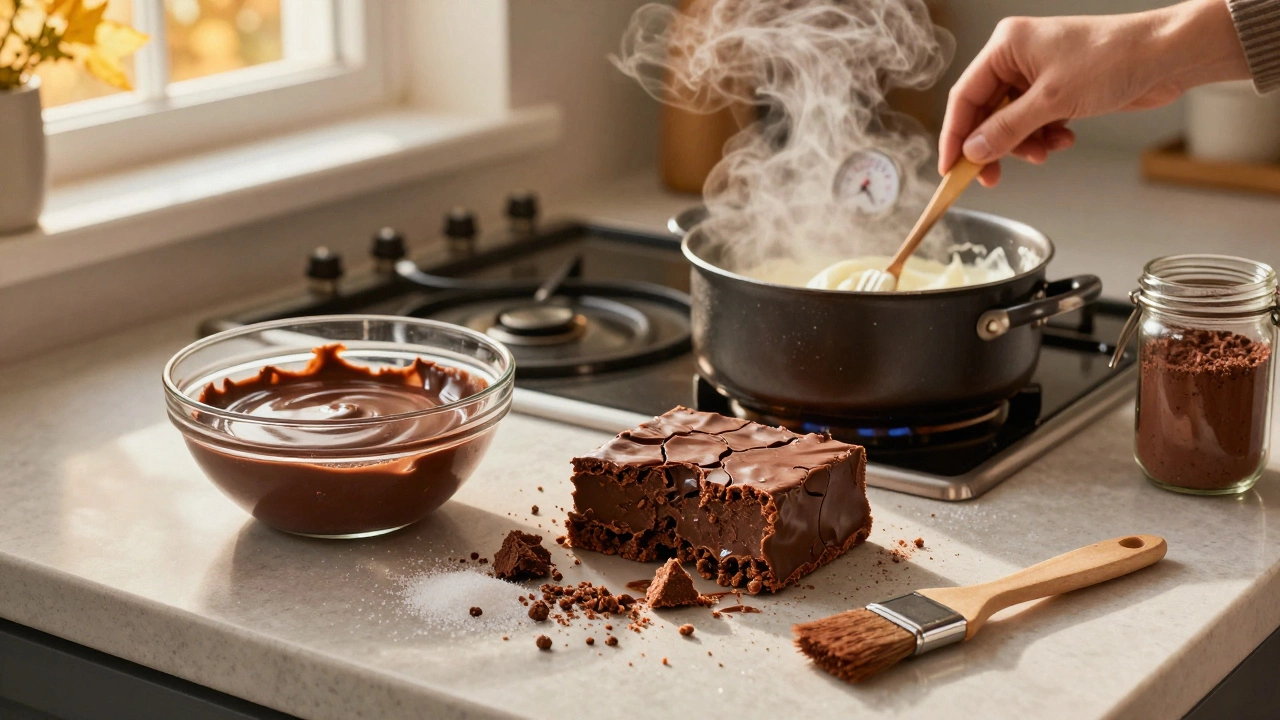
What to Do With Failed Fudge: 7 Easy Ways to Save Your Batch
Don’t throw away failed fudge. Learn 7 easy ways to rescue soft, hard, grainy, or oily fudge and turn it into chocolate sauce, bark, or dessert toppings.
Read MoreWhen you think of fudge, a rich, creamy chocolate confection made from sugar, butter, and milk. Also known as chocolate fudge, it’s supposed to melt on your tongue—not crumble in your hand. But too often, what starts as a simple recipe turns into a sticky mess, a grainy block, or a greasy puddle. Ruined fudge isn’t bad luck—it’s usually a mistake in temperature, timing, or technique.
Fudge fails because it’s not just cooking—it’s chemistry. Sugar syrup must reach the exact right temperature (usually between 234°F and 240°F), and stirring too much after it cools turns smooth fudge into sand. Even the type of chocolate you use matters. Dark chocolate with high cocoa butter can separate, while cheap chocolate chips often contain stabilizers that ruin texture. And don’t even get started on skipping the cooling step. If you jump in and stir before the mixture cools enough, you’re basically forcing sugar crystals to form everywhere. That’s why your fudge turns grainy instead of silky.
It’s not just about the recipe. Tools matter too. A candy thermometer isn’t optional—it’s your best friend. A heavy-bottomed pot prevents hot spots. And patience? That’s the secret ingredient no one talks about. Letting the mixture cool undisturbed for 10 minutes before stirring is what separates perfect fudge from disappointment. You can’t rush the science.
What you’ll find below are real fixes for real fudge fails. From why evaporated milk makes a difference to how skipping xanthan gum isn’t the issue (it’s not even in fudge), we’ve pulled together every post that explains what actually goes wrong—and how to fix it. No fluff. No guesswork. Just clear, tested answers to the problems you’re facing right now in your kitchen.
Don’t throw away failed fudge. Learn 7 easy ways to rescue soft, hard, grainy, or oily fudge and turn it into chocolate sauce, bark, or dessert toppings.
Read More