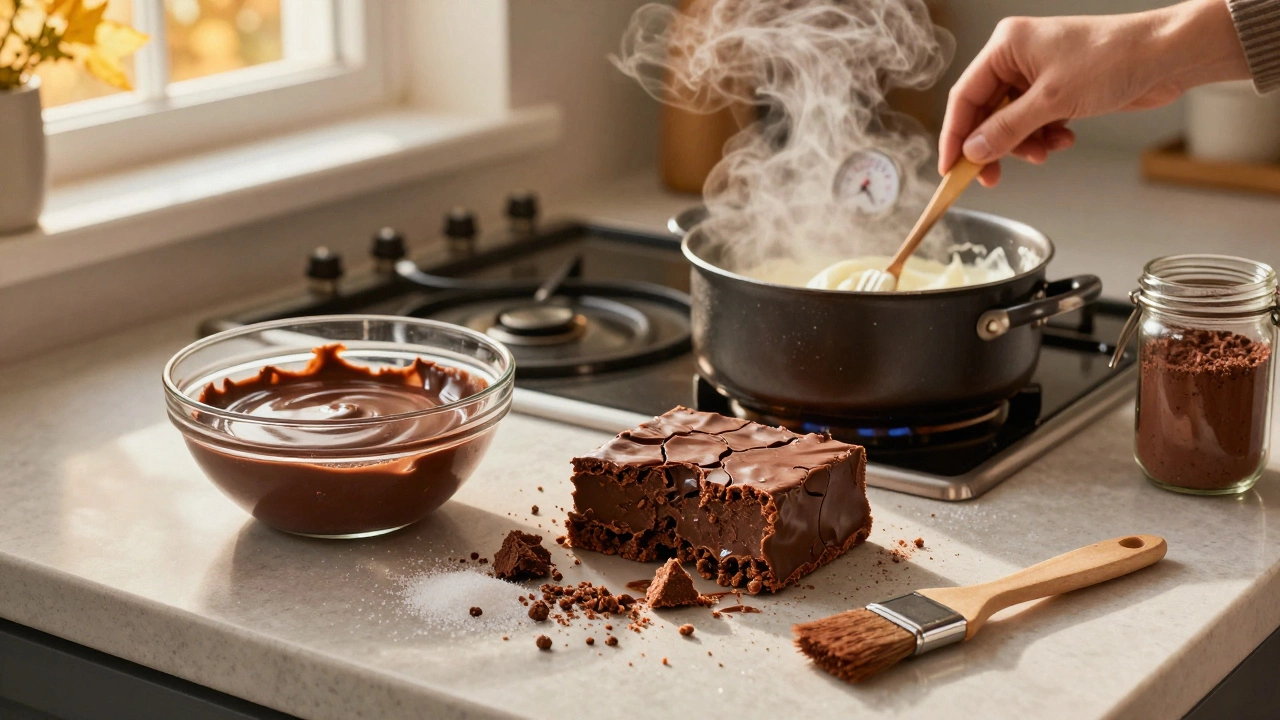
You spent an hour melting chocolate, stirring in sugar and butter, waiting for the perfect temperature, only to pull your fudge out of the fridge and find it’s either a sticky mess or a rock-hard brick. Sound familiar? You’re not alone. Fudge is notoriously finicky - one degree off, one minute too long on the stove, and your batch can go sideways. But before you toss it, know this: failed fudge doesn’t mean wasted. Most fudge disasters can be rescued with simple, no-fail tricks.
Why Fudge Fails (And Why It’s Not Your Fault)
Fudge doesn’t fail because you’re bad at baking. It fails because it’s a sugar science experiment. Sugar syrup needs to hit exactly 234-238°F (112-114°C) - the soft-ball stage - to form the right crystal structure when cooled. Too low? It stays soft and gooey. Too high? It turns grainy or brittle. Humidity, altitude, even the type of pan you use can throw it off. That’s why even experienced bakers have fudge fails.
Here’s what you’re probably dealing with:
- Too soft or runny: Didn’t reach the right temperature, or cooled too fast.
- Too hard or crumbly: Overcooked, or stirred too much after removing from heat.
- Grainy texture: Sugar crystals formed during cooling because of agitation or impurities.
- Separated or oily: Chocolate seized or butter broke down.
Now, here’s how to fix each one.
1. If Your Fudge Is Too Soft or Runny
This is the most common issue. You poured it into the pan, waited, and now it’s more like chocolate syrup. Don’t panic.
Put it back in a saucepan over low heat. Add 1/2 cup of heavy cream or whole milk. Stir gently until fully melted and smooth. Bring it back to a gentle boil, then cook to 238°F (114°C) - use a candy thermometer. Pour it back into a greased pan and let it cool undisturbed. This resets the sugar crystals.
Pro tip: If you don’t have a thermometer, drop a small spoonful into ice water. If it forms a soft, pliable ball that flattens when removed, you’re good.
2. If Your Fudge Is Too Hard or Crumbly
Overcooking is the usual culprit. The sugar syrup boiled too long, so the water evaporated too much, leaving behind dense, brittle crystals.
Break the fudge into chunks and melt it in a double boiler with 1/4 cup of heavy cream or milk. Stir until smooth. Pour into a new pan and let it set again. You can even add a pinch of salt or a splash of vanilla to refresh the flavor.
This version won’t be as smooth as original fudge, but it’ll be delicious as a topping for ice cream, pancakes, or even stirred into hot cocoa.
3. If Your Fudge Is Grainy
Graininess happens when sugar crystals grow too large - usually from stirring while cooling or from undissolved sugar at the start.
Rescue it the same way as hard fudge: melt with 1/4 cup cream or milk over low heat. Once smooth, let it cool without stirring. Pour into a pan lined with parchment. When set, cut into squares. The texture will be softer and more fudgy than the original, but the flavor? Still rich and chocolatey.
Next time, avoid stirring after the mixture reaches boiling point. And make sure your sugar dissolves completely before bringing it to a boil - scrape the sides of the pan with a wet pastry brush to wash down any sugar crystals.
4. If Your Fudge Separated or Looked Oily
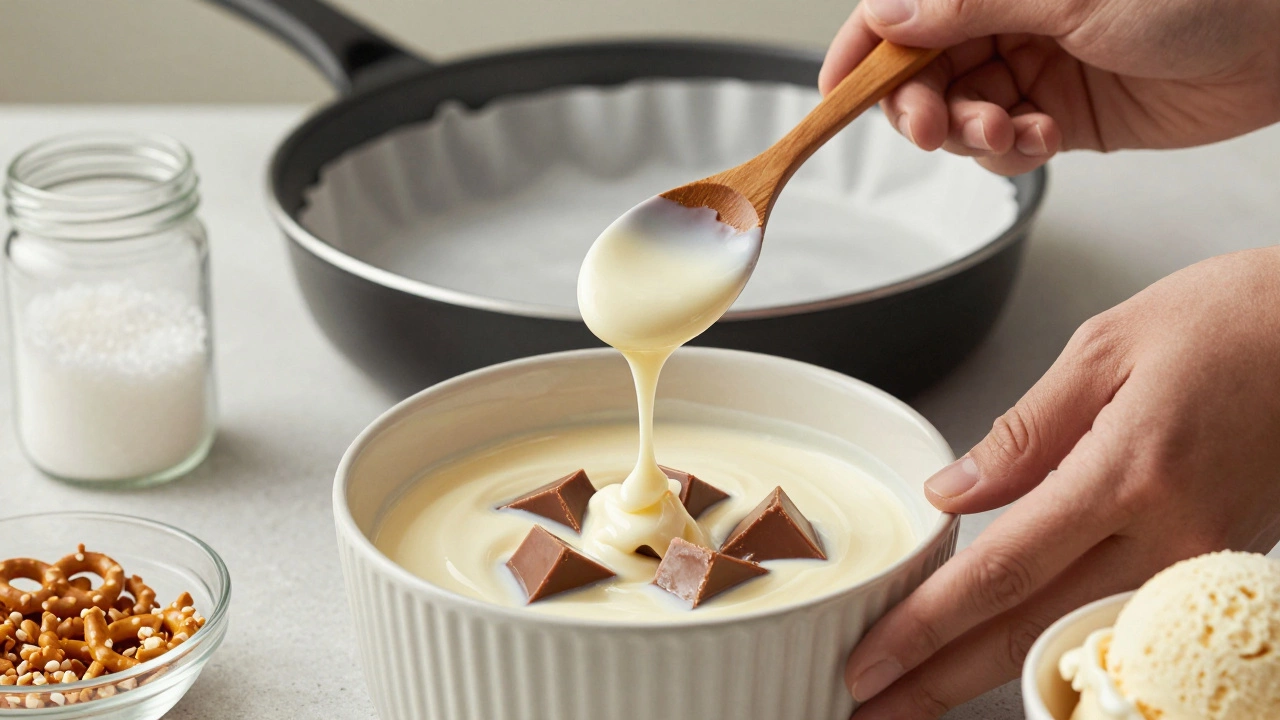
This usually happens when chocolate overheats or gets water in it. The cocoa butter separates, leaving a greasy film on top.
Here’s the fix: Add 1 tablespoon of vegetable oil or coconut oil and stir slowly over low heat. The fat helps re-emulsify the mixture. If it’s still not smooth, add a splash of hot water - just 1 teaspoon at a time - and keep stirring. The water helps dissolve sugar crystals and brings the chocolate back together.
Once smooth, pour into a pan and chill. You’ll end up with a looser texture, but it’ll still taste amazing as a sauce.
5. Turn It Into Chocolate Sauce
No matter what went wrong, if your fudge melted into a liquid, don’t waste it. Heat it gently with 1/4 cup cream, then pour over ice cream, waffles, or brownies. Add a pinch of sea salt or a dash of espresso powder to deepen the flavor. It’s richer than store-bought sauce and costs next to nothing.
Store it in a jar in the fridge for up to two weeks. Reheat gently in the microwave in 15-second bursts.
6. Use It as a Filling or Layer
Failed fudge still has flavor. Crumble it into layers of a trifle, swirl it into cheesecake batter, or press it into the bottom of a no-bake pie crust as a chocolate base. Mix it into cookie dough before baking - it’ll melt and create gooey pockets. Fold it into whipped cream for a quick chocolate mousse.
One baker in Vermont uses ruined fudge to make chocolate-stuffed pretzels: she melts it, dips pretzel rods, and sprinkles with sea salt. It’s a hit at farmers’ markets.

7. Make Chocolate Bark
Break your failed fudge into pieces. Melt it gently with 1/2 cup of chopped chocolate (dark, milk, or white). Stir until smooth. Pour onto a parchment-lined baking sheet. Add toppings: crushed nuts, dried fruit, pretzel bits, or mini marshmallows. Chill until firm, then break into shards.
This version is messier than traditional bark, but it’s more flavorful. And since you’re melting it with extra chocolate, the texture becomes smooth and glossy - exactly what bark should be.
How to Prevent Fudge Failures Next Time
Here’s what actually works:
- Use a heavy-bottomed saucepan. Thin pans heat unevenly and cause hot spots.
- Don’t stir after boiling. Stirring introduces crystals. Let it sit undisturbed until it cools to 110°F.
- Use a candy thermometer. Guessing the temperature is the #1 reason fudge fails.
- Wipe down the sides of the pan with a wet brush before boiling to dissolve sugar crystals.
- Work in a dry kitchen. Humidity makes sugar absorb moisture and stay soft.
- Let it cool at room temperature, not in the fridge. Rapid cooling causes graininess.
And if you still mess up? That’s okay. Even professional chocolatiers have bad batches. The difference? They know how to turn failure into something new.
What Not to Do
Don’t:
- Try to reheat fudge in the microwave without adding liquid - it’ll seize or burn.
- Add butter or cream to hard fudge and then try to re-chill it without melting first.
- Scrape the bottom of the pan when stirring - that’s where burnt bits hide.
- Use low-fat milk or substitutes. They don’t have enough fat to create the right texture.
These shortcuts might seem like time-savers, but they’ll make your fudge worse.
Final Thought: Fudge Is Supposed to Be Imperfect
Real fudge isn’t about perfection. It’s about rich, slow-dissolving chocolate, a hint of salt, and the joy of sharing something homemade - even if it didn’t turn out the way you planned. The best fudge I ever ate came from a batch that split, melted, and turned into a sauce. We poured it over vanilla ice cream and called it ‘Chocolate Storm.’ It was messy. It was delicious. And no one cared about the texture.
So next time your fudge fails, don’t toss it. Tweak it. Transform it. Turn it into something even better.
Can I fix fudge that didn’t set after 24 hours?
Yes. Scrape the fudge into a saucepan, add 1/2 cup heavy cream, and reheat to 238°F (114°C). Pour into a new pan and let it cool undisturbed. This resets the sugar crystals and usually fixes the texture.
Why does fudge get grainy?
Graininess happens when sugar crystals form too large during cooling. This occurs if you stir the mixture after it’s boiled, or if sugar didn’t fully dissolve before heating. Always wipe the sides of the pan with a wet brush before boiling, and avoid stirring once it reaches a boil.
Can I use milk instead of cream to rescue fudge?
Yes, but cream works better. Whole milk can work in a pinch, but it has less fat, so the texture might be slightly softer or less rich. For best results, use heavy cream or half-and-half.
Is it safe to eat fudge that separated?
Absolutely. Separated fudge is safe to eat - it just looks unappetizing. The issue is texture, not spoilage. Adding a bit of oil or hot water and reheating gently will fix the appearance and restore the flavor.
How long does rescued fudge last?
Rescued fudge stored in an airtight container at room temperature lasts about 1-2 weeks. If refrigerated, it can last up to 3 weeks. For longer storage, freeze it in layers with parchment paper - it keeps for 3 months.