If you’re baking gluten-free cakes and wondering whether quinoa is safe to use, you’re not alone. Many people assume grains are off-limits on a gluten-free diet-but quinoa breaks the mold. It’s not a grain at all. It’s a seed. And yes, quinoa is naturally gluten-free.
Quinoa isn’t a grain. That’s why it’s safe.
Quinoa looks like a grain. It cooks like a grain. But botanically, it’s a pseudo-cereal, more closely related to spinach and beets than to wheat, barley, or rye. That’s the key. Gluten is a protein found only in certain grasses-wheat, barley, rye, and their crossbred hybrids. Quinoa doesn’t come from any of those plants. So, it doesn’t contain gluten.
People with celiac disease or non-celiac gluten sensitivity can eat quinoa without triggering an immune reaction-*as long as it’s pure*. That’s the catch.
Purity matters: Cross-contamination is the real risk
While quinoa itself is gluten-free, most of it is grown, harvested, and processed alongside gluten-containing grains. Think about it: a farm might rotate wheat and quinoa in the same field. A mill might use the same equipment for oats, barley, and quinoa. That’s how gluten sneaks in.
A 2018 study by the Celiac Disease Foundation tested 18 brands of quinoa sold in the U.S. and Canada. Six of them contained gluten levels above 20 parts per million-the international safety threshold for gluten-free labeling. That’s not a lot. But for someone with celiac disease, even 10 milligrams of gluten can cause damage.
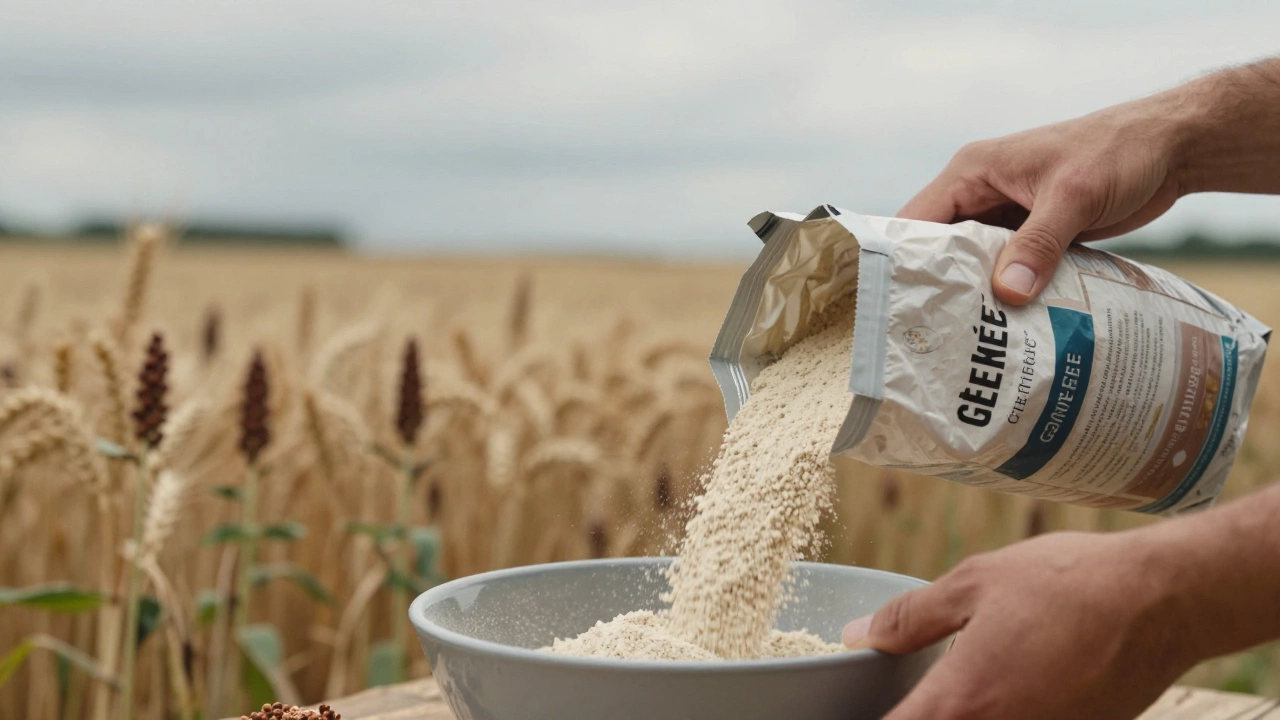
So, when you buy quinoa for gluten-free cakes, always look for a certified gluten-free label. That means the product was tested and processed in a dedicated facility. Brands like Bob’s Red Mill, Ancient Harvest, and Quinoa Corporation all offer certified options. Don’t just rely on the word “natural” on the package. That means nothing.
Why quinoa is perfect for gluten-free cakes
Quinoa isn’t just safe-it’s a game-changer for gluten-free baking. Most gluten-free flours are made from rice, potato, or tapioca. They’re bland, gritty, or gummy. Quinoa flour, on the other hand, has a nutty flavor and high protein content-around 14 grams per cup. That helps baked goods hold their shape and stay moist.
It’s also packed with fiber, iron, magnesium, and all nine essential amino acids. That’s rare for a plant-based food. No other gluten-free flour gives you this kind of nutrition in one scoop.
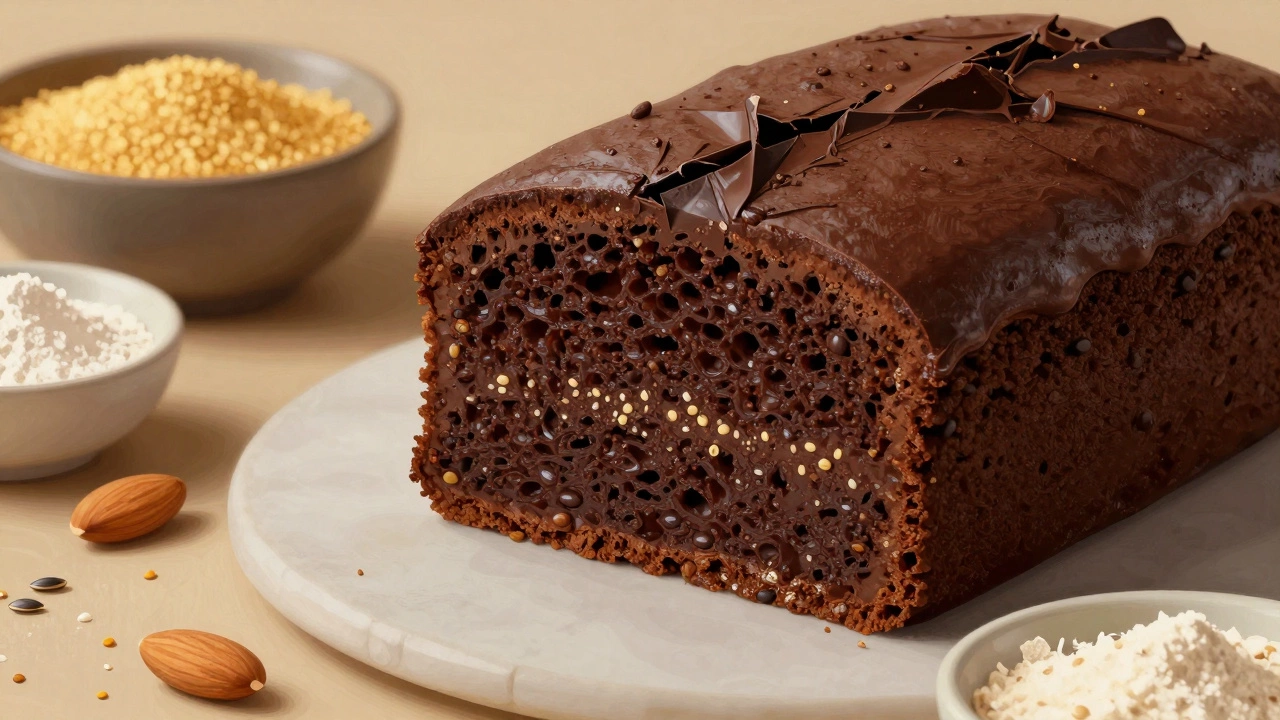
When you swap out half the flour in your cake recipe for quinoa flour, you get a richer texture and deeper flavor. Try it in chocolate cakes. The earthiness of quinoa balances the sweetness perfectly. One Melbourne bakery, The Gluten-Free Pantry, switched to quinoa flour in their chocolate layer cake in 2023. Sales jumped 40% in six months. Customers said it tasted “like real cake,” not a substitute.
How to use quinoa flour in cakes
Quinoa flour doesn’t behave exactly like wheat flour. It’s denser and absorbs more liquid. You can’t just swap it 1:1 and expect the same result.
- Start with a 25% substitution. Replace one-quarter of your gluten-free flour blend with quinoa flour.
- Add an extra tablespoon of liquid per cup of quinoa flour. It needs moisture to soften.
- Pair it with lighter flours like almond or sorghum to balance the density.
- Don’t overmix. Quinoa flour can turn gummy if you stir too long.
- Bake at the same temperature as your original recipe, but check 5-10 minutes earlier. It can brown faster.
For a simple quinoa flour cake, try this: 1 cup gluten-free flour blend, ¼ cup quinoa flour, 1 tsp baking powder, ½ cup coconut oil, ¾ cup maple syrup, 2 eggs (or flax eggs for vegan), 1 tsp vanilla. Bake at 175°C for 25-30 minutes. Let it cool completely before slicing-it firms up as it sits.
Quinoa vs. other gluten-free flours
Not all gluten-free flours are created equal. Here’s how quinoa stacks up:
| Flour | Protein (per 100g) | Texture | Flavor | Best for |
|---|---|---|---|---|
| Quinoa flour | 14g | Dense, moist | Nutty, earthy | Chocolate cakes, muffins, brownies |
| Rice flour | 7g | Grainy, dry | Neutral | Light cakes, cookies |
| Almond flour | 21g | Soft, crumbly | Buttery, sweet | Macarons, flourless cakes |
| Sorghum flour | 10g | Smooth, light | Mild, slightly sweet | Loaf cakes, bread |
| Tapioca flour | 0g | Chewy, sticky | None | Binding agent, crusts |
Quinoa flour wins on nutrition and flavor depth. But it’s not the best solo option. Use it as part of a blend. Combine it with sorghum and tapioca for a balanced structure. Add almond flour for richness. That’s the secret most professional gluten-free bakers use.
What about quinoa flakes or cooked quinoa in cakes?
You can also use cooked quinoa in cakes-especially in muffins or dense loaves. It adds texture, moisture, and a subtle crunch. One popular recipe in Melbourne uses ½ cup cooked, cooled quinoa folded into a banana cake batter. It’s not the main flour, but it boosts fiber and makes the cake feel more substantial.
Quinoa flakes (like rolled oats) work well as a topping or mixed into crumbles. They soften during baking and add a chewy layer without gluten.
Common mistakes to avoid
- Buying quinoa labeled only as “gluten-free” without certification. Always check for the crossed grain symbol.
- Using quinoa flour straight from the bag without sifting. It clumps easily.
- Assuming all quinoa products are equal. Quinoa pasta? Quinoa cereal? They’re often processed with wheat or barley. Read labels.
- Skipping the rest time. Quinoa flour benefits from a 15-20 minute rest after mixing. Letting the batter sit helps the flour hydrate fully.
Final verdict: Yes, quinoa is gluten-free. But only if you choose wisely.
Quinoa is one of the best gluten-free ingredients you can use for cakes. It’s nutritious, flavorful, and versatile. But you have to be smart about sourcing it. Certified gluten-free quinoa flour is your best bet. Skip the bulk bins. Avoid unbranded imports. Stick to trusted brands that test their products.
Once you find the right one, you’ll notice the difference. Your cakes will taste better. They’ll hold together better. And you won’t have to sacrifice nutrition for safety.
Is quinoa naturally gluten-free?
Yes, quinoa is naturally gluten-free because it’s not a cereal grain-it’s a seed. It doesn’t contain the proteins found in wheat, barley, or rye that cause gluten reactions.
Can people with celiac disease eat quinoa?
Yes, but only if it’s certified gluten-free. Cross-contamination during farming or processing can introduce gluten. Always choose products labeled and tested to contain less than 20 ppm of gluten.
Can I substitute quinoa flour for regular flour in cakes?
Not 1:1. Quinoa flour is denser and absorbs more liquid. Start by replacing 25% of your flour blend with quinoa flour, and add extra liquid. Combine it with lighter flours like almond or sorghum for the best texture.
Does quinoa flour taste bitter?
Raw quinoa flour can have a slightly bitter or earthy taste. That’s why it’s best used in combination with other flours or in recipes with strong flavors like chocolate, cinnamon, or molasses. Rinsing uncooked quinoa before grinding can also reduce bitterness.
Is quinoa flour better than rice flour for gluten-free cakes?
Yes, in most cases. Quinoa flour has more protein and fiber, gives better structure, and adds a richer flavor. Rice flour is often bland and gritty. Quinoa flour improves both nutrition and taste in gluten-free baking.
Where can I buy certified gluten-free quinoa flour?
Look for brands like Bob’s Red Mill, Ancient Harvest, or Quinoa Corporation in health food stores or major supermarkets. Always check for the certified gluten-free logo on the package. Online retailers like iHerb or Amazon also carry reliable options.