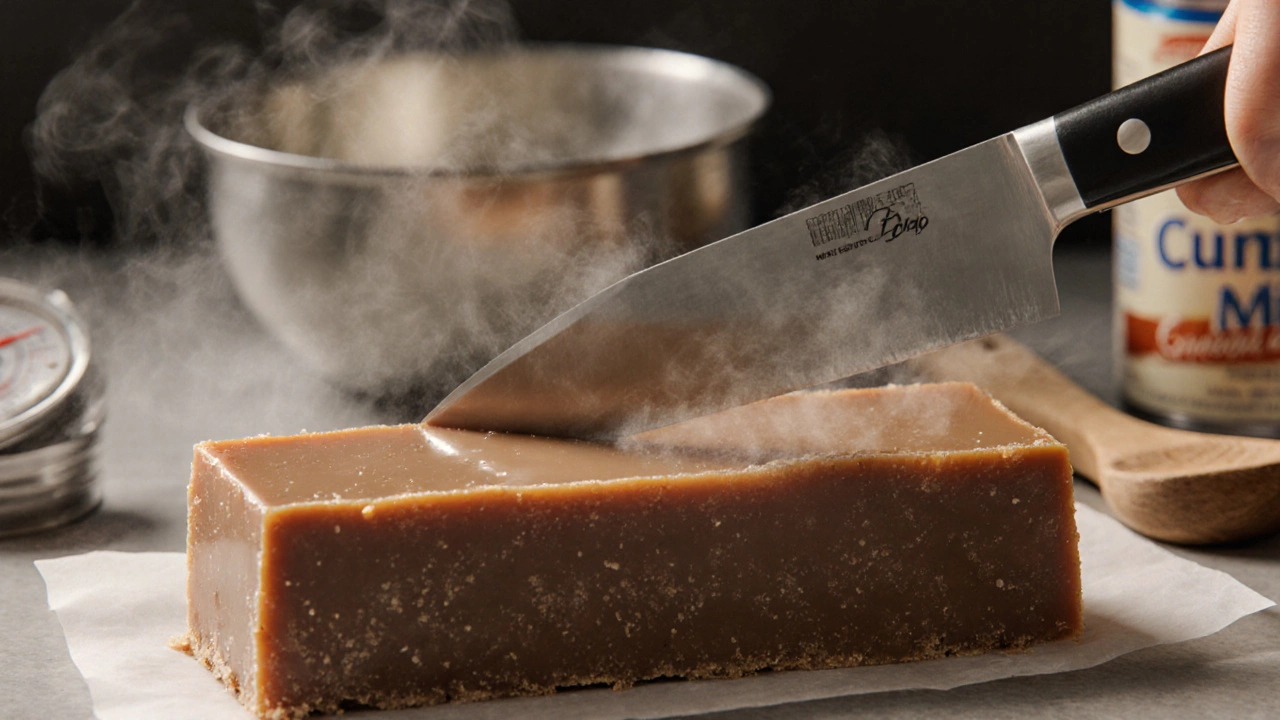
Best Milk for Fudge: What Works, What Doesn't, and Why It Matters
When you're making fudge, a dense, creamy candy made by boiling sugar, butter, and milk to a precise temperature. Also known as soft candy, it's not just about sugar and chocolate — the milk you choose makes or breaks the final texture. Many people assume any milk will do, but that’s where things go wrong. Skim milk? Too thin. Almond milk? Too watery. The right milk isn’t just an ingredient — it’s the backbone of your fudge’s creaminess and ability to set properly.
The science is simple: fudge needs enough fat and solids to bind with sugar crystals. Whole milk, with its 3.5% fat content, gives you the perfect balance. It carries flavor, slows down sugar crystallization, and adds body without making the fudge greasy. Evaporated milk? Even better. It’s concentrated, with less water and more milk solids, which means faster thickening and a richer mouthfeel. That’s why most professional recipes call for it. Condensed milk? Too sweet — it’ll turn your fudge into a sticky mess unless you adjust the sugar. And don’t even think about plant-based milks unless you’re okay with a grainy, soft result. They lack the proteins and fats needed to stabilize the candy structure.
Temperature matters too. Milk that’s too cold when added to hot sugar can shock the mixture and cause graininess. Warm it gently before mixing. Stirring too much after adding the milk? That’s another common mistake — it encourages sugar crystals to form unevenly. Gentle stirring only, then let it set undisturbed. The candy thermometer, a tool used to measure sugar syrup temperatures for perfect candy texture is your best friend here. Fudge needs to hit the soft-ball stage — 234–240°F — and the milk you use affects how quickly and evenly it gets there.
People often blame their fudge for not hardening when the real issue is the milk. If your fudge stays soft, it’s not your recipe — it’s the liquid. Use whole milk or evaporated milk, avoid substitutes unless you’ve tested them, and measure precisely. You don’t need fancy ingredients, just the right ones. And if you’ve ever wondered why store-bought fudge tastes different from homemade? It’s not just the chocolate. It’s the milk.
Below, you’ll find real fixes from bakers who’ve been there — why their fudge didn’t set, what they changed, and how they got that perfect, melt-in-your-mouth texture every time. No guesswork. Just clear, tested advice.
Why Use Evaporated Milk in Fudge? The Science Behind the Creaminess
Evaporated milk improves fudge texture by reducing water content, controlling sugar crystallization, and delivering a smooth, creamy finish. Learn why it's essential in professional fudge recipes.
Read More