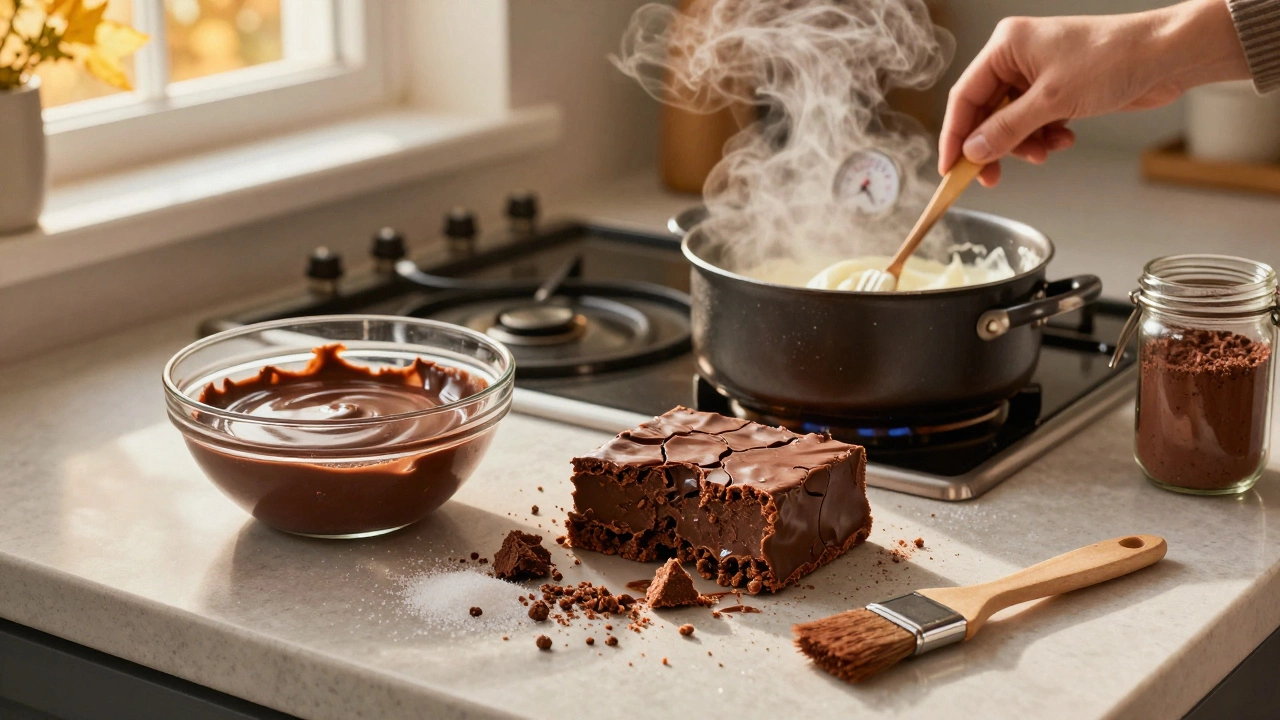
What to Do With Failed Fudge: 7 Easy Ways to Save Your Batch
Don’t throw away failed fudge. Learn 7 easy ways to rescue soft, hard, grainy, or oily fudge and turn it into chocolate sauce, bark, or dessert toppings.
Read MoreWhen you make fudge, a dense, creamy candy made from sugar, butter, and milk or cream. It’s not just a recipe—it’s a precise chemical process. One wrong step, and instead of smooth, melt-in-your-mouth fudge, you get a grainy, greasy mess. That’s not your fault. It’s the sugar crystals. When they grow too big, they ruin the texture. And that’s the #1 reason failed fudge happens.
Fudge making relies on controlling sugar crystallization. Too much stirring? You’re feeding those crystals. Wrong temperature? The syrup won’t set right. Use the wrong chocolate or skip evaporated milk? You’ll end up with oily, flat fudge. These aren’t random mistakes—they’re predictable failures tied to the science of candy making. The same thing happens whether you’re using a stovetop or a microwave. evaporated milk, a concentrated milk product with less water helps because it reduces moisture, letting sugar form tiny crystals instead of big, gritty ones. And temperature, the key variable in candy making—you need to hit the soft-ball stage (234–240°F), or your fudge won’t hold its shape.
It’s not about being a better baker. It’s about understanding the rules. You don’t need fancy tools. Just a candy thermometer, patience, and a quiet hand. No stirring after it boils. No rushing the cooling. No swapping ingredients unless you know why they matter. The posts below show you exactly what goes wrong—and how to fix it. You’ll see real examples: why chocolate type changes everything, why some recipes fail even when followed exactly, and how to rescue a batch that’s already gone wrong. No fluff. Just clear fixes for the most common failed fudge problems.
Don’t throw away failed fudge. Learn 7 easy ways to rescue soft, hard, grainy, or oily fudge and turn it into chocolate sauce, bark, or dessert toppings.
Read More