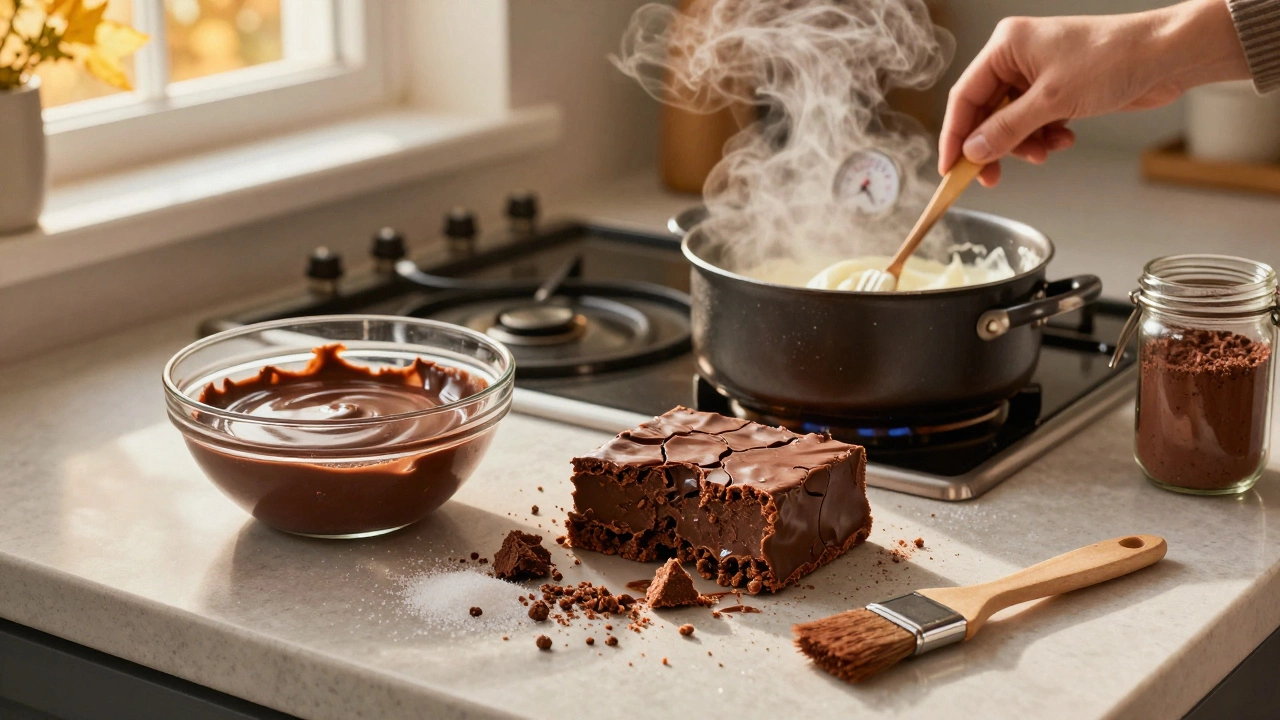
What to Do With Failed Fudge: 7 Easy Ways to Save Your Batch
Don’t throw away failed fudge. Learn 7 easy ways to rescue soft, hard, grainy, or oily fudge and turn it into chocolate sauce, bark, or dessert toppings.
Read MoreWhen you're making fudge, a dense, creamy candy made from sugar, butter, and milk or cream. Also known as soft candy, it's not just a recipe—it's a temperature-sensitive science experiment. One degree too hot, one stir too many, and your batch turns grainy, greasy, or too hard. But here’s the truth: most fudge fails aren’t your fault. They’re caused by misunderstood steps, wrong ingredients, or skipping the cooling phase. The good news? Almost every failed fudge can be saved.
What makes fudge tricky is the sugar syrup. It needs to hit exactly 234–240°F (112–116°C) to form the right crystal structure. Too low? It stays sticky. Too high? It turns brittle. And stirring while it’s hot? That’s the #1 mistake. You’re not mixing—you’re triggering sugar crystals to form everywhere, which ruins the smooth texture. That’s why recipes tell you to leave it alone until it cools. Even the type of milk matters. evaporated milk, a concentrated, shelf-stable milk with less water. Also known as concentrated milk, it’s used in professional fudge because it reduces the chance of graininess and boosts creaminess. If you used regular milk, that’s probably why your fudge didn’t set right. And don’t forget the chocolate. Cheap chocolate chips have stabilizers that prevent smooth melting. Real chocolate bars? They melt evenly and give you that glossy, melt-in-your-mouth finish.
But what if you already messed up? Don’t toss it. If your fudge is too soft, reheat it with a splash of cream, bring it back to 234°F, then cool again without stirring. If it’s grainy, melt it down with a little milk, stir gently until smooth, then let it cool slowly. And if you forgot to grease the pan? No problem—line it next time with parchment. You’ll avoid the whole scrape-and-pull nightmare. fudge storage, how you keep your fudge after it’s made. Also known as fudge preservation, it’s just as important as making it. Refrigeration isn’t always the answer—it can dry out fudge or pull out moisture, making it crumbly. Room temperature in an airtight container with wax paper between layers? That’s the sweet spot. Keep it cool, dry, and away from strong smells.
Below, you’ll find real fixes from bakers who’ve been there. From why evaporated milk makes the difference, to how to rescue a batch that turned to rock, to the one step most people skip when cooling fudge. No fluff. No guesswork. Just the exact steps that turn failed fudge into perfect, rich, creamy bites.
Don’t throw away failed fudge. Learn 7 easy ways to rescue soft, hard, grainy, or oily fudge and turn it into chocolate sauce, bark, or dessert toppings.
Read More