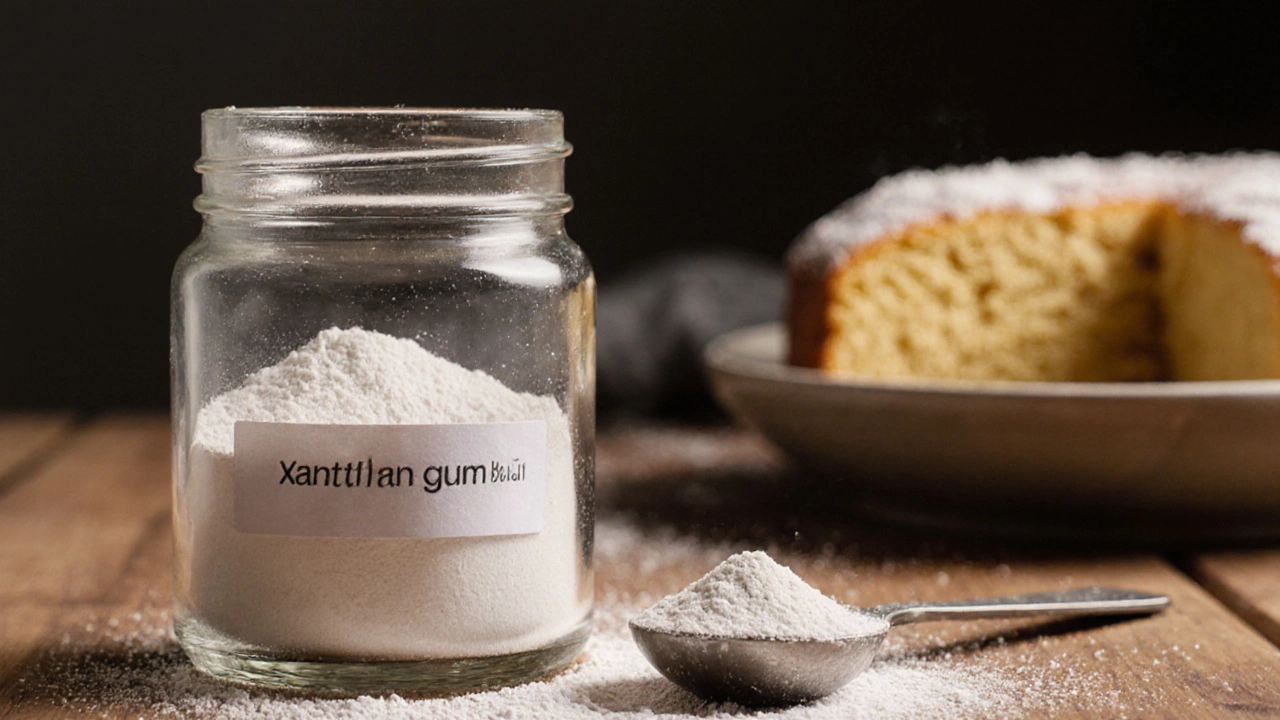
Is Xanthan Gum Gluten-Free? A Clear Answer for Bakers
Xanthan gum is naturally gluten-free and safe for baking gluten-free cakes, but cross-contamination can be a risk. Learn how to choose safe brands and alternatives if you're sensitive.
Read MoreWhen you bake gluten-free, xanthan gum, a thickening agent made by fermenting sugar with bacteria, commonly used to replace gluten in baked goods. Also known as E415, it helps bind ingredients and gives structure to cakes and breads that would otherwise crumble. It’s in almost every gluten-free flour blend you buy, but questions keep popping up: Is it safe? Does it cause digestive issues? Is it even necessary?
For most people, xanthan gum is perfectly safe. The FDA and European Food Safety Authority both approve it for use in food. Studies show you’d need to eat over 15 grams in one sitting to feel any side effects—way more than what’s in a single cake recipe. But if you have IBS, SIBO, or a sensitive gut, even small amounts might cause bloating or gas. That’s because it’s a soluble fiber that ferments in the colon. Not everyone reacts the same. If your stomach gets upset after eating gluten-free baked goods, xanthan gum could be the quiet culprit.
And here’s the thing—it’s not the only option. guar gum is a close cousin, often used as a substitute. It’s milder on the gut but doesn’t hold up as well in recipes with lots of liquid. Then there’s psyllium husk, which adds fiber and structure, and works great in breads. But none of these work exactly like xanthan gum. That’s why most recipes call for it: it’s reliable. It doesn’t need heat to activate. It thickens cold and hot. It keeps your cake moist and stops it from falling apart.
Some people avoid it because it’s made from corn, soy, or wheat sugar—depending on the source. If you’re allergic to those, check the label. Most brands use non-GMO and allergen-free sources, but not all. And while it’s not a gluten-containing ingredient, cross-contamination during manufacturing can happen. That’s why gluten-free bakers who are sensitive to even trace gluten look for certified products.
So is xanthan gum dangerous? No. Is it essential? For most gluten-free cakes, yes. But you don’t have to use it blindly. If you’re baking regularly, try swapping it out. Use half xanthan gum and half psyllium. Reduce the amount by 25%. Bake the same recipe three times and see how your body responds. Your cake might still turn out fine—and your gut might thank you.
Below, you’ll find real baking stories from people who’ve struggled with gluten-free cakes, learned what happens when they skip xanthan gum, and found workarounds that actually work. Whether you’re avoiding it for health reasons or just curious why your cake fell, these posts give you the facts—not the fluff.
Xanthan gum is naturally gluten-free and safe for baking gluten-free cakes, but cross-contamination can be a risk. Learn how to choose safe brands and alternatives if you're sensitive.
Read More