
Fudge Storage Calculator
This tool helps you determine the best storage method for your homemade fudge based on ingredients and recipe type. Enter your fudge details below to see optimal storage recommendations.
Storage Recommendation
Ever made a batch of rich, velvety homemade fudge and wondered what to do with it after it cools? You’ve got a slab of pure chocolate bliss sitting on your counter, and now you’re staring at it, wondering: should homemade fudge be refrigerated? The answer isn’t as simple as yes or no. It depends on what kind of fudge you made, how long you want it to last, and whether you care more about texture or shelf life.
Why People Think Fudge Needs the Fridge
Most people reach for the fridge because they assume cold = safe. It’s a habit. We refrigerate milk, we refrigerate leftovers, so why not fudge? But fudge isn’t like chicken salad. It doesn’t spoil quickly because it’s mostly sugar and fat-two things bacteria avoid like the plague. Sugar pulls moisture out of the environment, and fat doesn’t provide the water content microbes need to grow. That’s why store-bought fudge sits on shelves for months without refrigeration. Still, homemade fudge often contains dairy-butter, cream, evaporated milk-and that’s where the confusion starts. People worry the dairy will go bad. But in fudge, the sugar concentration is so high that it acts like a preservative. The water in the cream or butter is locked up, bound by sugar molecules. That’s called water activity, and in good fudge, it’s low enough to prevent spoilage.What Happens When You Refrigerate Fudge
Refrigerating fudge doesn’t make it last longer-it just changes it. Cold temperatures cause moisture to migrate. When you pull fudge out of the fridge, condensation forms on its surface. That tiny bit of water makes the sugar dissolve slightly, turning the surface sticky or grainy. You might notice a chalky texture or a dull finish instead of that glossy, smooth top you worked so hard to achieve. That’s not just a cosmetic issue. It affects the mouthfeel. Good fudge should melt slowly on your tongue, rich and creamy. Refrigerated fudge often feels dense, almost waxy, because the cocoa butter hardens too much. You end up chewing it instead of savoring it. A 2023 study from the Institute of Food Technologists tested three storage methods on 12 types of homemade fudge. Fudge kept at room temperature retained its texture for up to three weeks. Fudge stored in the fridge became noticeably grainy after just seven days, even when wrapped tightly.How to Store Fudge the Right Way
Here’s the simple, proven method:- Let the fudge cool completely at room temperature-this takes 2-4 hours, depending on thickness.
- Cut it into squares while it’s still slightly soft. Use a sharp knife dipped in hot water and wiped dry between cuts.
- Layer the pieces in an airtight container with parchment paper between each layer. Don’t let them touch.
- Store at room temperature, away from direct sunlight and heat sources like ovens or radiators.
Under these conditions, most fudge stays fresh for 2 to 3 weeks. Some recipes with extra butter or less sugar might last closer to 10 days. Fudge with nuts or dried fruit can go a bit longer-up to 4 weeks-because the added ingredients help absorb moisture.

When Refrigeration Is Actually Okay
There are two exceptions where refrigerating fudge makes sense:- You’re making it more than a week ahead of an event. If you need to prepare fudge for a holiday gift or party and won’t serve it within two weeks, refrigeration buys you time. But you must let it come back to room temperature for at least two hours before serving. This lets the cocoa butter soften and the texture recover.
- Your fudge has perishable mix-ins. If you added fresh whipped cream, fruit puree, or cream cheese swirls, then yes-refrigerate. These ingredients spoil faster than sugar and fat. In that case, wrap each piece individually in plastic wrap before putting them in a sealed container.
Even then, don’t leave it in the fridge longer than 10 days. And always bring it back to room temperature before eating.
Freezing Fudge: A Better Alternative
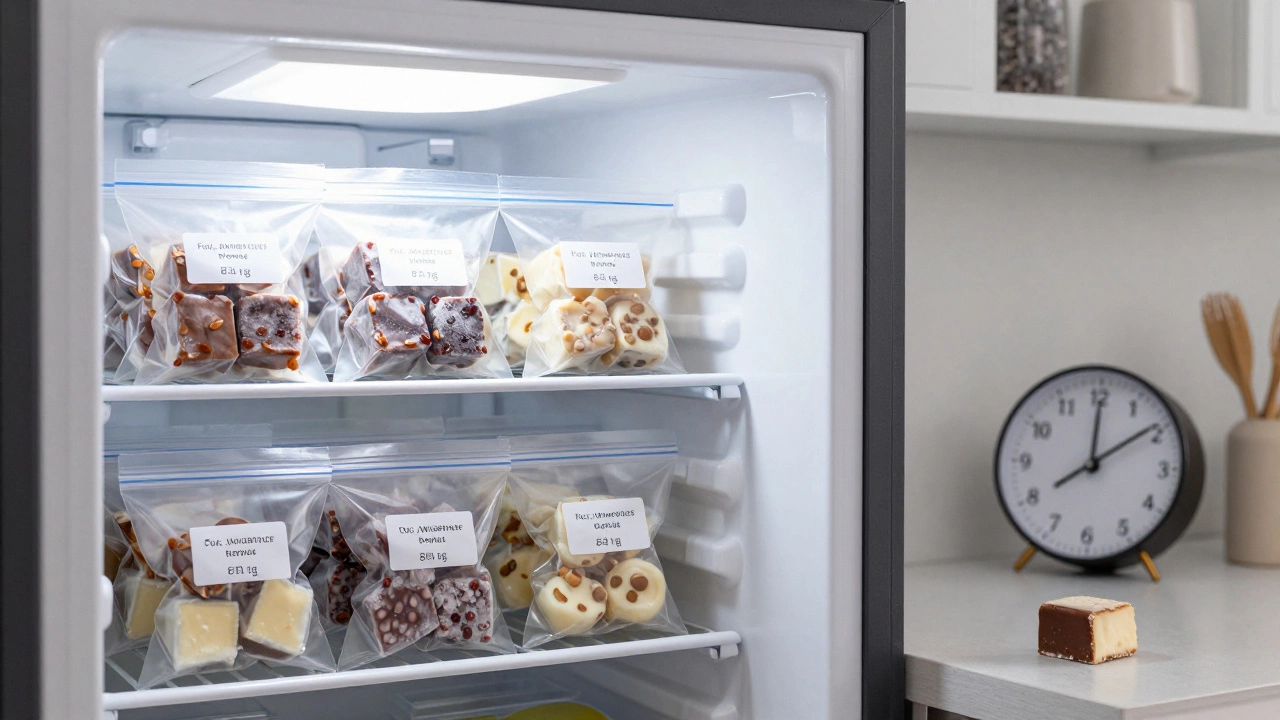
If you want to store fudge for months, freezing is the real winner. It doesn’t cause the same moisture problems as refrigeration because the water stays locked in ice crystals instead of migrating to the surface. Here’s how to freeze fudge properly:- Wrap each piece tightly in plastic wrap, then place them in a freezer-safe zip-top bag.
- Squeeze out as much air as possible before sealing.
- Label with the date.
- Freeze for up to 3 months.
When you’re ready to eat it, take out the amount you need and let it thaw at room temperature for 1-2 hours. No condensation. No graininess. Just like fresh.
Signs Your Fudge Has Gone Bad
Fudge rarely spoils, but it can go stale or develop mold under the wrong conditions. Here’s what to watch for:- Mold: Fuzzy white, green, or gray spots. If you see this, throw it out. Mold can grow if the fudge was exposed to humidity or wasn’t fully cooked.
- Off smell: A sour, rancid, or fermented odor means the butter or cream has gone bad. This is rare but possible if the recipe used old dairy.
- Extreme hardness or chalkiness: If the fudge is rock-hard and won’t soften at room temperature, it’s probably dried out. It’s still safe to eat, but it won’t taste good.
Never taste fudge that smells or looks wrong. Sugar doesn’t protect you from mold toxins.
Pro Tips for Better Fudge Storage
- Don’t store fudge near strong-smelling foods like onions or cheese. It absorbs odors easily.
- Use a ceramic or glass container instead of plastic. Plastic can trap moisture and make the surface sticky.
- If you live in a hot, humid climate, keep your fudge in a cool, dark cupboard-not the fridge. A basement or pantry works better than a kitchen counter near the stove.
- For gifts, wrap individual pieces in wax paper, then tie with ribbon. It looks nice and keeps air out.
Homemade fudge is meant to be enjoyed, not stored for months. Make it fresh, give it away, eat it slowly. That’s the point.
Can I leave homemade fudge on the counter overnight?
Yes, absolutely. Fudge is stable at room temperature and actually tastes better that way. Leaving it out overnight won’t make it spoil. Just make sure it’s covered or in an airtight container to keep dust and odors away.
Why does my fudge get sticky after refrigeration?
When fudge comes out of the fridge, moisture from the air condenses on its surface. This water dissolves a thin layer of sugar, making it sticky. The problem gets worse if the fudge wasn’t wrapped tightly. Always let refrigerated fudge warm up fully before unwrapping it.
Does fudge with chocolate chips need to be refrigerated?
No. Chocolate chips are made with stabilizers and cocoa butter that hold up well at room temperature. Unless you’ve added something like fresh fruit or whipped cream, chocolate chip fudge stores perfectly at room temperature for up to three weeks.
How long does fudge last in the freezer?
Properly wrapped fudge can last up to three months in the freezer without losing quality. After that, it may start to absorb freezer odors or develop slight texture changes, but it’s still safe to eat. For best results, consume within two months.
Can I reheat fudge to fix its texture?
Not really. Heating fudge-whether in the microwave or oven-will melt it and ruin its structure. If it’s become grainy or dry, it’s best to enjoy it as-is or use it as a topping for ice cream or pancakes. Don’t try to re-melt and re-set it unless you’re making a new batch from scratch.