You know that moment when you bite into perfect Classic Fudgea rich, soft confection known for its dense texture and sweet flavor? It should melt on your tongue without being gritty, yet hold together enough to stay on a fork. But why does some homemade fudge end up like rock candy while others turn out soft and creamy? The difference comes down to one thing: how you manage the invisible architecture of sugar crystals.
The Hidden World of Sugar Crystals
Fudge is essentially a controlled mess of tiny icebergs floating in liquid syrup. To understand why it tastes like fudge, you have to understand sucrose. When you dissolve white sugar in water and heat it, the molecules move around freely. As the mixture cools, they want to reconnect and form a lattice-that is a crystal. If those crystals are large, you get a sandy or gritty texture. If they are microscopic, you get that signature smooth, creamy mouthfeel we crave.
The magic happens during the cooking process. By controlling the formation of these crystals, you manipulate the texture. You don't just want sugar; you want a specific type of sugar structure. Without interference, a single large crystal could ruin the entire batch. This is where other ingredients step in. They act as bodyguards, keeping the crystals small enough to slip past your tongue's detection sensors.
Why Corn Syrup and Acid Matter
You might wonder why almost every reliable fudge recipe includes corn syrup or golden syrup alongside the regular sugar. It isn't just for flavor. These syrups contain glucose and fructose, which don't fit neatly into the sucrose crystal lattice. Imagine trying to park a square car in a round spot-it disrupts the flow.
This disruption is exactly what you want. The glucose molecules get in the way of the sucrose molecules linking up, forcing them to create many smaller crystals instead of fewer large ones. Similarly, adding a bit of vinegar or lemon juice (an acid) breaks some of the sucrose into invert sugars through hydrolysis. This creates more interference agents. Without these non-crystallizing components, your fudge risks seizing up into a hard block that shatters under pressure.
The Critical Role of Dairy and Fat
| Ingredient | Primary Function | Effect if Omitted |
|---|---|---|
| Cream/Whole Milk | Lipids and Proteins interfere with crystal growth | Drier, potentially harder texture |
| Butter | Richness and moisture retention | Lack of glossy sheen, drier bite |
| Sugar (Sucrose) | Structural backbone of the candy | No structure; purely liquid |
| Corn/Glucose Syrup | Precvents large crystal formation | Gritty or grainy texture |
In the table above, notice how dairy isn't just for flavor. While it definitely adds richness, milk proteins and fats coat the forming sugar crystals. Think of them like a lubricant. They prevent the crystals from clumping too tightly. Full-fat cream is crucial here because low-fat alternatives lack the necessary lipid coating. This results in a fudge that feels dry or waxy rather than luscious.
Butter is typically added after the cooking phase is complete. If you cook with the butter, the milk solids can burn, creating a bitter taste that overpowers the sweetness. Adding it off the heat allows the fat to emulsify into the thickened syrup without breaking. This gives the fudge that characteristic glossy shine you see in professional shops.
Mastering the Temperature Window
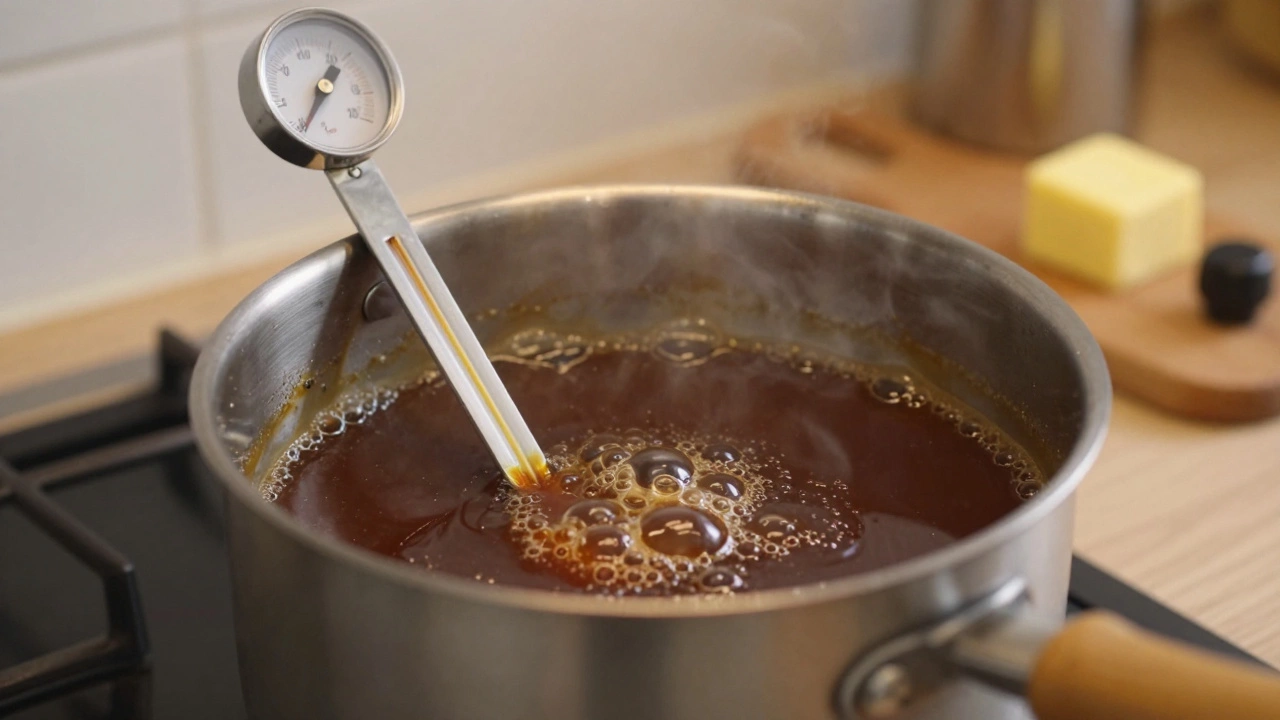
There is a reason why candy thermometers are considered essential tools in fudge making. Temperature dictates the ratio of water to sugar. Water evaporates as the mixture boils, increasing the concentration of sugar. When you hit the "soft-ball stage," specifically around 234-240°F (112-115°C), the sugar solution has reached the right density to set properly once cooled.
If you take it off too early, there is too much water left. The fudge will remain runny or sticky like jam. It won't firm up because the crystal network is too diluted. Conversely, if you cook it too long, you push past the soft-ball stage into firm-ball or hard-crack. That excess evaporation removes so much water that the crystals lock in place immediately. Your result becomes brittle chocolate bark rather than chewy fudge. Precision in timing matters less than precision in temperature.
Altitude plays a role here too. If you are living in the mountains of Victoria or high altitude regions, water boils at lower temperatures. You need to adjust the target temperature slightly lower, otherwise, you accidentally overcook the batch. Always calibrate your thermometer against boiling water before starting to ensure accuracy.
How Cooling and Beating Build Texture
Many people think the heavy lifting is done once the pot hits the stove. However, the cooling period is actually when the structural transformation happens. Once the hot mixture leaves the heat, you need to let it cool undisturbed until it reaches room temperature, usually around 110°F (43°C).
During this cooling phase, the sugar solution supercools, meaning it remains liquid below the normal freezing point until nucleation occurs. Stirring at this stage is risky. If you disturb the surface, you introduce air bubbles and trigger premature crystallization. Wait until the top layer looks dull and the sides start to thicken.
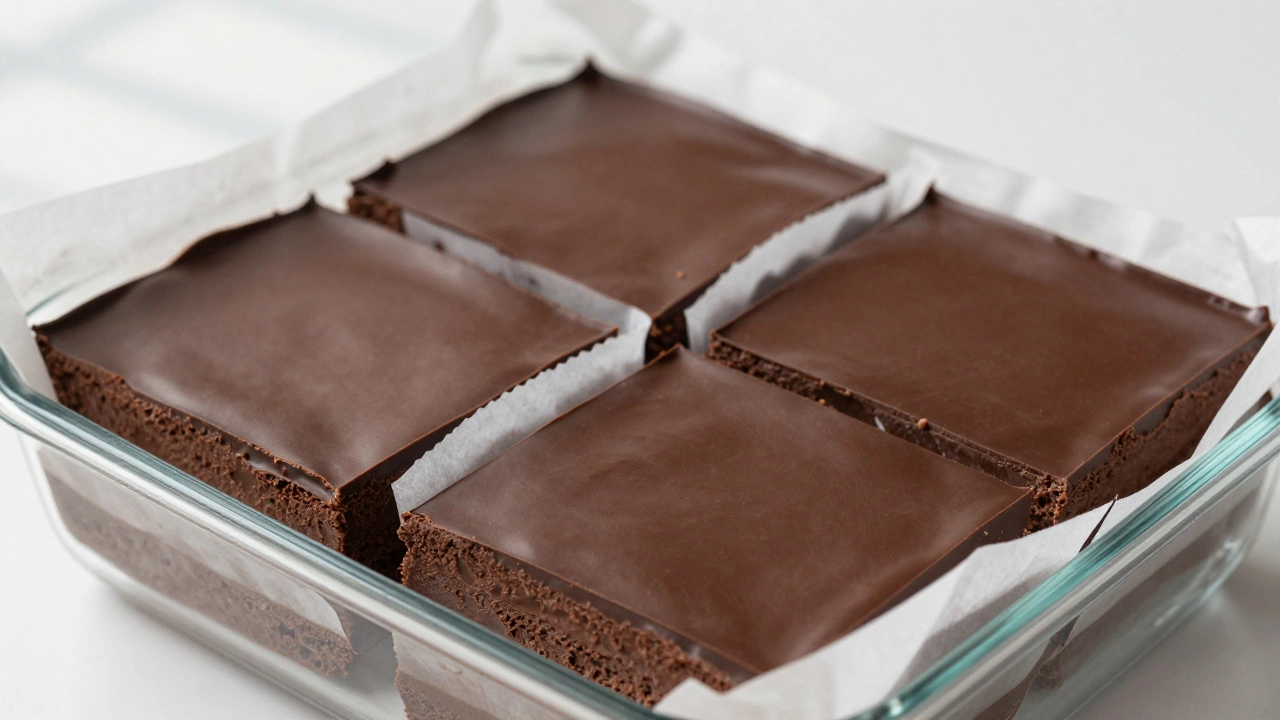
Once the temperature drops enough, the beating begins. This is the most physically demanding part. By whipping the mixture, you force air in and mechanically induce crystal formation. The friction generates heat, which keeps the sugar pliable while the crystals knit together. You keep going until the mixture loses its gloss and takes on a matte finish. This means the crystals have fully formed and locked in place.
Troubleshooting Common Flavors and Textures
Sometimes the texture is right, but the flavor feels "off." Usually, this means vanilla was added at the wrong time. Pure vanilla extract contains alcohol, which can evaporate prematurely if boiled with the sugar. Adding it during the final beating phase ensures the volatile aromatics remain intact.
If your fudge tastes bland despite having lots of sugar, you might be using cheap vanilla or insufficient salt. Salt acts as a flavor enhancer by suppressing bitterness in the cocoa or caramel notes. A pinch of sea salt elevates the overall perception of sweetness without actually making it sweeter.
Another common complaint is the "waxiness" sensation. This often stems from using margarine instead of real butter or substituting condensed milk incorrectly. Margarine has emulsifiers that can behave differently in high-heat environments. Stick to cultured butter with higher milk fat content for the cleanest mouthfeel.
Preserving Quality After Setting
Once your fudge sets in the pan, the work isn't quite finished. Fudge is hygroscopic, meaning it absorbs moisture from the air. If you leave it uncovered on the counter in the kitchen, the surface will eventually sweat and become sticky.
To maintain that perfect snap, you need airtight storage. Wrap individual squares in parchment paper, then stack them between waxed sheets in a sealed container. Keep them in a cool, dark place. Refrigeration isn't always necessary unless the climate is very humid, though cold temperatures do slow the crystallization process further. In fact, if refrigerated, bring the fudge to room temperature before serving so the fats don't solidify completely in your mouth, preserving that melt-in-the-mouth experience.
Can I substitute honey for corn syrup in fudge?
Yes, but with caution. Honey contains natural enzymes and acidity that can alter the pH level of the syrup. It tends to make fudge darker in color and has a distinct floral taste. Because honey attracts moisture strongly, fudge made with it may be softer and less shelf-stable than versions using neutral corn syrup.
Why did my fudge turn out hard instead of soft?
Hard fudge usually means you cooked it to a higher temperature than intended. You passed the soft-ball stage (112-116°C) and entered the firm-ball stage. Next time, trust your thermometer more than your timer. Removing it early ensures the water content stays high enough for a chewy texture.
What causes grainy texture in fudge?
Graininess occurs when large sugar crystals form instead of many small ones. This usually happens if the syrup was stirred during boiling (which encourages crystals to grow too fast) or if the mixture wasn't beaten enough once cooled. Ensure you add corn syrup for inhibition and avoid stirring until the boiling phase starts.
Is it possible to fix runny fudge?
Unfortunately, if the fudge didn't reach the correct temperature initially, it is difficult to fix without melting everything down again. You would need to reheat the entire batch slowly to remove excess moisture and re-cool it carefully, but this risks graininess. Prevention via accurate thermometry is the best strategy.
Does humidity affect fudge setting time?
Yes, significant humidity in the kitchen air can slow the cooling process. On rainy days, moisture in the air interferes with evaporation rates. Additionally, storing finished fudge in high-humidity environments without airtight packaging will cause it to absorb water and become tacky over time.