Italian Dinner Time & Course Checker
Check Your Dinner
Italian dinners typically start between 8:30 PM and 9:00 PM. This allows time for socializing, digestion, and enjoying meals slowly. Your dinner timing and composition matter!
Why timing matters: Italian dinners are a social ritual that follows the day's rhythm. Eating later (8:30-9:00 PM) allows time for leisure activities, conversation, and proper digestion before bedtime.
Most people think Italian dinner means pasta, pizza, and tiramisu. But if you’ve ever sat down at a table in Rome, Naples, or Bologna after 8 p.m., you’d know that’s not the whole story. Tiramisu might be the dessert that steals the spotlight online, but it’s rarely the center of an Italian evening meal. In fact, many Italians don’t even eat it at dinner - not because they don’t love it, but because they save it for Sundays, holidays, or special guests.
Italian dinner isn’t about one dish - it’s about rhythm
Italian dinners follow a structure that’s been passed down for generations. It’s not rushed. It’s not a single plate. It’s a sequence. A typical dinner starts with an antipasto - maybe cured meats, olives, or grilled vegetables. Then comes the primo, which is usually something warm and comforting: risotto, gnocchi, or a simple pasta with tomato and basil. The secondo follows - meat, fish, or eggs - served with a side of vegetables, not rice or potatoes. Then, if there’s room, comes the contorno, a light salad or roasted greens. Dessert? Optional. And often, it’s fruit.
Real Italian families don’t eat tiramisu every night. They eat it when someone’s birthday rolls around, or after a big Sunday lunch. In many homes, dessert is just an orange, a handful of grapes, or a small piece of local cheese. Even in restaurants, tiramisu is often listed under “dolci da fine pasto” - sweets to finish the meal - but it’s not the default. It’s the exception.
What’s actually on the table most nights?
Let’s look at what Italians eat on a regular Tuesday evening. In northern Italy, you might find risotto alla milanese with a side of braised beef. In central Italy, it’s spaghetti alla carbonara - no cream, just eggs, cheese, pancetta, and pepper. In the south, it’s pasta con le sarde - pasta with sardines, wild fennel, and pine nuts. Protein? Often fish or chicken, rarely red meat. Portions are small, but flavorful. No one eats until they’re stuffed. They eat until they’re satisfied.
Vegetables aren’t an afterthought. They’re a main event. Broccoli rabe sautéed with garlic and chili. Roasted eggplant with balsamic. Fennel shaved thin and dressed with lemon. These aren’t sides. They’re part of the primo or secondo. Italians don’t separate carbs and veggies like some diets suggest. They balance them naturally.
And bread? It’s always there. Not as a starter, but as a tool. Used to mop up sauce, soak up olive oil, or wipe the plate clean. It’s not served in baskets with butter. It’s served plain, warm, and often from the local bakery. The crust is thick. The crumb is chewy. It’s not meant to be eaten by itself.
Tiramisu: the dessert myth
Tiramisu was invented in the 1960s in Veneto, not in some ancient monastery. It’s young by Italian standards. And it’s rich - layers of espresso-soaked ladyfingers, mascarpone cream, and cocoa. That’s not everyday food. It’s a celebration dessert. In most Italian households, you’ll find it once a month, maybe less. If you ask a nonna what she eats for dinner, she won’t say tiramisu. She’ll say “minestra” - soup - or “fagioli” - beans.
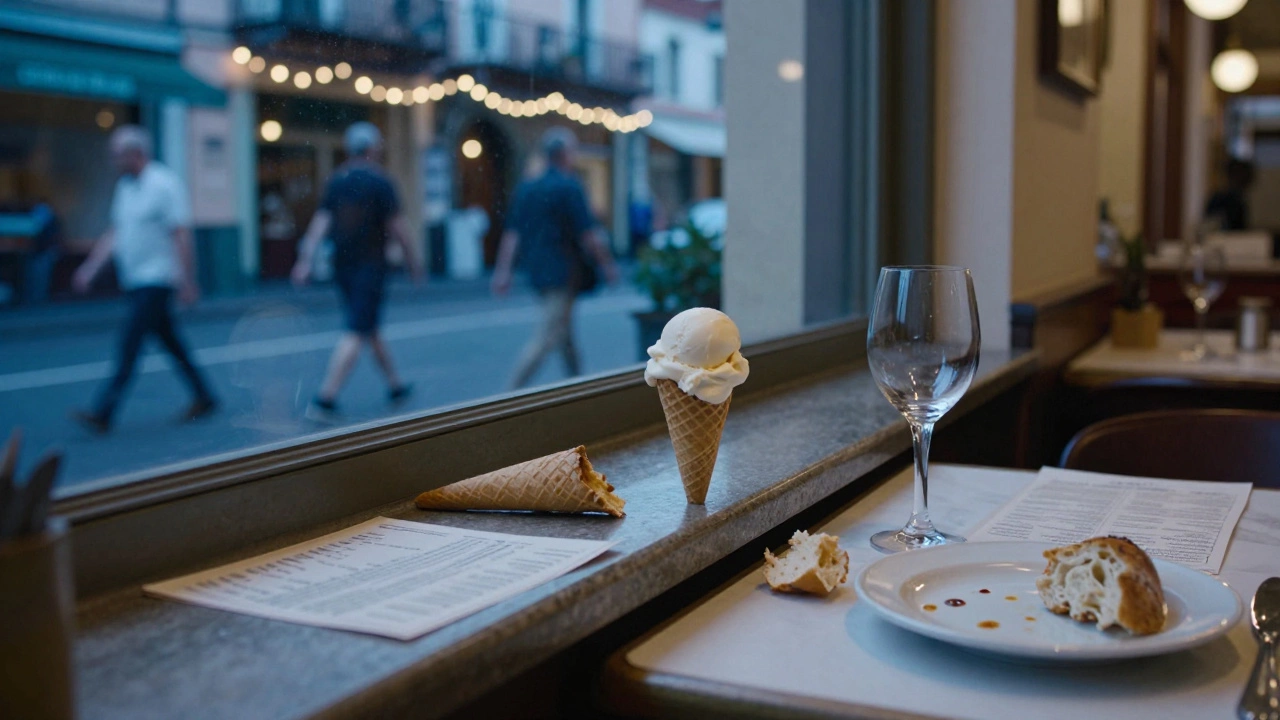
Even in restaurants, tiramisu is often replaced by simpler options: panna cotta, zabaglione, or gelato. And gelato? That’s not dessert. That’s a snack. Many Italians grab a small cone after a walk, not after dinner.
Dinner time isn’t 7 p.m. - it’s 9 p.m.
Italians don’t eat dinner early. They eat when the day slows down. Lunch ends around 2 p.m. The afternoon is for walking, napping, or meeting friends. Dinner doesn’t start until 8:30 or 9 p.m. That’s why it’s light. It’s not meant to be heavy. It’s meant to be enjoyed slowly, with conversation, with wine, with silence between bites.
There’s no TV during dinner. No phones. Just food, family, and time. That’s why portions stay small. You don’t need a lot when you’re savoring every bite.
What about cheese and wine?
Wine is part of dinner, but not poured like water. A glass or two with the meal - never more. Red wine with meat, white with fish. Often, it’s local. Not imported. Not expensive. Just good.
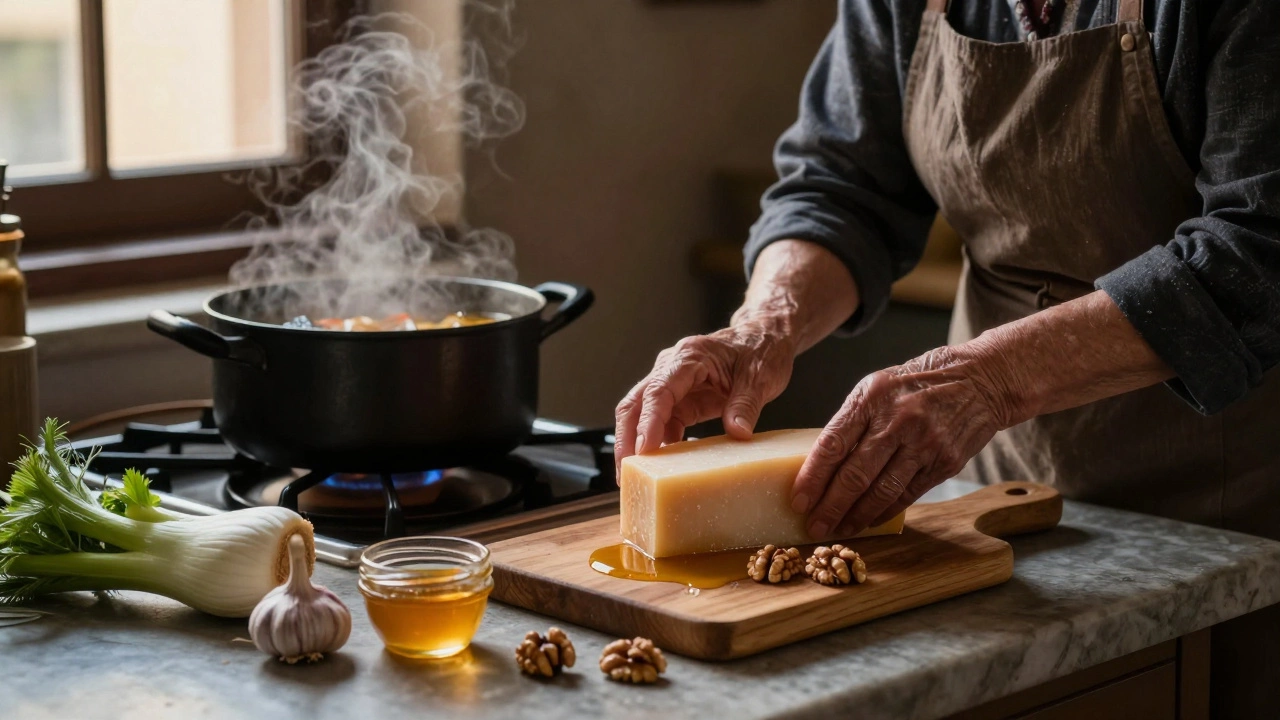
Cheese comes at the end, after the main course. Not as a starter. Not as a snack. As a bridge between the savory and the sweet. A wedge of Parmigiano Reggiano. A slice of Pecorino. Maybe a soft ricotta. Served with a drizzle of honey or a few walnuts. No crackers. No fruit. Just cheese, and maybe a sip of grappa.
Why this matters - and what you can learn
If you want to eat like an Italian, you don’t need to buy tiramisu ingredients. You need to change your rhythm. Eat later. Eat slower. Eat smaller portions. Let vegetables lead. Let bread be a tool, not a side. Let dessert be optional.
Most Western diets focus on big, filling meals. Italians focus on balance. They don’t count calories. They don’t follow trends. They follow taste, season, and tradition. Their dinners aren’t Instagram-worthy. They’re life-worthy.
Try this: next time you eat dinner, skip the dessert. Eat fruit instead. Or nothing at all. Let the meal end with quiet. Let the table stay set a little longer. That’s the Italian way.
What Italians don’t eat for dinner
Here’s what you won’t find on a typical Italian dinner table:
- Fast food - not even on a busy night
- Frozen meals - most families cook from scratch
- Large portions of pasta - it’s a first course, not the main
- Processed cheese - real cheese only, aged and local
- Ice cream after every meal - that’s a summer treat, not a daily habit
- Salad as a starter - it’s served after the main, not before
And yes - tiramisu? It’s on the list too. Not because it’s bad. But because it’s not everyday food.
Do Italians eat tiramisu every night?
No. Tiramisu is a special-occasion dessert, usually reserved for Sundays, holidays, or when guests visit. Most Italians eat fruit, cheese, or nothing at all for dessert on regular nights.
What’s the most common Italian dinner?
There’s no single dish, but a typical dinner includes a first course like risotto or pasta, followed by a protein like grilled fish or chicken, and a side of seasonal vegetables. Bread is always present, used to mop up sauces.
Why do Italians eat dinner so late?
Italians work later hours, and dinner is a social ritual. It’s not just about food - it’s about connecting after the day. Eating at 9 p.m. allows time for leisure, walks, and conversation before the meal.
Is pasta the main dish at Italian dinner?
No. Pasta is usually the first course (primo). The main dish (secondo) is often meat, fish, or eggs. Pasta is served in smaller portions, and it’s not the center of the meal.
Do Italians eat dessert every night?
Not at all. Many Italians end dinner with fruit, a small piece of cheese, or nothing. Dessert is a treat, not a requirement. Even in restaurants, it’s often skipped unless it’s a special night.