Fudge Cream of Tartar Calculator
Input Your Fudge Recipe
Recommended Cream of Tartar
(0.00 ml)
Corn Syrup Alternative
1/4 - 1/2 cup
Lemon Juice Alternative
1 tsp
Ever made fudge that turned out grainy instead of silky? You followed the recipe, measured everything perfectly, even stirred just right-but it still tasted like sand in your mouth. That’s not your fault. It’s chemistry. And the secret to fixing it might already be in your pantry: cream of tartar.
Why Fudge Turns Grainy
Fudge is basically sugar syrup that’s cooled slowly so sugar crystals stay tiny. When sugar crystals grow too big, you get that gritty, crumbly texture. It happens when the sugar solution cools too fast, gets disturbed too much, or has impurities that act as seed points for crystals to form. Even a speck of dust or a stray sugar crystal on the side of the pan can trigger the whole batch to crystallize unevenly.How Cream of Tartar Stops Crystallization
Cream of tartar is potassium bitartrate, a natural byproduct of winemaking. It’s mildly acidic. When you add it to fudge, it breaks down some of the sucrose (regular table sugar) into glucose and fructose. These are called inverted sugars, and they don’t crystallize easily. Think of it like this: imagine you’re trying to stack identical bricks neatly. That’s sucrose. Now, throw in a few oddly shaped stones-glucose and fructose. They get in the way. They stop the bricks from lining up perfectly. That’s exactly what inverted sugars do to sugar crystals. They get between the sucrose molecules and keep them from forming large, noticeable crystals. This is why cream of tartar is a staple in old-school fudge recipes. A teaspoon per batch is enough. It doesn’t change the flavor. You won’t taste tanginess. But you’ll taste the difference in texture-smooth, melt-in-your-mouth fudge instead of gritty disappointment.How Much to Use
For a standard batch of fudge (about 2 cups of sugar), use 1/2 to 1 teaspoon of cream of tartar. More than that won’t help. In fact, too much can make the fudge taste sour or interfere with setting. It’s not a magic bullet-it’s a precision tool. Add it with the sugar and butter at the start of cooking. Don’t wait until the mixture is boiling. Mixing it in early ensures it dissolves completely and starts breaking down sugar molecules from the beginning.What Happens If You Skip It?
You can make fudge without cream of tartar. People have done it for generations. But without it, you’re relying on other methods to control crystallization: stirring less, avoiding scraping the sides of the pan, using a candy thermometer, and letting the mixture cool undisturbed. Most home bakers don’t have the patience-or the perfect conditions-to pull that off. A little breeze, a quick stir with a wooden spoon that’s not perfectly clean, or even a slightly uneven heat source can ruin the batch. Cream of tartar gives you a buffer. It’s insurance.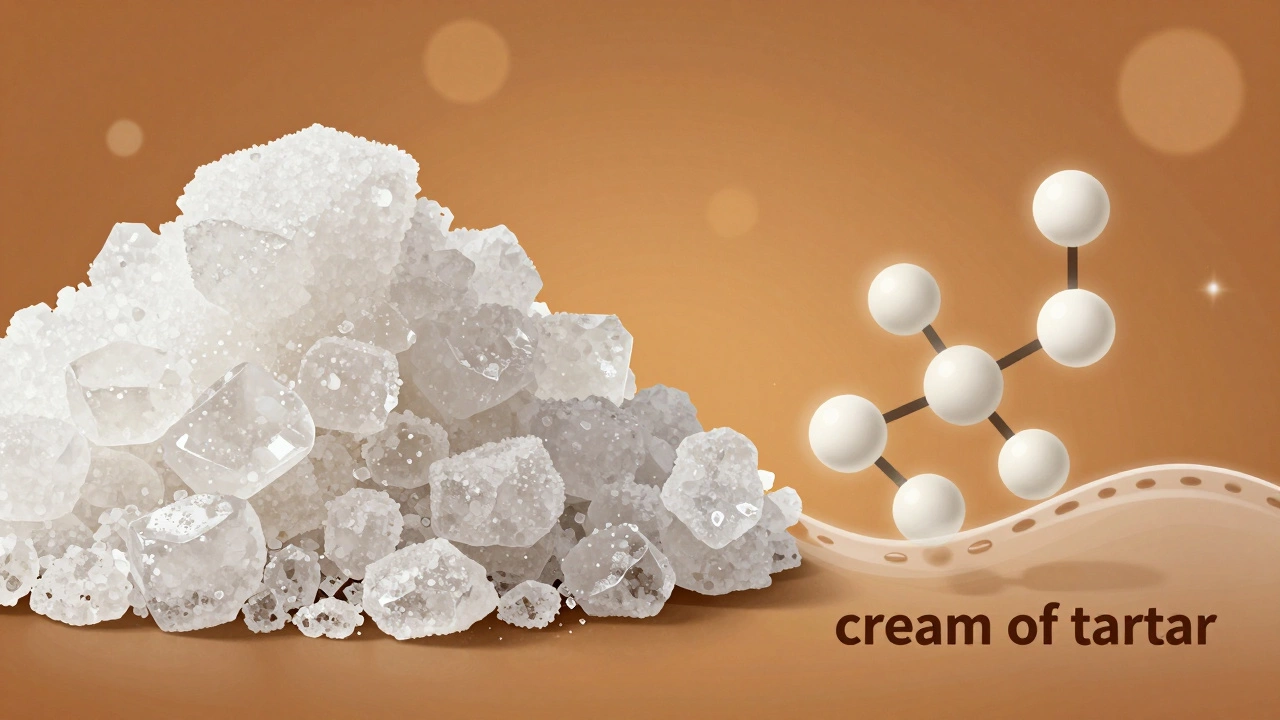
Alternatives to Cream of Tartar
If you don’t have cream of tartar, you’ve got options:- Light corn syrup: Add 1/4 to 1/2 cup. It’s the most common substitute. Like cream of tartar, it contains inverted sugars and prevents crystallization. But it adds extra sweetness and a slightly different texture-fudge can be a little softer.
- Lemon juice: A teaspoon of fresh lemon juice works similarly. It’s acidic like cream of tartar, so it inverts some sugar. But you might taste a hint of citrus, which can clash with chocolate.
- Golden syrup: Common in Australia and the UK, it’s a natural invert sugar syrup. Use 1/4 cup. It adds a mild caramel note that pairs well with dark chocolate.
Real-World Test: Side-by-Side Fudge
Last month, I made two batches of classic chocolate fudge. One with 3/4 teaspoon of cream of tartar. One without. Both used the same ingredients: sugar, butter, heavy cream, vanilla, and 12 ounces of semisweet chocolate. The batch with cream of tartar set in about 90 minutes. It was glossy, firm but flexible, and melted smoothly on the tongue. The batch without? It took 4 hours to set. It was harder, slightly crumbly, and had visible sugar granules when you bit into it. One person said it felt like eating crushed rock candy. The difference wasn’t subtle. It was the kind of thing you notice the first bite.Pro Tips for Perfect Fudge Every Time
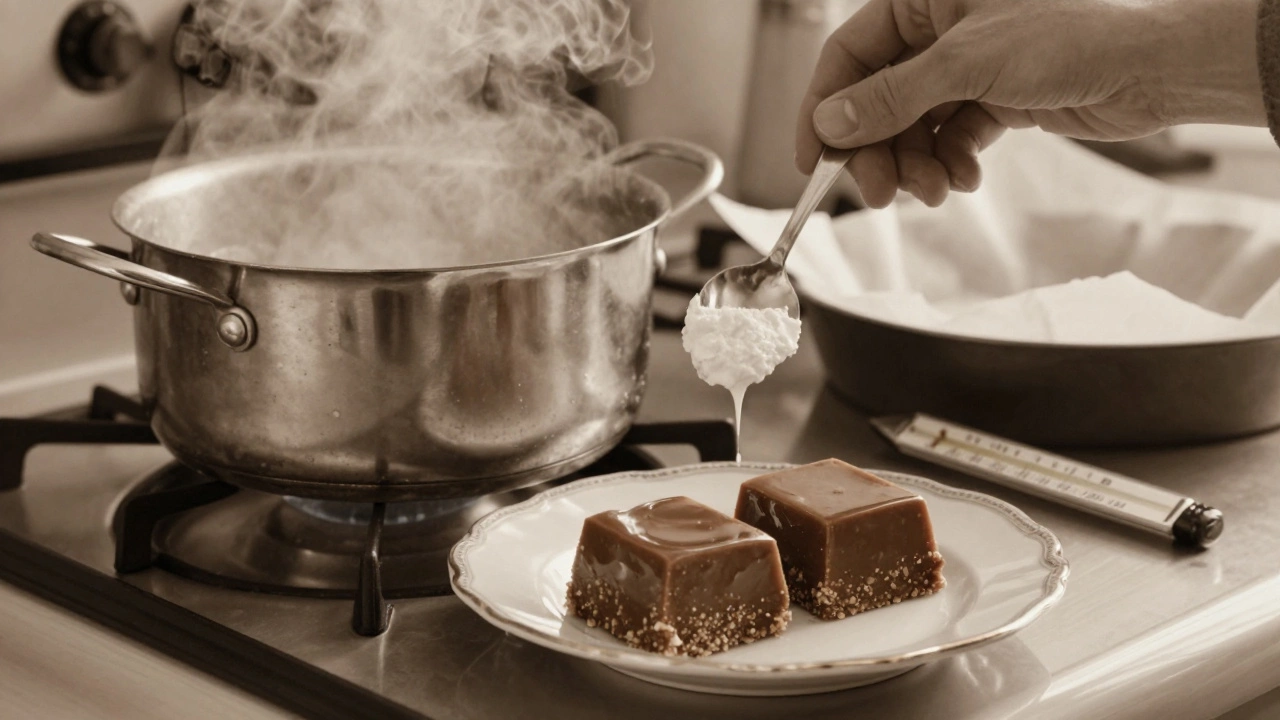
- Use a candy thermometer. Fudge needs to hit 234°F (112°C)-the soft-ball stage. Anything below and it won’t set. Above and it’ll be too hard.
- Don’t stir once the mixture starts boiling. Stirring after boiling introduces crystals. Just swirl the pan gently if needed.
- Let it cool to 110°F before stirring in chocolate and vanilla. Stirring too early = grainy fudge.
- Line your pan with parchment paper. No greasing. It makes removal easier and prevents sticking without adding fat that might interfere with setting.
- Use high-quality chocolate. Cheap chocolate has fillers that don’t melt evenly and can cause texture issues.
Why This Matters Beyond Fudge
Cream of tartar’s role in fudge isn’t just about one dessert. It’s a perfect example of how small chemical tweaks change food outcomes. The same principle applies to caramel, marshmallows, and even royal icing. Invert sugars are the quiet heroes of candy-making. Knowing this helps you adapt recipes. If a recipe calls for corn syrup and you’re out, you can reach for cream of tartar instead. You’re not just following steps-you’re understanding why they’re there.Common Myths About Cream of Tartar in Fudge
- Myth: It makes fudge taste sour. Truth: At the right amount, it’s undetectable. You’re adding acidity to control chemistry, not flavor.
- Myth: It’s only for old recipes. Truth: Modern candy makers still use it. Professional chocolatiers keep it on hand for texture control.
- Myth: You can use baking powder instead. Truth: Baking powder is alkaline. It won’t invert sugar. It’ll ruin your fudge.
Final Takeaway
Cream of tartar doesn’t make fudge sweet. It doesn’t add flavor. It doesn’t thicken it. What it does is silent, precise, and powerful: it prevents sugar from turning into grit. It turns a risky, finicky recipe into something you can make with confidence-even on a humid Melbourne afternoon. If you’ve ever walked away from a failed batch of fudge, don’t blame yourself. Just add a teaspoon of cream of tartar next time. It’s the quietest upgrade in baking.Can I use cream of tartar in white fudge too?
Yes. Cream of tartar works the same way in white fudge, which is usually made with powdered sugar, marshmallow fluff, or condensed milk. It helps prevent graininess whether you’re using chocolate or not. Just stick to 1/2 to 1 teaspoon per batch.
Is cream of tartar the same as tartaric acid?
No. Cream of tartar is potassium bitartrate, a salt derived from tartaric acid. Tartaric acid is stronger and more concentrated. You can’t substitute one for the other directly-using pure tartaric acid would make your fudge too sour and could even affect how the chocolate sets.
How long does cream of tartar last?
It lasts indefinitely if stored in a cool, dry place. I’ve had a jar for over five years that still works perfectly. Check for clumping-if it’s hard and won’t pour, it’s absorbed moisture and may not dissolve well. Otherwise, it’s good.
Can I use cream of tartar in vegan fudge?
Yes. Cream of tartar is naturally vegan. It’s made from grape residue and potassium hydroxide. Many vegan fudge recipes use it to control texture, especially when using coconut milk or maple syrup as the base.
Why does my fudge still get grainy even with cream of tartar?
You’re probably stirring after the mixture boils, or the sugar didn’t fully dissolve before heating. Make sure all the sugar is dissolved before bringing it to a boil. Test by rubbing a bit between your fingers-it should feel smooth, not gritty. Also, avoid scraping the sides of the pan while cooking.