Macaron Size & Baking Calculator
Baking Time
15-18 min
at standard tempTemperature
150°C / 300°F
internal target: 90°CFilling Amount
10-12g
per macaronRest Time
30-45 min
until skin formsEver bought a box of macarons only to find they were tiny little pebbles or massive cookies that overwhelmed your palate? You are not alone. The debate over macaron size is one of the most common questions among home bakers and pastry enthusiasts. It seems simple enough-just bake them until they look right-but the reality is much more technical. Getting the dimensions wrong can ruin the texture, the structural integrity, and even the flavor balance of these delicate French confections.
The short answer is that the ideal diameter for a standard macaron shell is between 4 cm (1.5 inches) and 6 cm (2.4 inches). However, this number changes depending on whether you are making miniatures for a wedding table or large statement pieces for a boutique patisserie. In this guide, we will break down why size matters, how it affects your baking process, and what dimensions you should aim for based on your specific goals.
The Standard: Why 4-6 cm Is the Sweet Spot
When most people think of a classic French macaron, they picture the small, round sandwich cookie with smooth domes and ruffled feet. This visual identity is tied directly to its size. The industry standard for a "regular" macaron falls squarely in the 4 cm to 6 cm range. This dimension is not arbitrary; it is the result of decades of refinement by Parisian pâtissiers who needed a treat that was substantial enough to hold filling but light enough to be eaten in two bites.
| Size Category | Diameter (cm) | Diameter (inches) | Best Use Case |
|---|---|---|---|
| Mini / Petit Four | 2 - 3 cm | 0.8 - 1.2 in | Wedding favors, tea parties, high-end tasting menus |
| Standard / Classic | 4 - 6 cm | 1.5 - 2.4 in | Everyday sales, gift boxes, general consumption |
| Large / Statement | 7 - 9 cm | 2.7 - 3.5 in | Boutique displays, special occasions, heavy fillings |
Why does this specific range work so well? It comes down to the ratio of crust to interior. A macaron needs a thin, crisp exterior and a chewy, moist center. If the shell is too small, the crust takes up too much of the volume, making every bite dry and crunchy. If it is too large, the center may remain undercooked or gummy because heat cannot penetrate evenly before the edges burn. The 4-6 cm sweet spot ensures that the meringue-based batter cooks through completely while maintaining that signature texture contrast.
How Size Affects Baking Time and Temperature
One of the biggest mistakes beginners make is assuming that a smaller macaron bakes faster at the same temperature. While it is true that mini macarons require less time, the relationship between size and heat is not linear. When you change the size of the piped circle, you change the surface area-to-volume ratio, which drastically alters how moisture evaporates from the batter.
For standard 5 cm macarons, a typical oven temperature of 150°C (300°F) works well for about 15-18 minutes. But if you pipe 3 cm mini macarons, you might need to reduce the time to 10-12 minutes, or even lower the temperature slightly to prevent the bottoms from burning before the tops set. Conversely, large 8 cm macarons might need 20-25 minutes. If you stick to the standard timer for these larger shells, you risk ending up with hollow centers-a common defect where the inside is raw and airy rather than dense and chewy.
To manage this, many professional bakers use a thermometer to check the internal temperature of the shell. A properly baked macaron shell should reach an internal temperature of around 90°C (194°F). This objective measure removes the guesswork, regardless of whether you are baking minis or giants. It also helps ensure consistency across batches, which is crucial if you are selling these treats commercially.
The Impact on Filling Ratio and Flavor Balance
Size is not just about the shell; it dictates how much filling you can use. A macaron is essentially a vehicle for ganache, buttercream, or jam. The goal is to have a harmonious balance where neither the shell nor the filling dominates. In a 4 cm macaron, the filling layer should be about 3-4 mm thick. This provides enough flavor punch without making the cookie soggy or difficult to bite through.
If you increase the size to 8 cm, you cannot simply double the filling thickness. Doing so would create a structural nightmare. The weight of the extra filling could cause the delicate shells to crack or slide apart when picked up. Instead, you need to adjust the viscosity of your filling. Larger macarons often benefit from thicker, more stable fillings like Italian meringue buttercream or firm chocolate ganache, which can support the wider span without leaking out the sides.
Consider the eating experience as well. A standard macaron is designed to be eaten in one or two bites. This allows the flavors to hit your palate simultaneously. A giant macaron requires multiple bites, which means the flavor profile changes as you eat it. By the time you reach the end, the initial burst of almond and vanilla might have faded. For this reason, complex flavor combinations like lavender-honey or rose-lychee work better in standard sizes, while bold, single-note flavors like dark chocolate or espresso can stand up to the longer eating duration of larger macarons.
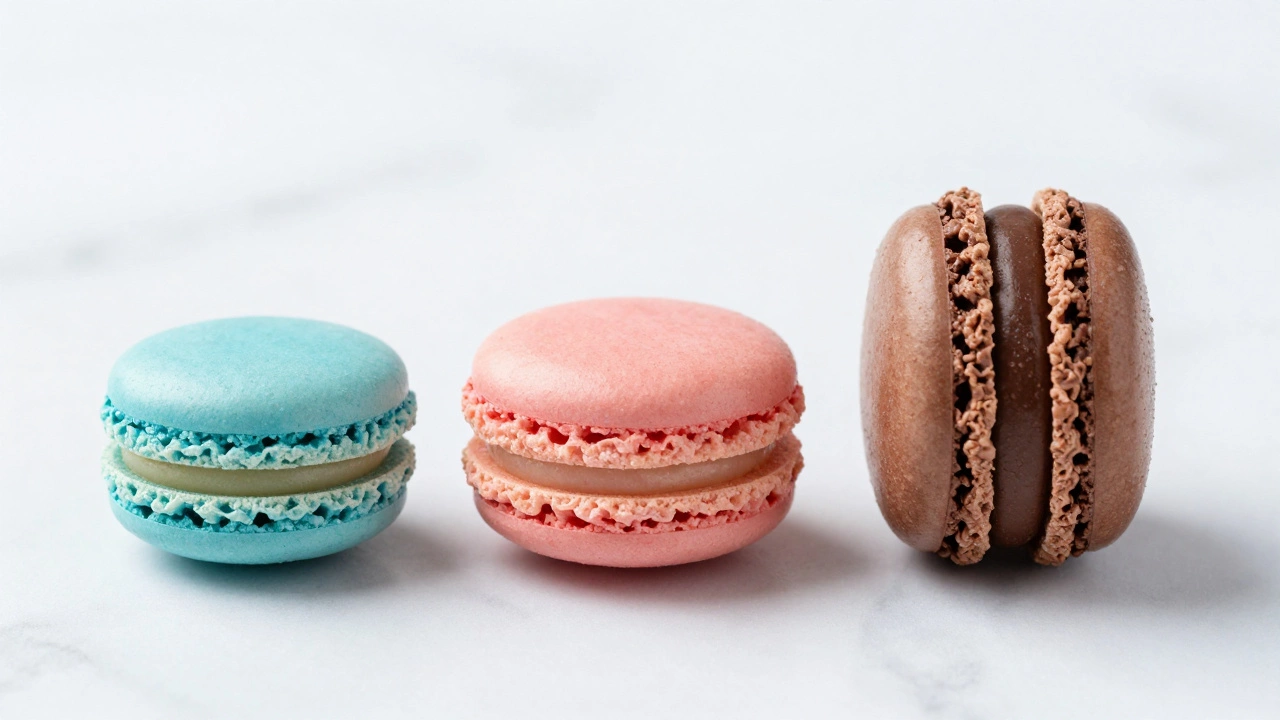
Structural Integrity: Preventing Cracks and Hollows
As macarons get larger, they become more prone to structural defects. The most common issues are cracking on top and hollowness inside. Cracking occurs when the skin forms too quickly or unevenly. With larger shells, the batter has more mass, so it takes longer for the surface to dry out during the resting phase. If you do not let them rest long enough, the rapid expansion in the oven causes the fragile skin to split.
Hollowness is another size-related challenge. It happens when the batter rises too fast and then collapses, leaving an empty space inside. This is particularly common in large macarons because the heat struggles to cook the center evenly. To combat this, bakers often use the "French method" for smaller macarons but switch to the "Italian method" for larger ones. The Italian method involves pouring hot sugar syrup into egg whites, creating a more stable meringue that holds its structure better under the stress of larger dimensions.
Another tip for larger macarons is to avoid overmixing the batter. Overmixed batter spreads too much, resulting in flat, wide shells with weak structures. Undermixed batter can lead to peaked tops and cracks. Finding the right consistency-the famous "ribbon stage"-is critical. For larger macarons, you want a slightly stiffer batter to help the shells rise vertically rather than spreading outward uncontrollably.
Choosing the Right Size for Your Audience
Your target audience plays a huge role in determining the ideal macaron size. If you are making macarons for a corporate event or a wedding, mini macarons (2-3 cm) are often preferred. They are elegant, easy to handle, and allow guests to sample multiple flavors without feeling full. They also fit neatly into small boxes or cupcake liners, making them perfect for take-home favors.
On the other hand, if you are running a boutique bakery or selling online, standard-sized macarons (4-6 cm) are the safest bet. They feel like a proper treat and justify a higher price point. Customers expect a certain substance from their dessert, and a tiny macaron can feel like a gimmick unless positioned correctly. Large macarons (7+ cm) are niche products. They work well for special holidays like Valentine's Day or Christmas, where the visual impact is part of the appeal. However, they are harder to ship due to fragility and often command a premium price that may deter casual buyers.
Think about convenience too. Mini macarons are great for grazing tables where people are standing and mingling. Standard macarons are better for sit-down dinners or coffee breaks. Large macarons are often shared or saved for later, which can affect freshness. If you are selling pre-made macarons, consider how long they will last. Smaller macarons dry out faster due to their higher surface-area-to-volume ratio, so they are best sold fresh or within 24 hours. Larger macarons retain moisture longer, giving you a slightly wider window for delivery and storage.
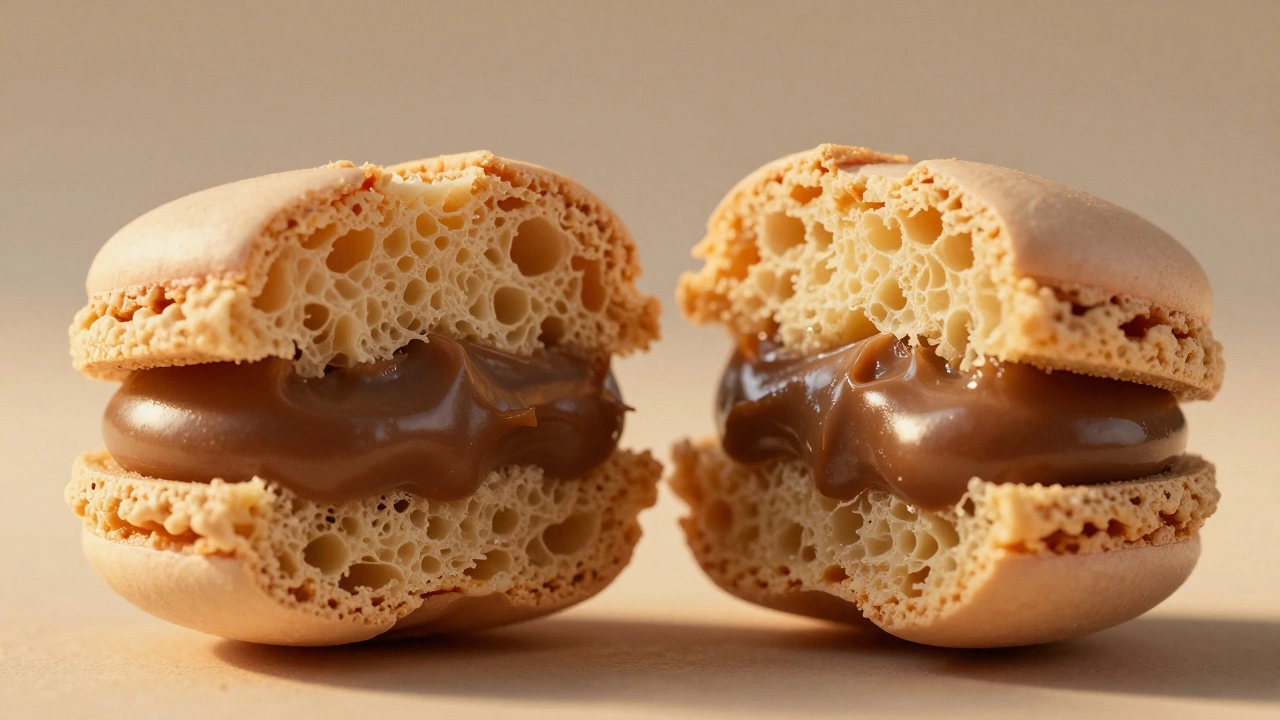
Practical Tips for Piping Consistent Sizes
Achieving uniform size is half the battle. Uneven macarons bake unevenly, leading to a mix of burnt and undercooked shells in the same batch. Here are some practical steps to ensure consistency:
- Use Templates: Print or draw circles on paper underneath your silicone mat. Trace these circles lightly with a food-safe marker or use pre-printed silicone mats with guides. This ensures every piped circle starts at the exact same diameter.
- Invest in a Piping Aid: Tools like the Macaron Mat Mold or adjustable ring guides can help maintain height and width consistency. These devices clip onto your baking sheet and provide a physical barrier for the batter.
- Fill the Bag Correctly: Keep the pressure consistent. Squeeze the piping bag with steady force. If you run low on batter mid-circle, stop and refill. Inconsistent pressure leads to irregular shapes.
- Tap the Tray: After piping, firmly tap the baking sheet against the counter several times. This releases air bubbles and helps the batter settle into a uniform shape. For larger macarons, you may need to tap more vigorously to ensure the batter spreads evenly to the edges of your template.
- Measure Before Baking: Use a ruler to spot-check a few shells before putting them in the oven. If they are too big, you can gently nudge them back into shape with a damp finger. If they are too small, you cannot fix them, so start over.
Consistency is key not just for aesthetics but for accurate baking times. If all your macarons are the same size, you can rely on your tested timing and temperature settings. Variability introduces chaos into the baking process, making it nearly impossible to replicate success.
Storage and Shelf Life Considerations
Size also impacts how you store and sell macarons. Because macarons are hygroscopic (they absorb moisture from the air), their shelf life depends heavily on their surface area. Mini macarons have a larger surface area relative to their volume, meaning they absorb moisture faster and become soft and stale more quickly. They are best enjoyed within 24-48 hours of assembly.
Standard and large macarons have a slower rate of moisture absorption. They can last up to 5-7 days in the refrigerator if stored in an airtight container. Some bakers even recommend freezing assembled macarons for up to a month. When thawed, they often taste better because the filling has had time to meld with the shell, creating a more cohesive flavor profile. This makes larger macarons a better option for advance preparation or shipping.
If you are planning to mail macarons, size becomes a logistical concern. Large macarons are fragile and prone to breaking during transit. Many commercial bakers opt for standard sizes because they stack more securely in boxes. Minis are also popular for shipping because they are less likely to break, but they must be packed tightly to prevent movement. Always include desiccant packets in your shipping boxes to control humidity, especially if you live in a humid climate like Melbourne.
What is the average diameter of a store-bought macaron?
Most store-bought macarons, such as those from Ladurée or Pierre Hermé, range from 4 cm to 5 cm in diameter. This size is considered the industry standard for a balanced eating experience.
Can I make macarons any size I want?
Technically, yes, but extreme sizes present challenges. Very small macarons (<2 cm) are difficult to pipe and bake evenly. Very large macarons (>9 cm) risk being hollow or structurally unstable. Stick to the 2-9 cm range for best results.
Why do my large macarons come out hollow?
Hollowness in large macarons is usually caused by uneven heating or over-beaten egg whites. Ensure your oven temperature is accurate and consider using the Italian meringue method for better stability. Also, make sure the batter is rested sufficiently before baking.
How long should I rest mini macarons before baking?
Mini macarons typically need less resting time than standard ones, often 15-20 minutes instead of 30-45. However, always test for readiness by touching the surface; it should not stick to your finger. Humidity levels in your kitchen will also affect resting time.
Does the size of the macaron affect the amount of filling needed?
Yes. Larger macarons require more filling, but not proportionally more thickness. You need to adjust the filling's consistency to support the larger shell. A 6 cm macaron might need 10-15 grams of filling, while a 4 cm macaron needs only 5-8 grams.