Macaron Cost Breakdown Tool
Adjust the factors below to understand why a $20 box of macarons costs so much compared to standard cookies.
Production Factors
Price Per Unit
Retail Price
Price required to cover all costs including waste.
Cost Composition:
- Ingredients 0%
- Labor 0%
- Waste Burden 0%
- Packaging 0%
The Sticker Shock Reality
Walking into a boutique patisserie in Melbourne today, you might grab a box of six cookies that costs nearly twenty dollars. That feels like a lot for a small sweet treat. You could buy a dozen standard supermarket cookies for half that price. But there is more going on behind the counter than just a higher asking price. Understanding what drives the cost helps you decide if those bite-sized clouds are truly worth your money.
When you pay extra for macaronsdelicate French confections made with almond flour, egg whites, and sugar, you are buying a perfect storm of difficult ingredients, intense labor, and high waste margins. It isn't just about marketing hype; it is basic economics mixed with artisanal skill.
Key Takeaways
- Premium ingredients like raw almond flour account for a significant portion of the base cost.
- Labor intensive steps include aging egg whites and precise piping times.
- High failure rates mean shops absorb the cost of ruined batches.
- Freshness guarantees drive higher overhead compared to mass-produced goods.
- Gourmet packaging and branding add layers to the final retail price.
The Truth About Almond Flour
The foundation of any good macaron is Almond Flourfinely ground blanched almonds without skins. Regular wheat flour sits for pennies per cup in your pantry. Almond flour tells a very different story. You cannot simply grind regular almonds in a blender. You get oily, coarse clumps that ruin the smooth texture required for that famous top surface. Professional bakers buy commercially produced almond meal specifically processed for confectionary work.
In the current 2026 market, supply chain fluctuations for nut crops affect the bottom line significantly. When drought impacts crop yields in major exporting nations, wholesale prices for almond meal spike immediately. A boutique bakery has to pass that increase onto you. If the recipe requires three hundred grams of flour per batch, and the flour costs five times more than wheat flour, that math gets tricky fast.
Beyond the almond shell, consider the sugar. While granulated sugar isn't expensive, professional recipes often utilize castor sugar or glucose syrup to stabilize the meringue. Cheaper options might cause the shell to crack or sink. These minor adjustments in quality prevent structural collapse but add cents per unit.
The Labor Intensity Myth
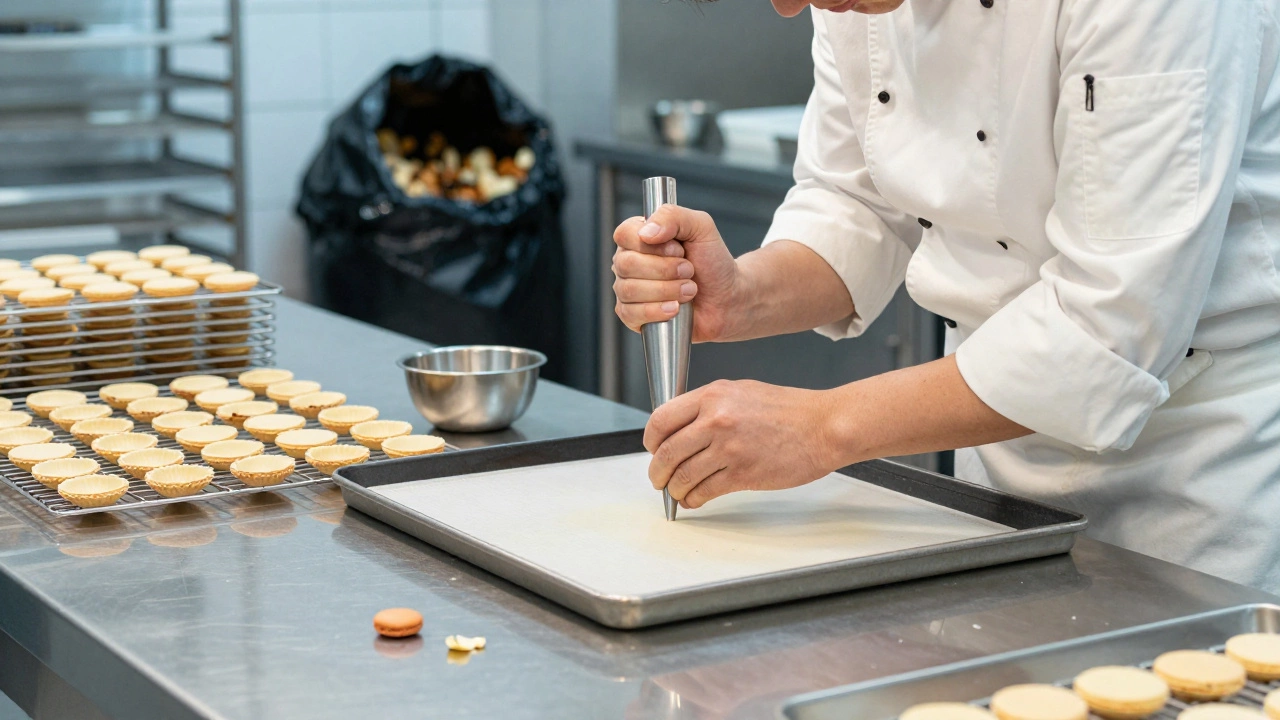
You might think the hardest part is mixing the dough. In reality, the labor comes before the whisk starts turning. Egg whites need time to mature. Fresh eggs from the coop right now contain too much water. Bakers purchase large trays of Egg Whitesprotein-rich component separated from yolks for stable meringues and age them for seven days in the fridge. This reduces moisture content and strengthens the protein bonds.
This process takes a week of inventory space before any profit happens. Then comes the "macerate" step, also known as the "macaronage." You have to fold the mixture until it reaches a lava-like consistency. Too little folding, and you get flat discs. Too much, and you lose volume. This requires experienced hands. A rookie makes mistakes that result in discarded trays.
Every tray sent to the oven represents hours of prep time sitting idle. You aren't just paying for the bake time; you are paying for the waiting room.
Failure Rates and Waste
Have you ever tried to bake these yourself? If your kitchen humidity is slightly off, the feet won't rise. If the oven temperature drops ten degrees, the colors burn before drying out. Commercial kitchens face this every single day.
A typical production run might see a thirty percent fail rate. Some batches come out cracked. Others are too pale or burnt. These failures go straight into the bin. They cannot be resold as premium products. The shop pays for the ingredients, the labor to mix them, and the energy to burn them, then throws them away. That cost of loss is buried in the price of the ones you actually buy.
Furthermore, Shelf Lifethe duration a product remains safe and delicious to eat is incredibly short. Unlike a chocolate chip cookie that tastes fine two weeks later, a macaron dries out or goes stale in three days. Shops have to throw away unsold inventory regularly to maintain reputation. Perishability acts as a tax on the final price.
Flavorings Fill The Gap
Many people assume vanilla paste is cheap. Real vanilla bean paste is costly. Even worse, specialty fillings require premium imports. Imagine a pistachio flavor using Bronte pine nuts instead of dried green dusting. Or a chocolate ganache using Valrhona couverture rather than generic compound chocolate.
Natural extracts cost ten times more than imitation flavors. If a shop claims to serve natural fruit flavors, they are likely using freeze-dried fruit powder which costs significantly more than artificial syrups. This choice keeps the product authentic but pushes the manufacturing cost upward.
| Component | Home Bakery Estimate | Boutique Bakery Estimate |
|---|---|---|
| Ingredients | $2.50 per unit | $4.00 per unit |
| Labor | $0.00 (Own time) | $5.50 per unit |
| Waste Factor | ~$1.00 absorbed | ~$2.00 absorbed |
| Packaging | $0.50 | $1.50 |
| Total Retail Value | $4.00 | $13.00 |
Packaging As Marketing
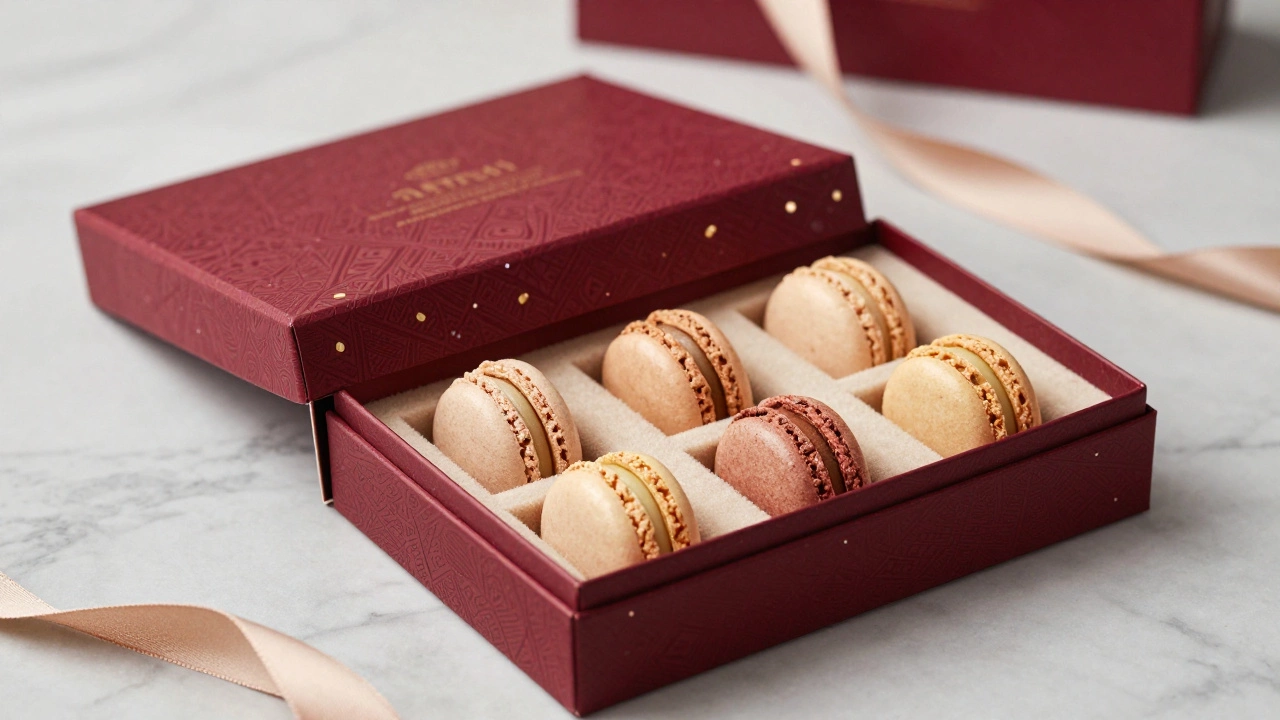
Part of the experience is the presentation. Premium Gift Boxesspecialized containers designed for protecting fragile pastries lined with velvet or gold foil exist solely to protect the fragile shells. You cannot ship a macaron in plastic wrap. If they touch, the icing smears. If they drop, the "foot" cracks.
Boxes must be rigid and branded. Ribbon ties, tissue paper, and custom labels all add cost. These materials are often single-use for shipping purposes. They sit in stockrooms taking up space until sold. All that material cost rolls into the price tag you see on the shelf.
Is It Worth Your Money?
So, do you save the cash for cake? If you are craving pure chocolate, maybe skip the fancy shells. But if you want an experience, the texture is unmatched. The combination of crunchy exterior and chewy interior with a creamy center creates a mouthfeel standard cookies simply cannot mimic.
Buying from a local specialist ensures you support businesses investing in quality ingredients rather than shortcuts. When you pay the higher price, you avoid preservatives and artificial stabilizers. It is safer, fresher, and genuinely tastier, even if the wallet feels lighter.
Frequently Asked Questions
Do macarons expire faster than other cookies?
Yes, macarons typically stay fresh for three to five days at room temperature, or up to two weeks if refrigerated. The high moisture content in the filling supports mold growth sooner than dry baked goods.
Can I substitute regular flour for almond flour?
No, replacing almond flour with wheat flour changes the gluten structure completely. You would end up with a standard cookie rather than a macaron, losing the signature crisp-chewy texture.
What determines the best price for macarons?
The best price usually correlates with higher volume orders. Buying loose units costs more per piece than buying a pre-packaged gift box because individual handling increases labor time.
Are homemade macarons significantly cheaper?
While the initial ingredient cost is lower, accounting for your own labor and potential waste makes them comparable in value, though still less than store prices due to lack of overhead fees.
Why do some shops sell fewer flavors?
Specialty shops focus on core flavors like pistachio or salted caramel to reduce waste from unused fillings. Producing many niche flavors increases inventory risks.