Macaron Flavor Explorer
Your Macaron Selection
0 flavorsUse the filters to discover macaron flavors
Try searching for specific ingredients or selecting a categoryThere is no single number that answers how many macaron flavors exist. If you count every unique combination ever tested in a home kitchen or a boutique patisserie, the number is infinite. However, if we look at established culinary traditions and commercially available varieties, the world of French macarons offers hundreds of distinct taste profiles.
The beauty of the macaron lies in its simplicity: two almond meringue shells with a filling. This simple structure acts as a blank canvas for pastry chefs. You can find classic vanilla bean macarons alongside complex Earl Grey tea infusions or savory rosemary-honey combinations. Understanding the scope of these flavors helps you navigate menus, plan weddings, or decide what to bake next.
The Core Palette: Classic French Flavors
Traditional Parisian patisseries stick to a refined set of flavors that highlight the quality of ingredients rather than overwhelming sweetness. These are the staples you will find in almost any reputable bakery.
- Vanilla Bean: The gold standard. It uses real vanilla seeds, offering a creamy, aromatic profile that lets the almond shell shine.
- Chocolate: Usually made with high-percentage dark chocolate ganache (70% cocoa) for a rich, bitter-sweet balance.
- Raspberry: A bright, tart fruit butter that cuts through the sweetness of the meringue.
- Lemon: Often paired with blueberry or white chocolate to add depth to the citrus zest.
- Coffee: Espresso-infused ganache that provides a robust, adult-friendly flavor.
These classics rely on precise technique. The meringue method, whether Italian or French, must be perfect to support these delicate fillings without collapsing.
Seasonal and Fruit-Forward Variations
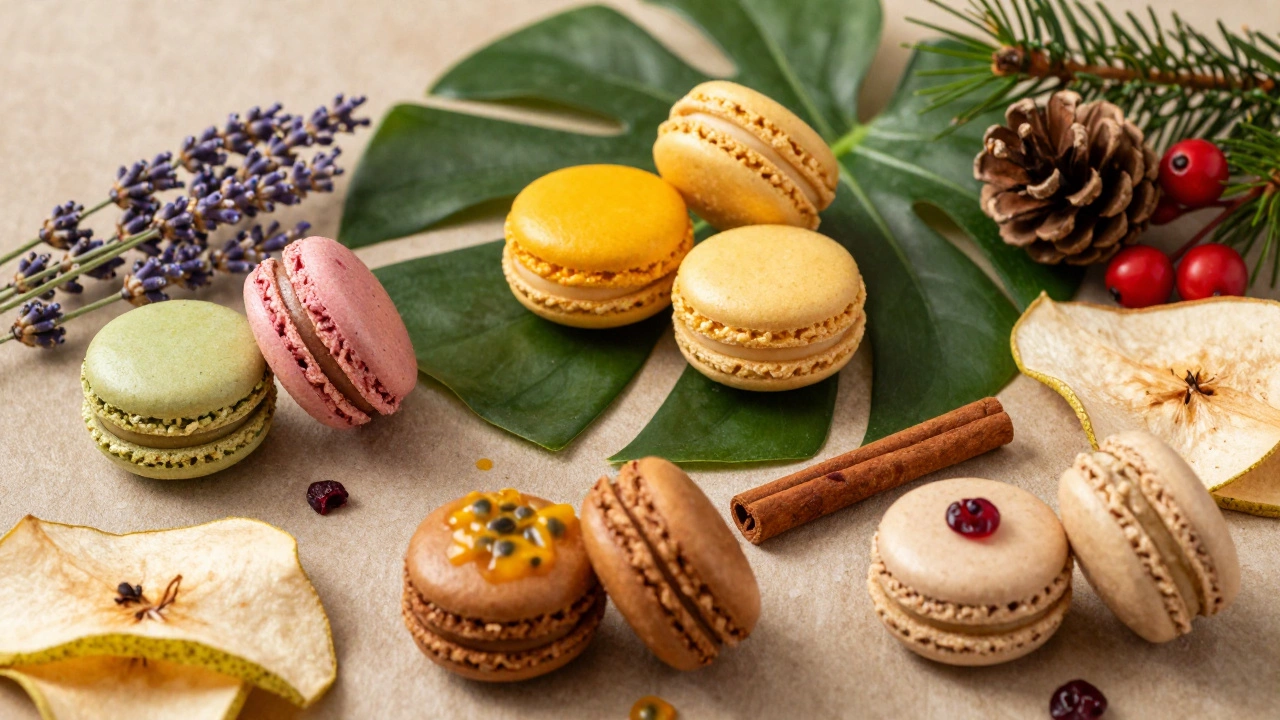
Seasonality drives innovation in macaron production. Patisseries change their offerings based on harvest cycles, leading to a rotating menu of fresh fruit flavors.
| Season | Popular Flavors | Filling Type |
|---|---|---|
| Spring | Pistachio, Rose, Lavender | Nut paste or floral syrup |
| Summer | Mango, Passion Fruit, Strawberry | Fruit curd or coulis |
| Autumn | Butter Pecan, Caramel, Pear | Brown butter ganache |
| Winter | Eggnog, Gingerbread, Cranberry | Spiced cream cheese or jam |
Fruit-based macarons require careful moisture management. Fresh fruit contains water, which can make the delicate shells soggy. Chefs often use reduced fruit purees or jams to concentrate flavor while maintaining structural integrity.
Savory and Unconventional Twists
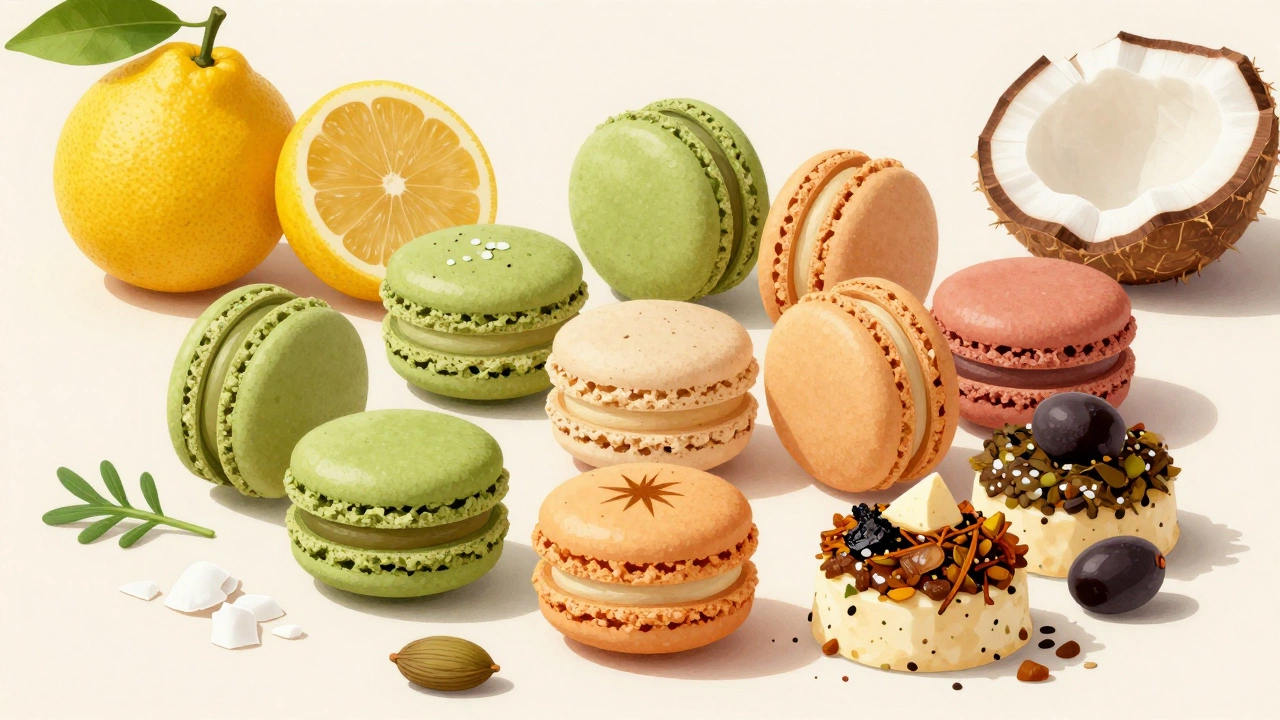
Modern pastry chefs have pushed boundaries by introducing savory elements. These macarons challenge the traditional sweet expectation and appeal to sophisticated palates.
You might encounter savory macarons filled with:
- Herbed Goat Cheese: Creamy cheese mixed with thyme and chive.
- Olive Tapenade: Salty, briny olives blended into a smooth paste.
- Bacon Maple: Smoky bacon bits combined with sweet maple glaze.
These variations are popular at cocktail parties and as appetizers. They demonstrate the versatility of the almond flour base, which pairs well with both sweet and salty components.
Global Influences and Cultural Adaptations
As macarons spread globally, local ingredients have influenced flavor profiles. In Japan, you might find matcha green tea or yuzu citrus macarons. In India, cardamom and saffron infuse the shells and fillings. In Brazil, passion fruit and coconut are common additions.
This cultural adaptation expands the total count of existing flavors significantly. Each region adds its own signature twists, creating a diverse global landscape of macaron tastes.
Dietary Restrictions and Alternative Flavors
The rise of dietary restrictions has led to new flavor innovations. Gluten-free macarons are naturally gluten-free due to the almond flour base, but vegan versions require alternative binding agents.
Vegan macarons often use aquafaba (chickpea water) instead of egg whites. This changes the texture slightly but opens up new flavor possibilities like chickpea-infused honey or lentil-based chocolates. Sugar-free options use erythritol or stevia, allowing for diabetic-friendly flavors like unsweetened cocoa or plain almond.
How to Choose Your Favorite Flavors
Selecting macaron flavors depends on the occasion and personal preference. For weddings, classic colors and tastes like vanilla and raspberry are safe bets. For casual gatherings, bold flavors like salted caramel or chili chocolate create excitement.
Consider the balance of textures. A crunchy nut filling contrasts nicely with a soft meringue shell. A smooth ganache provides a uniform experience. Think about intensity; strong flavors like espresso stand alone, while subtle ones like lavender pair well with complementary notes.
Are there more macaron flavors than cookie flavors?
Yes, likely. While cookies have thousands of variations, macarons are limited by their delicate structure. However, the precision required allows for more nuanced flavor layering, such as infusing the shell itself with tea or alcohol, creating a higher density of unique taste experiences per unit.
What is the most popular macaron flavor worldwide?
Vanilla bean is consistently the top seller. Its neutral yet aromatic profile appeals to the widest audience and serves as a baseline for comparing other flavors. Chocolate and pistachio also rank highly in global surveys.
Can I make macarons with any fruit?
You can, but not all fruits work equally well. High-water content fruits like watermelon or cucumber will make the shells soggy quickly. Berries, stone fruits, and tropical fruits with lower moisture or those reduced into jams/purees work best.
Do macaron flavors change over time?
Yes, trends shift. Past decades saw heavy reliance on artificial colors and simple sugar syrups. Modern trends favor natural ingredients, botanical infusions, and complex flavor pairings like olive oil and balsamic vinegar.
Is it better to buy macarons fresh or frozen?
Many experts recommend resting macarons for 24-48 hours after assembly. This "maturation" period allows flavors to meld and the texture to soften. Frozen macarons, when thawed properly, can retain this optimal texture longer than freshly assembled ones that haven't rested.