Macaron Tower Calculator
Number of macarons across the bottom row.
Estimation Results
Picture this: you’re planning the perfect dessert table. You want that stunning, towering structure of colorful macarons is a delicate French confection made from almond flour, egg whites, and sugar. Known for their smooth tops, ruffled feet (the 'pied'), and rich ganache filling. It looks like magic. But then comes the math problem. How many do you actually need? If you guess wrong, you end up with a lopsided mess or a mountain of leftover sweets gathering dust in your fridge.
The short answer? It depends entirely on the shape and size of your vision. A small pyramid might hold just 10 shells, while a grand wedding centerpiece can demand over 200. Let’s break down the geometry, the aesthetics, and the practicalities so you don’t have to guess.
Why Shape Matters More Than Height
When people ask about a "tower," they usually imagine a vertical stack. But structurally, a single column of macarons is a disaster waiting to happen. The weight of the top shell will crush the bottom one, especially if the filling is soft buttercream or ganache. That’s why we talk about pyramids, cones, or zig-zag structures instead of straight towers.
The most common designs are:
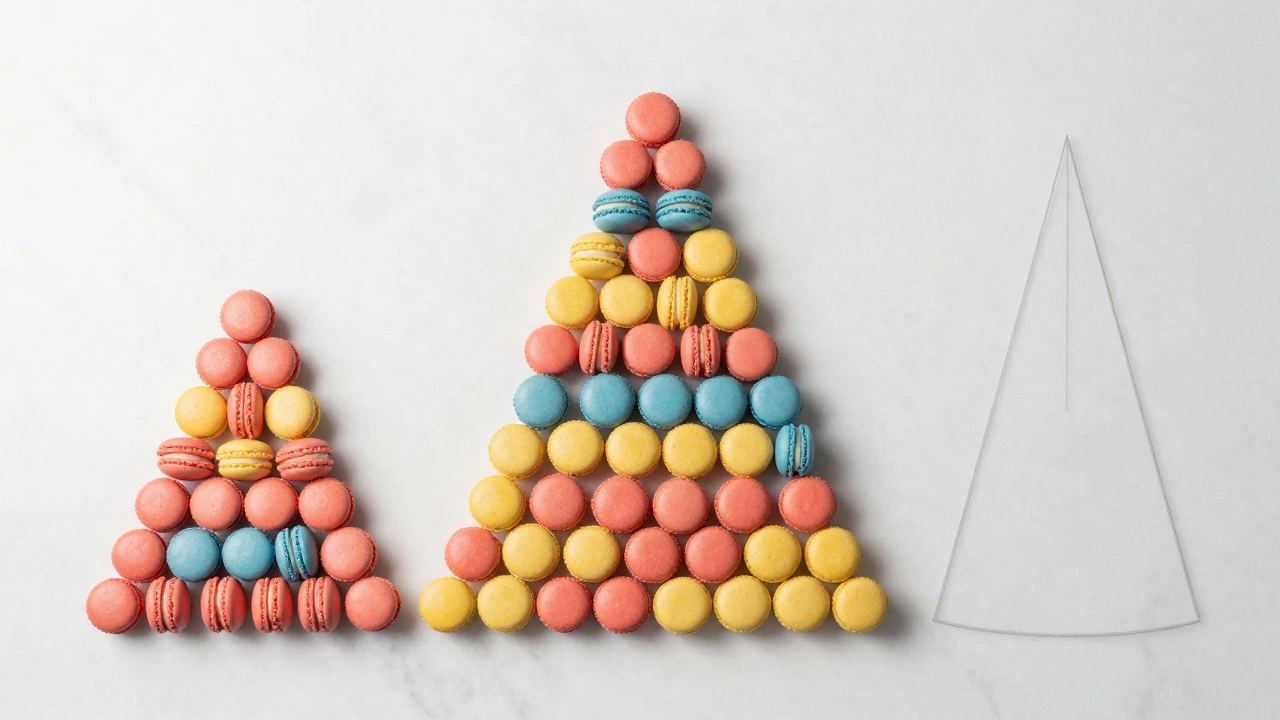
- The Pyramid: A triangular base that narrows as it goes up. This is the most stable and classic look.
- The Cone: Similar to a pyramid but with a rounded base, often achieved using a circular template.
- The Zig-Zag (or Spiral): Macarons placed side-by-side in a winding pattern around a central pole or stand. This requires fewer macarons for height but needs a sturdy support system.
For this guide, we’ll focus on the pyramid and cone shapes because they are self-supporting (mostly) and offer the best visual impact per macaron used.
The Math Behind the Magic: Standard Pyramids
To calculate how many macarons you need, we use a simple geometric formula based on layers. Each layer is a triangle of macarons. The number of macarons in a triangular layer is determined by the position in the sequence of triangular numbers.
Here is the breakdown for standard pyramid sizes:
| Base Width (Macarons) | Total Layers | Total Macarons Needed | Best For |
|---|---|---|---|
| 3 | 3 | 10 | Tasting menus, small favors |
| 5 | 5 | 35 | Bridal showers, baby showers |
| 7 | 7 | 84 | Wedding dessert tables, large parties |
| 9 | 9 | 165 | Grand entrances, corporate events |
| 11 | 11 | 286 | Luxury weddings, major celebrations |
Notice how quickly the numbers jump? Going from a base of 5 to a base of 7 doesn't just add two more macarons; it adds nearly double the total count. This exponential growth is why most home bakers stick to the 5-base or 7-base models.
Circular Cones vs. Triangular Pyramids
If you prefer a rounder, softer look, you might opt for a circular cone. These are harder to build because macarons aren't naturally round enough to create a perfect circle without gaps. However, they look incredibly elegant.
For a circular cone, you arrange macarons in rings. The number of macarons per ring increases as the radius grows. A rough estimate for a circular cone with a base diameter of 6 macarons (radius of 3) would require approximately 31-35 macarons, depending on how tightly you pack them. A larger cone with a base diameter of 10 macarons could easily exceed 100 units.
The key difference here is stability. Circular bases distribute weight differently. You often need a hidden acrylic core or a specialized stand to keep a circular tower from spreading outwards under its own weight.
Choosing the Right Stand and Support
You can’t just stack macarons on a plate. You need a dedicated macaron stand is a tiered display structure designed to hold macarons securely during an event. These stands come in various materials, including acrylic, wood, and metal.
Acrylic stands are popular because they are invisible, making the macarons appear to float. However, they can be slippery. Wooden stands offer better grip due to texture but change the aesthetic. When choosing a stand, ensure the tiers match the width of your macarons. Standard macarons are about 1.5 inches (4 cm) wide. If your stand’s tiers are too wide, the macarons will slide off. Too narrow, and you won’t fit enough to create a solid base.
Pro tip: Use a non-slip mat or a tiny dot of royal icing on the bottom of each macaron to secure it to the stand. This prevents shifting when guests reach in to grab one.
Timing and Freshness: The Hidden Challenge
Building the tower is only half the battle. Keeping it looking good is the other half. Macarons are sensitive to humidity and temperature. In a warm room, the ganache can soften, causing the shells to slide. In a dry room, the shells can become stale.
Here’s a timeline strategy:
- Bake 2 days before: Macarons taste best after "resting" for 24-48 hours. This allows the flavors to meld and the texture to firm up.
- Fill 1 day before: Fill them the night before the event. Keep them refrigerated if the filling contains dairy or fresh fruit.
- Assemble 2-3 hours before: Bring the macarons to room temperature before stacking. Cold macarons are brittle and can crack when handled. Warm macarons are slightly more flexible and less likely to shatter.
- Display: Avoid direct sunlight and heat sources. If the event is outdoors, consider a shaded area or a cooler box nearby for backups.
If you’re building a massive tower (100+ macarons), consider pre-stacking the lower layers and adding the top layers closer to serving time. This reduces the stress on the bottom shells.
Cost and Waste Considerations
Let’s talk money. Macarons are labor-intensive. Even experienced bakers make mistakes. Shells can crack, fillings can spill, and stacks can collapse. Always bake 10-15% extra than your calculated number.
For a 7-base pyramid (84 macarons), plan to bake around 95-100 shells. This buffer ensures you have replacements for any structural failures during assembly. Plus, having extras means you can replenish the tower if guests eat faster than expected.
From a cost perspective, homemade macarons cost significantly less than store-bought ones. Almond flour, sugar, and eggs are relatively inexpensive. The real cost is time. Baking 100 macarons can take 3-4 hours of active work, plus baking and cooling time. Factor this into your budget if you’re hiring a baker.
Alternative Designs for Smaller Budgets
If a full pyramid feels overwhelming, consider these alternatives:
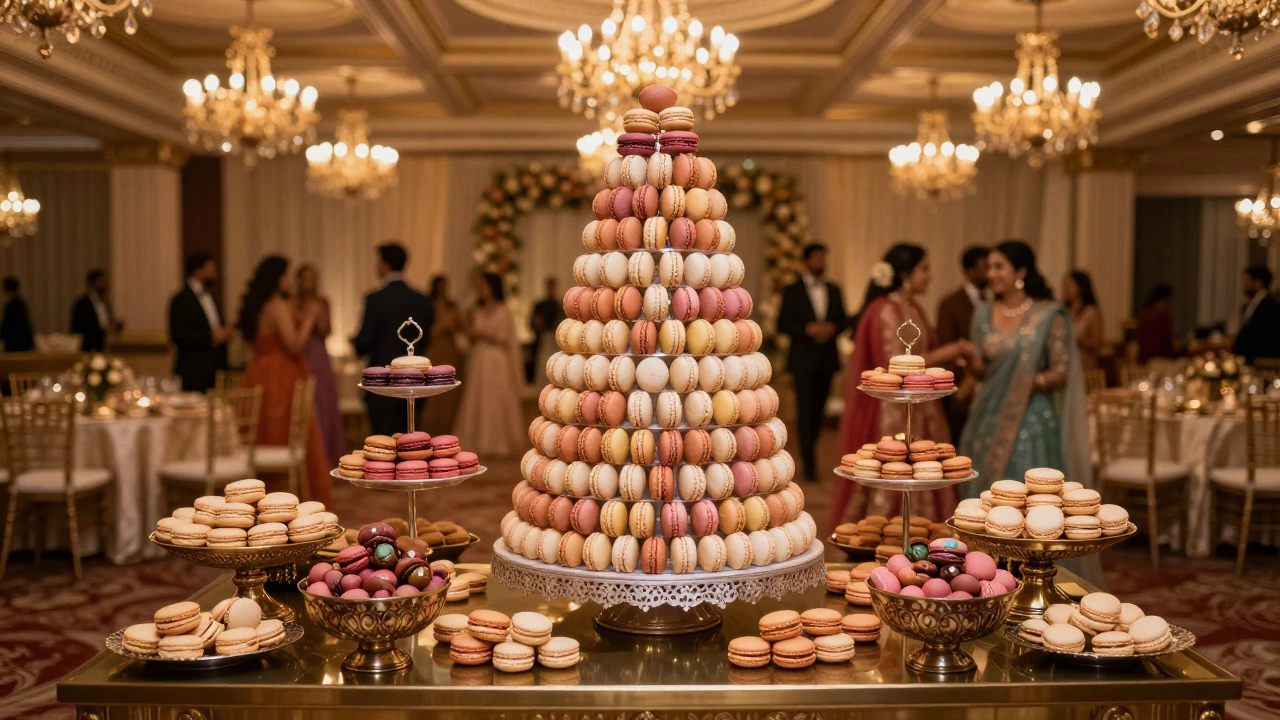
- The Tiered Plate: Use stacked cake stands. Place 10-12 macarons on each tier. This creates height without the complexity of a pyramid.
- The Scattered Look: Instead of a structured tower, scatter macarons across multiple trays and bowls. It’s casual, charming, and requires zero structural engineering.
- The Single Column with Gaps: Use a clear acrylic rod. Attach macarons at intervals using edible glue. This creates a "floating" effect and uses far fewer macarons for significant height.
These options still deliver visual impact but reduce the risk of collapse and the number of macarons needed.
Common Mistakes to Avoid
I’ve seen many beautiful towers fail because of small oversights. Here’s what to watch out for:
- Inconsistent Sizing: If your macarons vary in diameter, the pyramid will look jagged. Use a template to pipe consistent circles.
- Weak Fillings: Ganache is great, but if it’s too runny, it will ooze out and make the stack slippery. Ensure your filling is thick enough to hold its shape.
- Rushing Assembly: Take your time. Align each macaron carefully. A crooked base leads to a crooked tower.
- Ignoring Humidity: High humidity makes macarons sticky. Low humidity makes them dry. Adjust your environment accordingly.
Remember, perfection isn’t the goal. Charm is. A slightly imperfect tower made with love is always better than a sterile, flawless one bought from a factory.
Final Thoughts on Your Macaron Tower
Deciding how many macarons go into a tower is both an art and a science. Start with your guest count and budget, then choose a shape that fits your space. A 5-base pyramid is perfect for intimate gatherings, while a 7-base or larger makes a statement at big events. Don’t forget to bake extras, assemble close to serving time, and use a sturdy stand.
With the right planning, your macaron tower won’t just be food-it’ll be the centerpiece of your celebration. So, grab your piping bag, measure your angles, and start stacking.
How many macarons do I need for a small party?
For a small party of 20-30 guests, a 5-base pyramid with 35 macarons is ideal. This provides about 1-2 macarons per person, which is standard for dessert tables where other sweets are also available.
Can I build a macaron tower without a stand?
Yes, but it’s risky. You can use a flat plate and build a low pyramid directly on it. However, for anything taller than 3 layers, a stand is recommended to prevent sliding and collapse.
How long can a macaron tower sit out?
In a cool room (below 70°F/21°C), a macaron tower can sit out for 2-3 hours safely. In warmer conditions, limit display time to 1 hour to prevent fillings from melting and shells from becoming soggy.
What is the best filling for stacking macarons?
Chocolate ganache or Italian meringue buttercream are the best choices. They are firm enough to provide stability but still delicious. Avoid thin jams or whipped cream, which can cause slippage.
Do I need to refrigerate filled macarons?
If your filling contains dairy (like buttercream) or fresh fruit, yes, refrigerate them until 2 hours before serving. If using chocolate ganache or jam, they can stay at room temperature for up to 3 days.
How do I prevent macarons from sliding off the stand?
Use a non-slip mat on the stand, or apply a tiny dot of royal icing or melted chocolate to the bottom of each macaron before placing it. This acts as edible glue to keep them in place.
Can I make a macaron tower gluten-free?
Yes! Traditional macarons are naturally gluten-free since they are made with almond flour, not wheat flour. Just ensure your filling ingredients are also gluten-free.
What if my macarons are different sizes?
Sort them by size before assembling. Use the largest, most uniform shells for the base and smaller ones for the top. Mixing sizes randomly will result in an unstable and uneven tower.