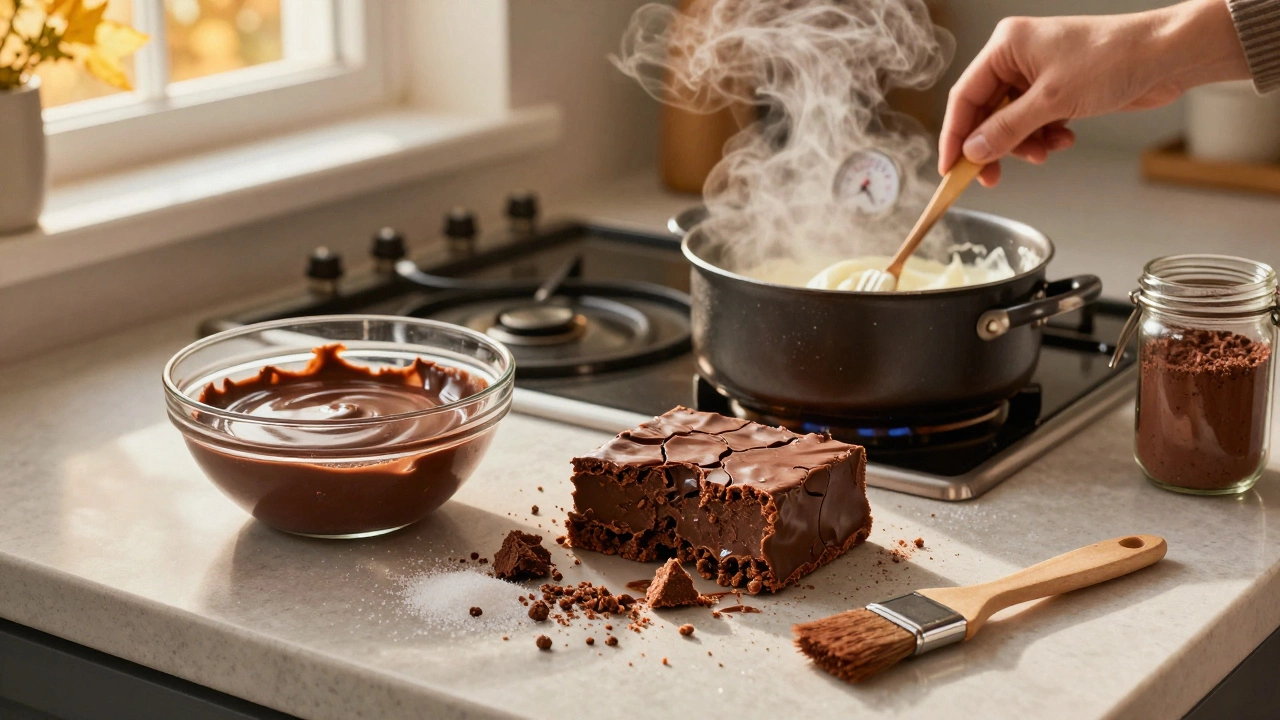
Fudge Too Soft: Why It Happens and How to Fix It
When your fudge, a dense, creamy candy made from sugar, milk, and chocolate. Also known as soft candy, it turns out too soft, it’s not a failed recipe—it’s a science mistake. Fudge isn’t just melted chocolate and sugar; it’s a precise sugar syrup that must reach the right temperature, cool just right, and be stirred at the exact moment. If you skip the thermometer or stir too early, you’ll end up with fudge that won’t hold its shape, no matter how much you chill it.
The real culprit behind soft fudge is almost always sugar syrup, a concentrated solution of sugar and water heated to a specific temperature to control crystallization. If it doesn’t hit 234–240°F (the soft-ball stage), the sugar doesn’t bind properly. Water stays in the mixture, and that water is what keeps your fudge gooey. Even if you follow the recipe exactly, a faulty candy thermometer or a high-altitude location can throw off the entire process. And don’t forget stirring—stirring too soon traps air and prevents crystals from forming evenly. Wait until the mixture cools to 110°F before you start beating. That’s the golden rule.
Another common issue? The type of evaporated milk, a concentrated, shelf-stable milk product with most water removed, used in fudge for creaminess and stability. Some people swap it for regular milk or cream, thinking it’ll make things richer. But that adds too much water. Evaporated milk isn’t optional—it’s the secret to fudge that holds up. And if you’re using chocolate chips instead of chopped chocolate, that’s another red flag. Chips have stabilizers that resist melting evenly, leading to grainy or soft spots.
You might also be storing it wrong. Fudge doesn’t need the fridge unless you live in a tropical climate. Cold temps can actually make it dry out or sweat, which feels like softness. Room temperature in an airtight container is usually best. And if you’ve tried everything and it’s still too soft? It’s not broken—it’s just undercooked. Try it again, but this time, let the syrup boil a full minute longer than the recipe says. Watch it. Smell it. Trust the process, not just the clock.
Below, you’ll find real fixes from bakers who’ve been there. From why refrigerating fudge doesn’t always help, to how the right ingredients make all the difference, these posts cut through the noise. No fluff. Just what works.
Why Is My Fudge Not Setting? The Real Reason Condensed Milk Isn't Working
Fudge not setting? It's not the condensed milk-it's temperature, stirring too soon, or humidity. Learn the real reasons and how to fix it for perfect fudge every time.
Read More
What to Do With Failed Fudge: 7 Easy Ways to Save Your Batch
Don’t throw away failed fudge. Learn 7 easy ways to rescue soft, hard, grainy, or oily fudge and turn it into chocolate sauce, bark, or dessert toppings.
Read More