Brownie Translator & Ordering Assistant
Not sure what to call a brownie in your destination? Select your location and setting below.
Recommended Term:
Cultural Note:
How to Order:
You are standing in a bakery in Madrid or Mexico City. You see a tray of dense, fudgy squares topped with cracked sugar crusts. Your brain screams "brownie," but your mouth hesitates. Do you say "brownie"? Do you try to translate it? Or do you point and hope the baker understands?
This hesitation is common among English speakers learning Spanish, and vice versa. It stems from a linguistic gap that doesn't actually exist in the way most people think. The short answer is yes, there is a word for it. But the longer, more interesting answer reveals how food travels across borders, changing names and identities along the way.
The Direct Answer: Yes, It Exists (But It’s Complicated)
If you walk into a high-end café in Barcelona, you can order a brownie in Spanish contexts often retains its English name as a loanword due to global brand recognition. In many urban areas, especially those influenced by international coffee chains like Starbucks or local artisanal bakeries catering to tourists, the word "brownie" is used exactly as is. Pronunciation might shift slightly-often sounding closer to "brau-nee"-but the term remains intact.
However, relying solely on the English loanword feels lazy if you want to sound culturally integrated. Spanish speakers have developed descriptive alternatives because traditional Hispanic cuisine didn't have an exact equivalent before American influence arrived. This creates a fascinating split: the borrowed term versus the descriptive translation.
Descriptive Translations: What Do You Call It If Not "Brownie"?
When translators or older generations avoid the English term, they turn to descriptions. These aren't official dictionary entries, but they are widely understood phrases used in menus and conversation.
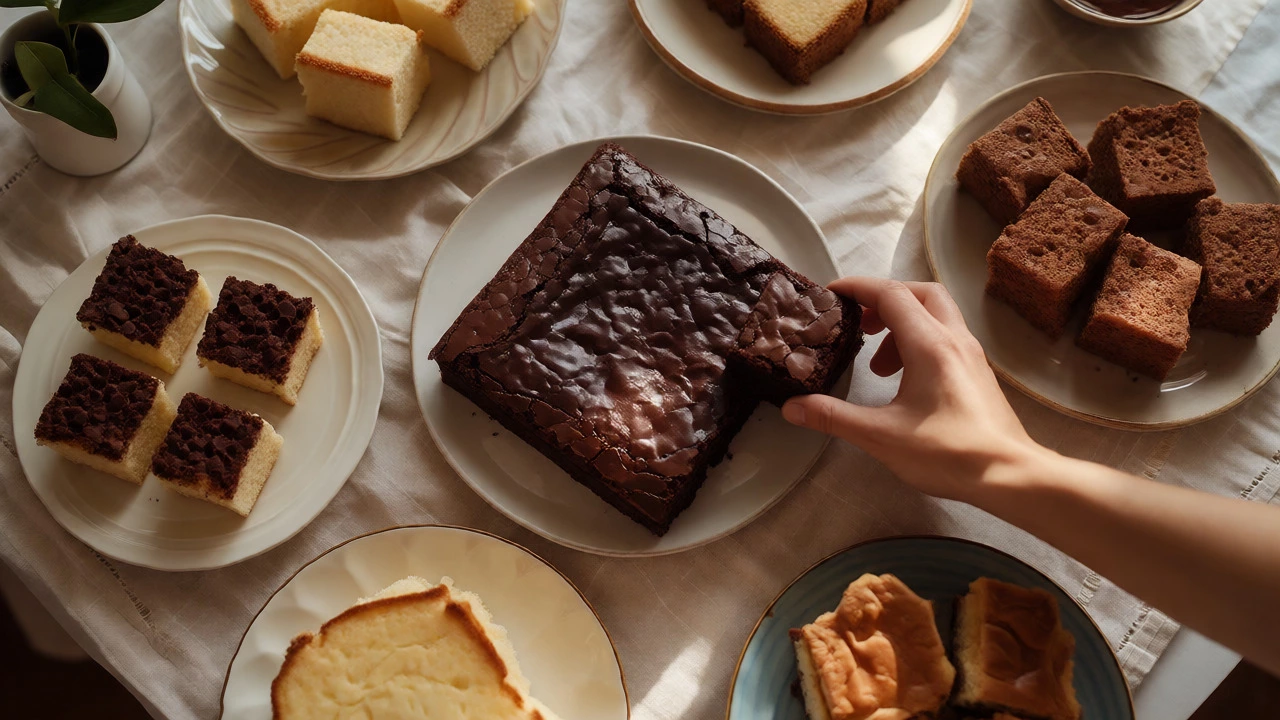
- Bizcocho de chocolate: Literally "chocolate sponge cake." This is technically inaccurate for a true brownie, which is dense and fudgy, not airy and spongy. However, in casual conversation, if you ask for this, you might get a cake-like brownie or an actual slice of chocolate cake.
- Cuadraditos de chocolate: Meaning "little chocolate squares." This is purely visual. It describes the shape, not the texture. A baker might use this on a menu to avoid using foreign words, leaving the customer to guess whether it's a blondie, a fudge square, or a brownie.
- Fudge de chocolate: Since brownies sit somewhere between cake and fudge, some regions lean toward "fudge." If you ask for "fudge" in certain Latin American countries, you might receive a soft, chewy bar that closely mimics a fudgy brownie.
Notice the pattern? None of these capture the specific chemical magic of a brownie-the Maillard reaction creating that shiny top, the lack of leavening agents like baking powder that keeps it dense. Spanish lacks a single, pre-existing noun for this specific confectionery category because the dish itself is a relatively modern invention in the broader timeline of Western cooking.
Where Did the Brownie Come From?
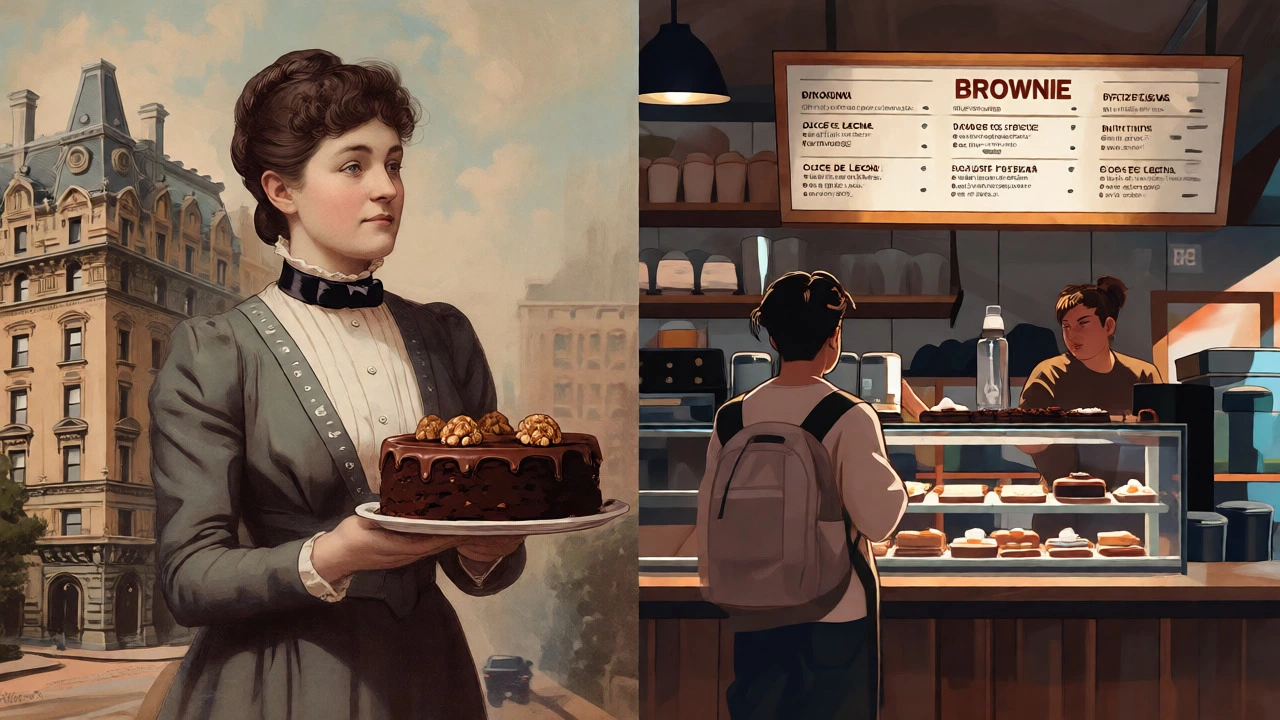
To understand why the translation is tricky, we have to look at the history. The brownie is a baked dessert consisting of chocolate, butter, sugar, eggs, and flour, typically cut into squares originated in the United States in the late 19th century. Several stories compete for the title of "first brownie," but most food historians agree they appeared around 1893 during the Chicago World's Columbian Exposition.
The leading theory involves Bertha Palmer, a prominent society woman who wanted a dessert that could be easily packed in a lunchbox for women attending the fair. She asked her chef at the Palmer House Hotel to create something small, elegant, and easy to eat. The result was a chocolate cake with walnuts and apricot glaze. While different from today's standard recipe, it established the concept: a portable, individual-sized chocolate treat.
Because the brownie is a product of American industrialization and convenience culture, it arrived in Spain and Latin America much later, primarily through globalization in the mid-to-late 20th century. By then, the English name had already become a brand identifier. Unlike "cookie," which has ancient roots and clear etymological ties to Dutch "koekje," the brownie is young enough that it didn't have time to evolve a native name before becoming globally recognized.
Regional Variations: How Different Countries Handle the Name
Spanish is spoken in over twenty countries. Does everyone call it the same thing? No. Culinary language is hyper-local.
| Region | Common Term | Context & Notes |
|---|---|---|
| Spain | Brownie / Bizcocho | Urban centers use "brownie." Rural areas may default to generic "cake" or "bizcocho." Menus often keep the English spelling for perceived premium status. |
| Mexico | Brownie / Pastelito | Heavily influenced by US proximity. "Pastelito" (little cake) is sometimes used for homemade versions, while "brownie" is reserved for commercial products. |
| Argentina | Brownie / Torta | Strong European immigrant heritage means "torta" (cake) is common. However, younger generations universally adopt "brownie." Argentine dulce de leche variations are often called "brownies de dulce de leche." |
| Colombia/Venezuela | Brownie / Cuadrito | "Cuadrito" (small square) appears in home baking circles. Commercially, the English term dominates. |
| Puerto Rico | Brownie | Due to strong US political and cultural ties, the English term is nearly universal, even in Spanish sentences. |
In Argentina, for instance, the culinary tradition is deeply rooted in Italian and Spanish influences, featuring rich cakes like tarta tatín or alfajores. When the brownie arrived, it competed with existing textures. Today, you'll find "brownie de maní" (peanut brownie) or "brownie de Nutella" everywhere. The modification happens to the flavor profile, not the name.
Linguistic Borrowing vs. Translation
Languages borrow words when a concept is new or when the foreign term carries prestige. "Brownie" falls into both categories. Using the English word signals that you know what you're talking about. Saying "bizcocho de chocolate" might signal that you expect a fluffy cake.
This is similar to how Spanish adopted "sandwich," "hot dog," and "pizza." We don't translate "pizza" into "pan plano con queso y tomate" every time. The entity is too specific, and the name is too iconic. The same logic applies here. If you translate "brownie" literally, you lose the cultural signifier. You lose the expectation of density, fudginess, and warmth.
Furthermore, the pronunciation adaptation is minimal. Spanish phonetics handle the "br" blend well. The ending "-nie" is pronounced clearly. There is no awkwardness in saying it. Compare this to trying to pronounce "waffle" or "donut," which require more phonetic gymnastics for some speakers. "Brownie" fits comfortably into the Spanish soundscape.
How to Order Like a Local
So, what should you actually say? It depends on where you are and who you are talking to.
- In a trendy café in Madrid or Buenos Aires: Say "Un brownie, por favor." Use the English word. It shows you are familiar with the global cafe culture. They will likely offer you options: classic, walnut, or white chocolate.
- In a traditional family bakery (pastelería) in a smaller town: Try "¿Tienen algo parecido a un brownie?" (Do you have something similar to a brownie?) or describe it: "Un pastelillo de chocolate denso." This invites conversation and might lead to discovering a local variant you never knew existed.
- At home with friends: If you baked them yourself, just call them "brownies." Even if you made them with Mexican chocolate or added tequila, the format defines the name.
Don't worry about being misunderstood. The visual cue of the square shape and the dark color does half the work. Food is universal; language is just the wrapper.
Why This Matters for Bakers and Writers
If you are writing a cookbook or a blog post targeting a Spanish-speaking audience, your choice of words affects perception. Calling a recipe "Receta de Brownie" attracts readers looking for that specific fudgy texture. Calling it "Receta de Bizcocho de Chocolate" attracts readers looking for a lighter, cake-like dessert.
SEO data supports this. Searches for "brownie receta" in Spanish-language markets often yield higher engagement than searches for translated terms. Why? Because users type what they know. They associate the image of the cracked-top square with the word "brownie," regardless of their native tongue.
For bakers, labeling products matters too. A box labeled "Brownies Artesanales" commands a higher price point than "Cuadraditos de Chocolate." The former implies a specific quality standard associated with the global definition of the treat. The latter sounds like a homemade snack, perhaps less refined.
The Future of the Word
Will Spanish ever invent a unique word for brownie? Unlikely. The trend in globalized food culture is convergence, not divergence. As streaming services, travel, and social media blur borders, food terminology flattens out. We see this with "sushi," "taco," and "croissant." These words are now part of the global lexicon.
However, regional adaptations will continue. We already see "brownie" modified by local ingredients: "brownie de guayaba" (guava), "brownie de coco" (coconut), or "brownie vegano." The core noun remains stable, while the adjectives change. This flexibility ensures the word survives without needing a full translation.
So, next time you bite into a warm, gooey square of chocolate heaven in Seville or Santiago, rest easy. You don't need a translator. You just need to say the word. It works everywhere.
Is "brownie" considered proper Spanish?
While not in the official Real Academia Española dictionary as a traditional Spanish word, "brownie" is widely accepted as a loanword in everyday usage. It is commonly found on menus and in informal speech, particularly in urban areas and commercial settings. Linguists classify it as a naturalized anglicism.
What is the difference between a brownie and a bizcocho?
A bizcocho is a sponge cake, characterized by a light, airy texture achieved through whipped eggs or baking powder. A brownie is dense, fudgy, or cake-like depending on the ratio of fat to flour, but generally lacks the lift of a bizcocho. If you order a bizcocho expecting a brownie, you will likely receive a dry, fluffy cake instead of a moist, dense square.
Can I use the word "cuadradito" to mean brownie?
Yes, but it is ambiguous. "Cuadradito" simply means "little square." It could refer to a lemon square, a rice krispie treat, or a piece of fudge. Context is key. If you point to a tray of chocolate desserts and say "cuadradito," people will understand, but it is not a specific name for the dessert itself.
Are brownies popular in Spain?
Yes, brownies have become extremely popular in Spain over the last two decades. They are a staple in cafés, schools, and supermarkets. While traditional Spanish pastries like churros or magdalenas remain beloved, the brownie has carved out a significant niche as a go-to chocolate dessert option.
How do you pronounce "brownie" in Spanish?
It is pronounced very similarly to English, but with a stronger emphasis on the vowels. It sounds roughly like "BRAU-nee." The 'r' is usually tapped or rolled lightly, and the 'w' sound is maintained. It does not undergo significant phonetic changes compared to other English loanwords.