Fudge Temperature Calculator
Get the exact temperature science for perfect fudge. Based on the article's research, fudge requires precise sugar crystallization at 114°C (237°F) for the soft-ball stage. Enter your target temperature and we'll help you calculate the ideal cooling process.
Results
Ever bitten into a piece of fudge that melted like silk on your tongue, then realized the next bite was grainy, dry, or stuck to the wrapper like gum? That’s not just bad luck. There’s a science to what makes fudge good-and most people get it wrong.
It’s not about the chocolate
Most people think good fudge means using expensive chocolate. It doesn’t. A $10 bar of Belgian chocolate won’t save fudge that was boiled too long or stirred at the wrong time. What actually matters is the sugar syrup’s temperature and how the crystals form. Fudge is basically sugar crystals suspended in a thick syrup, and if those crystals grow too big, you get sand in your mouth. If they stay tiny and even, you get smooth, rich fudge that melts without chewing.The magic number is 114°C (237°F). That’s the soft-ball stage. If you cook the sugar mixture past 116°C, you’re heading into hard-ball territory-and your fudge will turn crumbly. Under 112°C, and it won’t set right. You need a candy thermometer. No, your guess doesn’t count. I’ve seen people use the cold water test for decades, but in Melbourne’s humidity, it’s unreliable. A digital thermometer under $20 is the only way to be consistent.
Butter and cream aren’t just flavor
You can’t skip the butter. Not because it tastes good (though it does), but because fat coats the sugar crystals and stops them from clumping. The same goes for heavy cream. Whole milk won’t cut it. You need at least 35% fat. That’s why recipes calling for evaporated milk or condensed milk work-they’re concentrated. But if you’re using fresh cream, make sure it’s not skimmed. I’ve tested this myself: a batch made with half-and-half turned out gritty. The one with heavy cream? Smooth as velvet.And don’t melt the butter with the sugar. Add it after the sugar syrup hits 110°C. If you add it too early, the water in the butter boils off too fast and messes with the syrup’s balance. Wait until the sugar’s nearly done, then stir it in slowly. Same with vanilla extract-add it at the end, off the heat. Heat kills the flavor.
Stirring is the silent killer
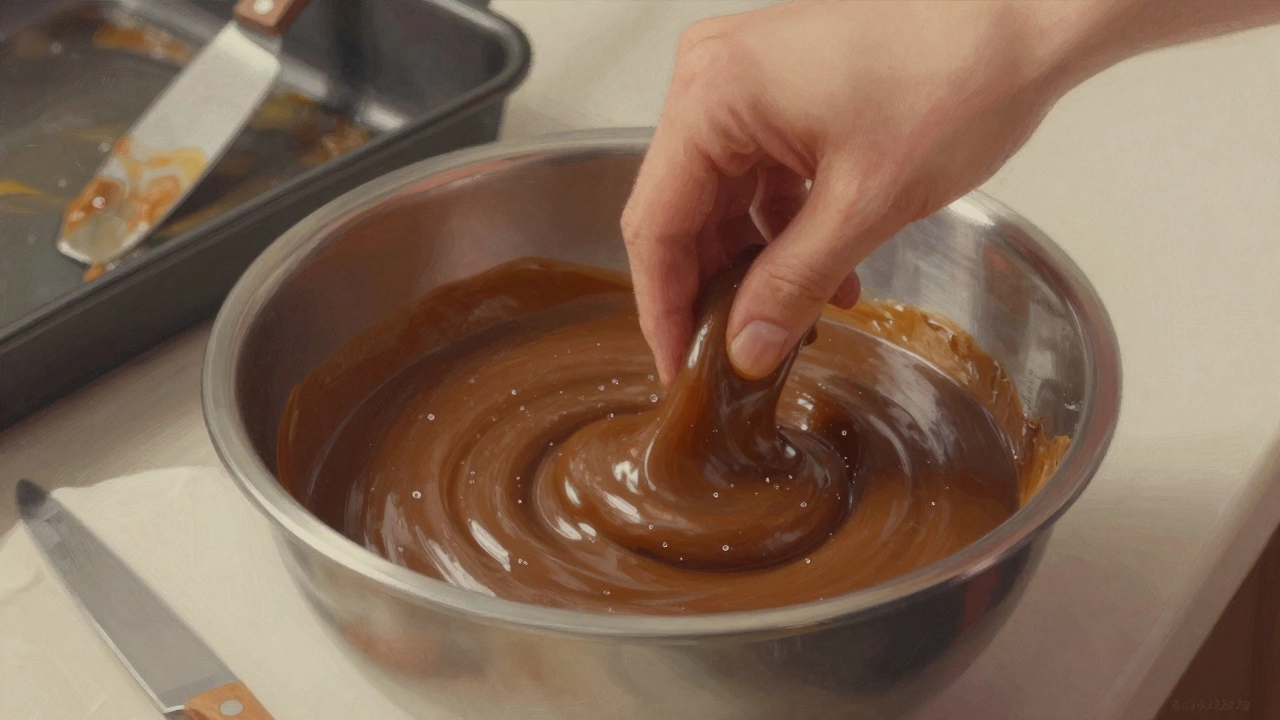
This is where most home bakers fail. You’re told to stir until smooth. But you’re not supposed to stir until it cools. Stirring while it’s hot wakes up the sugar crystals and makes them grow. It’s like shaking a soda bottle before opening it. The result? Grainy fudge.Here’s the real method: Bring the sugar, cream, and butter to a boil. Let it cook undisturbed until it hits 114°C. Take it off the heat. Let it cool to 50°C-about 15 to 20 minutes. Then, and only then, start stirring. Stir slowly, steadily, until it thickens and loses its shine. That’s when the crystals form properly. If you stir too soon, you get sugar sand. If you don’t stir enough, it stays runny. You need to feel the change in texture-it goes from glossy to matte, from pourable to spreadable.
Chocolate isn’t the star-it’s the support
If you’re making chocolate fudge, use real chocolate, but not the kind you eat. Chocolate chips don’t melt evenly. They have stabilizers to keep their shape in cookies. That’s the last thing you want in fudge. Use baking chocolate bars-70% dark is ideal. Chop it finely so it melts fast. Add it after you’ve stopped stirring, and let the residual heat melt it. Don’t put it back on the stove. Even a few extra seconds of heat can separate the cocoa butter and ruin the texture.And don’t add nuts or marshmallows until after the fudge has started to thicken. Stir them in at the very end, just before pouring. If you add them too early, they sink to the bottom. If you wait too long, they freeze in place and won’t distribute.
Temperature and timing are everything
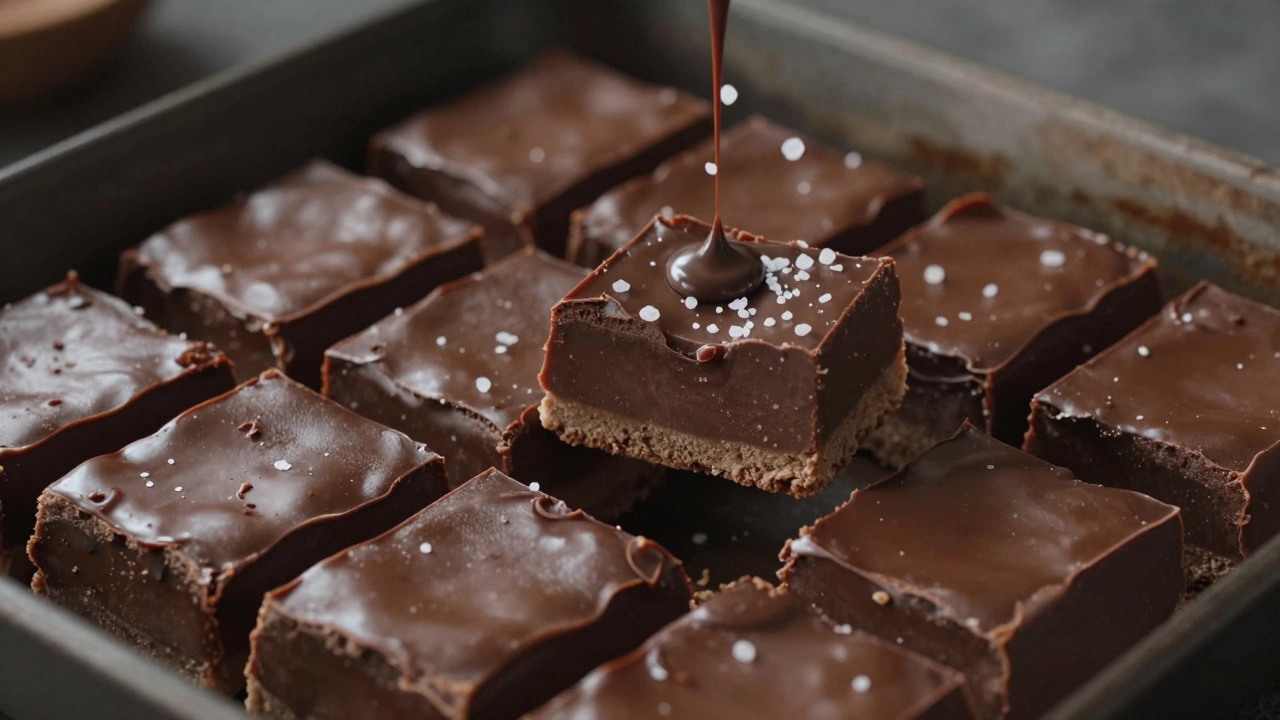
Fudge doesn’t set in the fridge. It sets through controlled cooling. Pour it into a greased pan-use parchment paper for easy removal-and leave it at room temperature for 2 to 3 hours. Don’t rush it. If you put it in the fridge too soon, the sugar crystals form unevenly. You’ll get patches of hardness and soft spots.Once it’s set, cut it with a sharp knife dipped in hot water. Wipe the blade after each cut. Cold metal can cause the fudge to crack. And store it in an airtight container with parchment between layers. Fudge breathes. If it’s exposed to air, it dries out. If it’s too humid, it gets sticky. In Melbourne’s weather, I keep mine in the pantry, not the fridge.
Common mistakes and how to fix them
- Grainy fudge? You stirred too early or used low-fat milk. Next time, wait until 50°C to stir, and use heavy cream.
- Too soft? Didn’t cook long enough. Use a thermometer. 114°C is the target.
- Too hard? Overcooked. Next time, pull it off the heat at 113°C. It’ll rise a degree or two from residual heat.
- Separating? You overheated the chocolate or added it while the mixture was too hot. Let it cool before adding chocolate.
What makes fudge truly great?
It’s not the brand of chocolate. Not the fancy vanilla. Not even the sea salt flakes you sprinkle on top. What makes fudge good is control. Control over temperature. Control over timing. Control over movement. You don’t need a professional kitchen. You just need patience and a thermometer.Try this: Make a batch using store-brand chocolate, plain white sugar, and store-bought cream. Cook it to exactly 114°C. Wait to stir. Don’t rush the cooling. You’ll be surprised. That batch will beat any fancy recipe you’ve tried before.
Flavor variations that actually work
Once you’ve mastered the base, experiment. But keep the science intact.- Peppermint: Add 1/2 tsp oil of peppermint after cooling. Not extract-oil won’t evaporate.
- Sea salt: Sprinkle flaky salt on top right after pouring, before it sets.
- Coffee: Dissolve 1 tbsp instant espresso powder in the cream before heating.
- Peanut butter: Swirl in 1/4 cup natural peanut butter after stirring. Don’t mix it in fully.
These all work because they don’t interfere with the sugar crystallization. Add too much liquid or too much fat, and you break the balance.
Why does my fudge turn out grainy?
Grainy fudge happens when sugar crystals grow too large. This usually occurs if you stir the mixture while it’s still hot. The agitation wakes up the sugar molecules and causes them to form big crystals. To fix this, avoid stirring until the mixture has cooled to 50°C. Also, make sure you’re using heavy cream and not low-fat milk, as fat helps prevent crystallization.
Can I use chocolate chips instead of baking chocolate?
No. Chocolate chips contain stabilizers to keep their shape when baked, which prevents them from melting smoothly into fudge. This often leads to a greasy or uneven texture. Use chopped baking chocolate bars-preferably 70% dark-for the best results. They melt evenly and create a silky finish.
Do I need a candy thermometer?
Yes. The difference between perfect fudge and grainy disaster comes down to a few degrees. The soft-ball stage is 114°C (237°F). Guessing by color or texture doesn’t work reliably, especially in humid climates like Melbourne. A basic digital candy thermometer costs less than $20 and is the most important tool in your fudge-making kit.
Why does my fudge not set?
If your fudge stays soft or runny, it likely didn’t reach the correct temperature during cooking. Sugar syrup must hit 114°C to form the right syrup-crystal balance. If it’s below that, the sugar doesn’t concentrate enough to hold its shape. Double-check your thermometer’s accuracy by testing it in boiling water-it should read 100°C at sea level. In Melbourne, altitude won’t affect you much, but old thermometers can drift.
How long does fudge last?
Properly stored, fudge lasts 2 to 3 weeks at room temperature. Keep it in an airtight container with parchment paper between layers to prevent sticking. Avoid the fridge-it can dry out the fudge and cause sugar bloom. If you need to store it longer, freeze it for up to 3 months. Thaw at room temperature before serving.
Can I make vegan fudge?
Yes, but you need to replace dairy with high-fat alternatives. Use full-fat coconut milk instead of cream, and vegan chocolate with at least 70% cocoa. Add a tablespoon of coconut oil to help mimic butter’s fat content. The process is the same-cook to 114°C, cool to 50°C, then stir. Vegan fudge can be just as smooth, but the flavor profile will be different.
Next steps: Try the basic recipe
Start simple. Gather: 2 cups granulated sugar, 1/2 cup heavy cream, 1/4 cup unsalted butter, 1/2 tsp vanilla extract, 12 oz chopped dark chocolate (70%). Cook sugar and cream to 114°C. Remove from heat. Stir in butter. Cool to 50°C. Stir until thickened. Add chocolate and vanilla. Pour into pan. Wait. Cut. Taste.That’s it. No tricks. No magic. Just control. And once you get it right, you’ll never buy fudge again.