Fudge Type Calculator
Fudge Type Calculator Result
Ever stood in front of a candy counter, staring at two jars labeled "fudge" and "chocolate fudge," wondering if they’re the same thing? You’re not alone. Most people assume chocolate fudge is just fudge with chocolate in it. But here’s the truth: fudge isn’t always chocolate. And that’s where things get interesting.
What Exactly Is Fudge?
Fudge is a soft, dense candy made by heating sugar, butter, and milk (or cream) to a specific temperature-usually between 234°F and 240°F (112°C to 116°C). That’s the soft-ball stage. Once it cools, you beat it until it thickens and becomes smooth. The magic happens because of how the sugar crystals form: small, even crystals give you that melt-in-your-mouth texture. Too many crystals? It turns grainy. Too few? It stays too soft.
Classic fudge doesn’t need chocolate at all. Think vanilla fudge, peanut butter fudge, maple fudge, or even mint fudge. These versions rely on flavor extracts, nuts, or swirls of caramel. The base is always the same: sugar, fat, and dairy. Chocolate? Optional.
What Makes Chocolate Fudge Different?
Chocolate fudge is fudge-yes-but with one key addition: cocoa powder or melted chocolate. That’s it. No mystery. No secret ingredient. Just chocolate added to the sugar mixture before it’s cooked. The cocoa powder gives it a deeper, more intense flavor and a darker color. If you use melted chocolate instead, you get a silkier texture because chocolate already contains cocoa butter, which helps smooth out the final product.
Here’s the breakdown:
- Regular fudge: Sugar + butter + milk/cream + flavoring (vanilla, peppermint, etc.)
- Chocolate fudge: Sugar + butter + milk/cream + cocoa powder or melted chocolate
That’s the whole difference. Chocolate fudge is a subtype of fudge, not a separate candy. It’s like saying "chocolate cake" vs "cake." One is a flavor variation. The other is the base.
Why Do People Confuse Them?
Because in most places-especially in the U.S.-when someone says "fudge," they mean chocolate fudge. It’s the default. Walk into a bakery in Melbourne, Sydney, or Chicago, and the fudge display is almost always chocolate. So over time, the word "fudge" became synonymous with chocolate fudge in popular culture.
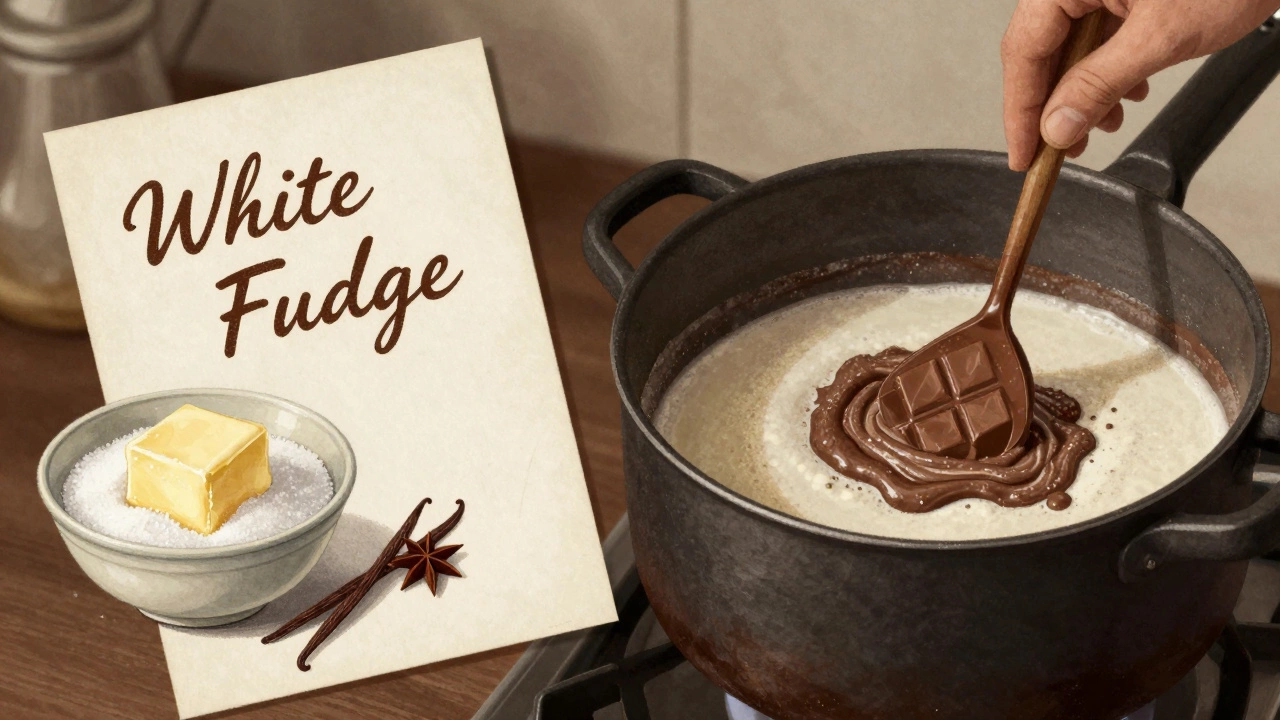
But if you dig into old cookbooks from the 1920s, you’ll find recipes for "white fudge," "orange fudge," and even "lemon fudge." These were common before chocolate became the dominant flavor. In fact, early fudge recipes from the late 1800s didn’t even mention chocolate. They used molasses, brown sugar, or maple syrup.
Texture and Taste: The Real Differences
Let’s talk about what you actually taste and feel.
Regular fudge-say, vanilla with pecans-has a lighter, more delicate sweetness. It’s creamy, with a clean finish. You taste the butter, the cream, maybe a hint of vanilla bean. It’s subtle.
Chocolate fudge? It’s rich. Heavy. Deep. The cocoa or chocolate adds bitterness to balance the sugar, which makes it feel more complex. It doesn’t just sit on your tongue-it lingers. The fat from the chocolate also changes the mouthfeel. It’s smoother, almost velvety, because cocoa butter melts right at body temperature.
And here’s a pro tip: if you’ve ever had grainy fudge, it’s almost always the regular kind. Why? Because without the fat from chocolate to help control crystal formation, it’s easier for sugar to clump up if you stir it too much while cooling. Chocolate fudge is more forgiving.
Can You Substitute One for the Other?
Not really. If a recipe calls for chocolate fudge and you use plain vanilla fudge, you’ll miss the chocolate flavor entirely. No amount of cocoa powder stirred in at the end will fix it. The chocolate needs to be melted into the hot sugar mixture to integrate properly.
On the flip side, if you’re making chocolate fudge and skip the cocoa or chocolate, you’re just making vanilla fudge. You can’t magically turn it into chocolate by adding a few chips at the end. It won’t melt evenly. It’ll sink. It’ll clump. And you’ll end up with uneven bites.
The process matters. The timing matters. The ingredients matter.
How to Tell Them Apart When You Buy Them
If you’re shopping for fudge at a local market or gift shop, here’s how to spot the difference without tasting:
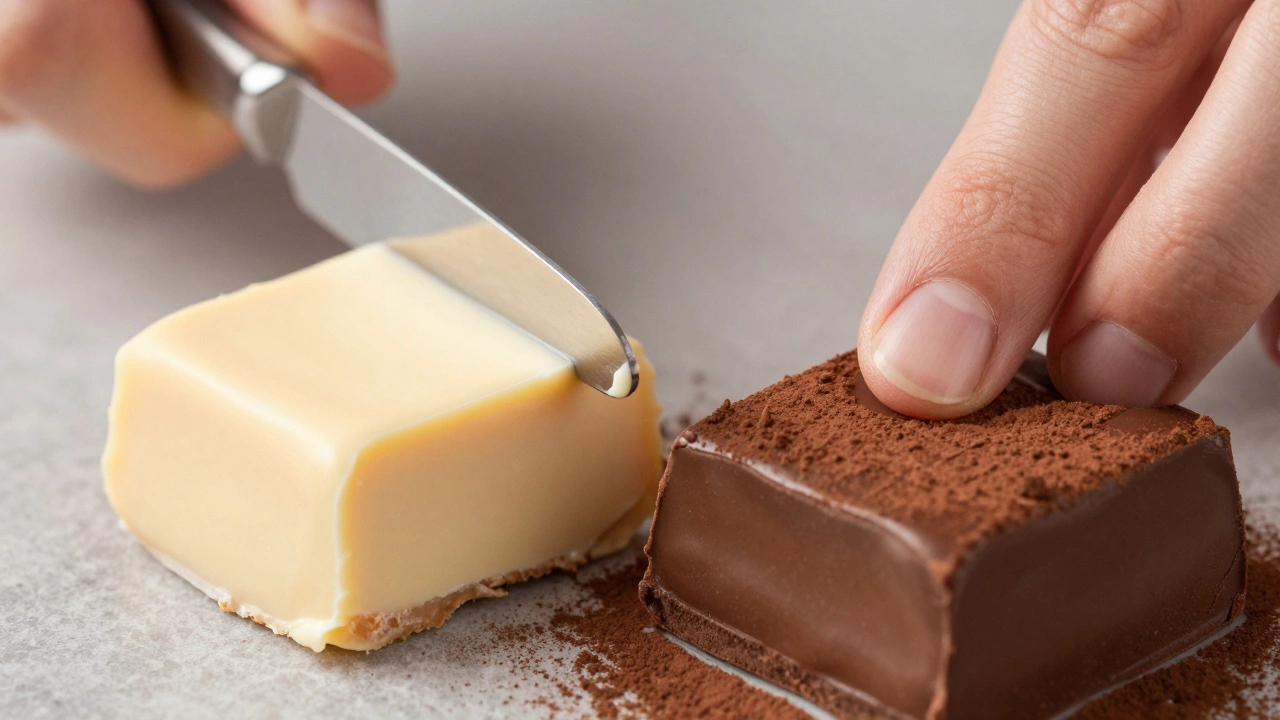
- Color: Chocolate fudge is dark brown, almost black. Regular fudge is pale tan or ivory.
- Texture: Chocolate fudge often looks shinier because of the cocoa butter. Regular fudge can look matte.
- Labeling: Reputable makers will say "Chocolate Fudge" or "Vanilla Fudge." If it just says "Fudge," assume it’s chocolate.
- Ingredients list: Look for "cocoa powder," "chocolate liquor," or "dark chocolate" in the list. If it’s not there, it’s not chocolate fudge.
Why This Matters for Baking
If you’re trying to make fudge at home and your last batch turned out gritty or too soft, knowing the difference between fudge and chocolate fudge might be your fix.
Chocolate fudge recipes are often more reliable for beginners. The cocoa butter helps stabilize the sugar crystals. Vanilla fudge? It’s trickier. You need precise temperature control and careful stirring. One wrong move, and you’ve got sugar sand.
Also, if you’re making fudge for gifts, the type matters. Chocolate fudge lasts longer because the cocoa butter acts as a natural preservative. Vanilla fudge can dry out faster, especially in dry climates like Melbourne’s winter.
Common Mistakes People Make
Here are three mistakes that mess up both types-but hit vanilla fudge harder:
- Stirring too early: Once you take the mixture off the heat, you have to wait until it cools to 110°F before stirring. Stir too soon? You’ll trigger giant sugar crystals. Grainy fudge.
- Using the wrong sugar: Always use granulated white sugar. Brown sugar or powdered sugar? They change the chemistry. Don’t do it.
- Skipping the butter: Butter isn’t just for flavor. It’s a fat that blocks crystal formation. Skip it, and your fudge will be hard and brittle.
Final Thought: It’s All About Context
At the end of the day, the difference between fudge and chocolate fudge is simple: one has chocolate, the other doesn’t. But that one change transforms the whole experience.
Chocolate fudge is bold. Comforting. Classic.
Fudge? It’s quiet. Elegant. Nostalgic.
Both are delicious. Both deserve a place on your counter. But now you know: if someone says "fudge," ask them-chocolate or not?
Is chocolate fudge just fudge with chocolate added?
Yes. Chocolate fudge is fudge with cocoa powder or melted chocolate added during the cooking process. The base-sugar, butter, and cream-stays the same. The chocolate changes the flavor, color, and texture, but it doesn’t make it a different candy. It’s a variation.
Can I make fudge without chocolate if I don’t like it?
Absolutely. Vanilla fudge, peanut butter fudge, and maple fudge are all popular without chocolate. They use extracts, nuts, or syrups for flavor. In fact, many traditional recipes from the 1800s didn’t include chocolate at all. Fudge started as a sugar candy, not a chocolate one.
Why does my fudge turn out grainy?
Grainy fudge happens when sugar crystals grow too large. This usually occurs if you stir the mixture while it’s still hot, or if you don’t let it cool enough before beating. Chocolate fudge is less likely to get grainy because cocoa butter helps control crystal formation. Vanilla fudge is more sensitive-so patience is key.
What’s the best way to store fudge?
Store fudge in an airtight container at room temperature for up to two weeks. For longer storage, refrigerate it (up to a month) or freeze it (up to three months). Chocolate fudge lasts longer because cocoa butter doesn’t dry out as easily. Wrap it in wax paper or parchment to prevent sticking.
Can I use milk chocolate instead of dark chocolate in chocolate fudge?
Yes, but it changes the texture. Milk chocolate has more milk solids and sugar, so your fudge will be softer and sweeter. Dark chocolate gives a firmer set and deeper flavor. If you use milk chocolate, reduce the amount of sugar slightly in the recipe to balance it. Always melt chocolate gently-never over high heat.