Which Cake Reigns Supreme?
The title of "King of Cakes" is disputed. Use this tool to determine which royal contender suits your needs.
Bûche de Noël
The Yule Log. A festive, rolled sponge cake decorated to look like wood. High drama, high skill.
High DifficultyBrioche
The Enriched Bread. Rich in butter and eggs, historically baked for royalty. Soft, flaky, luxurious.
Medium DifficultyYour Royal Choice
Side-by-Side Comparison
| Feature | Bûche de Noël | Brioche |
|---|---|---|
| Primary Category | Cake / Dessert | Enriched Bread |
| Key Ingredients | Eggs, sugar, flour, buttercream, chocolate | Flour, eggs, butter, yeast, milk |
| Texture | Light, airy sponge with creamy filling | Dense, soft, flaky, and buttery |
| Occasion | Christmas Eve / Holiday Parties | Breakfast, Brunch, or Tea Time |
| Difficulty Level | High (requires rolling and decorating skills) | Medium (requires kneading and proofing time) |
There is a specific moment in every holiday season when the air gets thick with the smell of vanilla, dark chocolate, and whipped cream. It’s not just any dessert night; it’s the celebration of a treat that has worn a crown for centuries. When people ask which cake holds the title of "King of Cakes," they are usually looking for a single answer, but the truth is a bit more deliciously complicated. Depending on where you stand-and whether you prefer your history served with butter or fruit-the title belongs to either the Bûche de Noël, also known as the Yule Log, or the Brioche.
However, if we are talking about the literal translation and the most famous moniker in pastry history, the spotlight falls squarely on the Bûche de Noël. It is a traditional French Christmas cake designed to look like a wooden log. But why does this rolled sponge cake get the royal treatment? And how did a simple piece of bread evolve into a dessert that requires precision, patience, and a steady hand?
The Crown Contenders: Who Really Rules the Bakery?
To understand the hierarchy of cakes, we have to look at two main contenders. The first is the Bûche de Noël. A festive French dessert made from a genoise sponge rolled around a filling of buttercream or mousse. The second is Brioche. A rich, enriched bread originating from France, known for its high egg and butter content.
Brioche is often called the "King of Cakes" because of its regal appearance and its historical connection to the French monarchy. It was baked for kings and nobles who demanded the finest ingredients. The texture is soft, slightly sweet, and incredibly buttery. It’s the kind of cake that feels luxurious even before you take a bite. However, Brioche is technically a bread. It’s an enriched dough, not a cake in the modern sense of layered sponges and frostings.
On the other hand, the Bûche de Noël is undeniably a cake. It’s a centerpiece. It’s dramatic. It’s the star of the show during the winter holidays. In many European households, especially in France and Belgium, the Bûche isn’t just a dessert; it’s a ritual. The question "Which cake is known as King of cakes?" often leads to this debate. If you want historical royalty, go with Brioche. If you want festive grandeur and visual spectacle, the Bûche takes the throne.
| Feature | Bûche de Noël | Brioche |
|---|---|---|
| Primary Category | Cake / Dessert | Enriched Bread |
| Key Ingredients | Eggs, sugar, flour, buttercream, chocolate | Flour, eggs, butter, yeast, milk |
| Texture | Light, airy sponge with creamy filling | Dense, soft, flaky, and buttery |
| Occasion | Christmas Eve / Holiday Parties | Breakfast, Brunch, or Tea Time |
| Difficulty Level | High (requires rolling and decorating skills) | Medium (requires kneading and proofing time) |
The Story Behind the Yule Log
Why do we call it the King of Cakes? The answer lies in ancient traditions. Long before ovens were common, families in Europe would gather around a massive bonfire on Christmas Eve. They would burn a large log, often saved from the previous year, to symbolize the return of the sun and to ward off evil spirits. This was the actual Yule Log.
As heating methods changed and central heating became standard, the real fire disappeared from homes. But the tradition didn’t vanish. Instead, bakers got creative. They started making a cake that looked like the log. The Genoise sponge, a light Italian sponge cake made with whole eggs whipped with sugar until pale and thick. was the perfect canvas. It’s flexible enough to roll without cracking, provided you handle it correctly. The chocolate frosting mimics the bark, and piped meringue mushrooms add the forest floor aesthetic.
This transformation from a burning timber to a edible masterpiece is what elevates the Bûche de Noël above ordinary desserts. It carries weight-literally and figuratively. It represents continuity, warmth, and family. That’s why it wears the crown. It’s not just food; it’s heritage on a plate.
Mastering the Sponge: The Foundation of Royalty
If you decide to bake the King of Cakes yourself, you need to respect the foundation. The success of a Bûche de Noël depends entirely on the quality of your sponge. Many home bakers fail here because they use a recipe that is too dry or too dense. You need a sponge that is moist but sturdy.
The classic choice is the Genoise. Unlike butter cakes, which rely on creaming butter and sugar, Genoise relies on air. You whip the eggs and sugar together over a double boiler until they reach ribbon stage. This means when you lift the whisk, the batter falls back in a thick ribbon that sits on the surface for a few seconds before disappearing. This trapped air is what makes the cake rise and stay light.
Here is the critical step that separates amateurs from pros: folding. Once you remove the eggs from the heat, you gently fold in the sifted flour. Do not stir vigorously. You want to keep those air bubbles intact. If you deflate the batter, your cake will be flat, and you won’t be able to roll it. A flat cake cannot become a log.
- Preheat your oven to 350°F (175°C). Line a jelly roll pan with parchment paper. Do not grease the sides of the pan; you want the cake to stick to the sides so it doesn’t shrink away from them while cooling.
- Whip eggs and sugar over simmering water until the mixture is warm to the touch and tripled in volume.
- Fold in the flour using a spatula. Cut down the center, sweep along the bottom, and fold over the top. Rotate the bowl and repeat. Be gentle.
- Bake immediately for 12-15 minutes. The cake should spring back when lightly touched.
The Art of Rolling Without Cracking
This is where most people panic. You pull a hot cake out of the oven, and you think, "I have five minutes to roll this thing." You don’t. You actually have zero minutes. The trick is preparation.
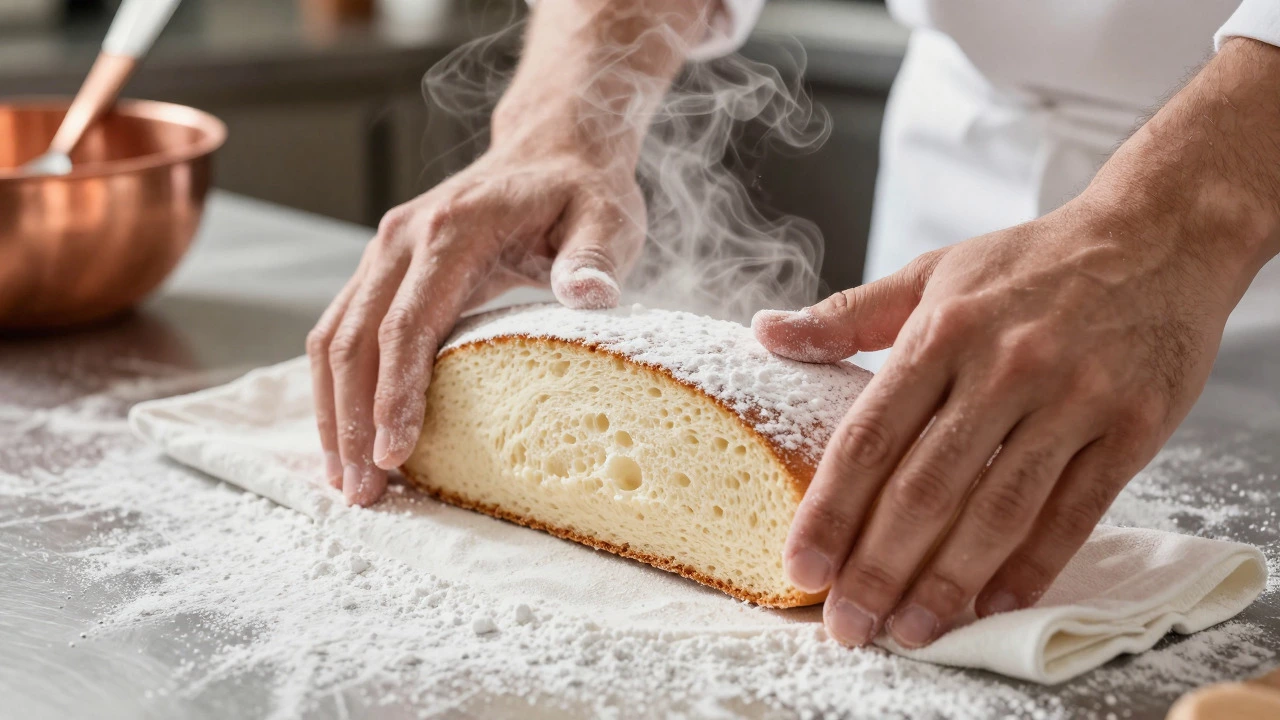
Before the cake even goes into the oven, lay out a clean kitchen towel and dust it heavily with powdered sugar. Why powdered sugar? Because it doesn’t absorb moisture like granulated sugar does, and it prevents sticking better than cornstarch alone. As soon as the cake comes out of the oven, invert it onto the sugared towel. Peel off the parchment paper carefully. The cake is still hot and pliable.
Start rolling from the short end. Roll the cake up inside the towel, including the towel itself. Let it cool completely on a wire rack. This trains the cake to remember the shape of a cylinder. When you unroll it later to add the filling, it will have a slight curve, making it much easier to roll again without snapping. If you try to roll a completely flat, cooled cake, it will crack. Physics is unforgiving in baking.
Filling and Frosting: Adding the Royal Flair
Once the cake is cool and unrolled, it’s time for the filling. Traditionalists swear by Buttercream, A smooth emulsion of butter and sugar, often flavored with vanilla or chocolate. specifically Swiss Meringue Buttercream. It’s stable, silky, and not overly sweet. You can flavor it with espresso, orange zest, or dark chocolate ganache. Spread a thin layer over the sponge. Don’t go overboard; too much filling makes the roll unstable.
Re-roll the cake tightly. Use the towel to help guide it into place. Once rolled, wrap the entire log in plastic wrap and refrigerate for at least an hour. This sets the structure. When you’re ready to decorate, unwrap it and cover it in a crumb coat of chocolate ganache or buttercream. Then, apply the final layer.
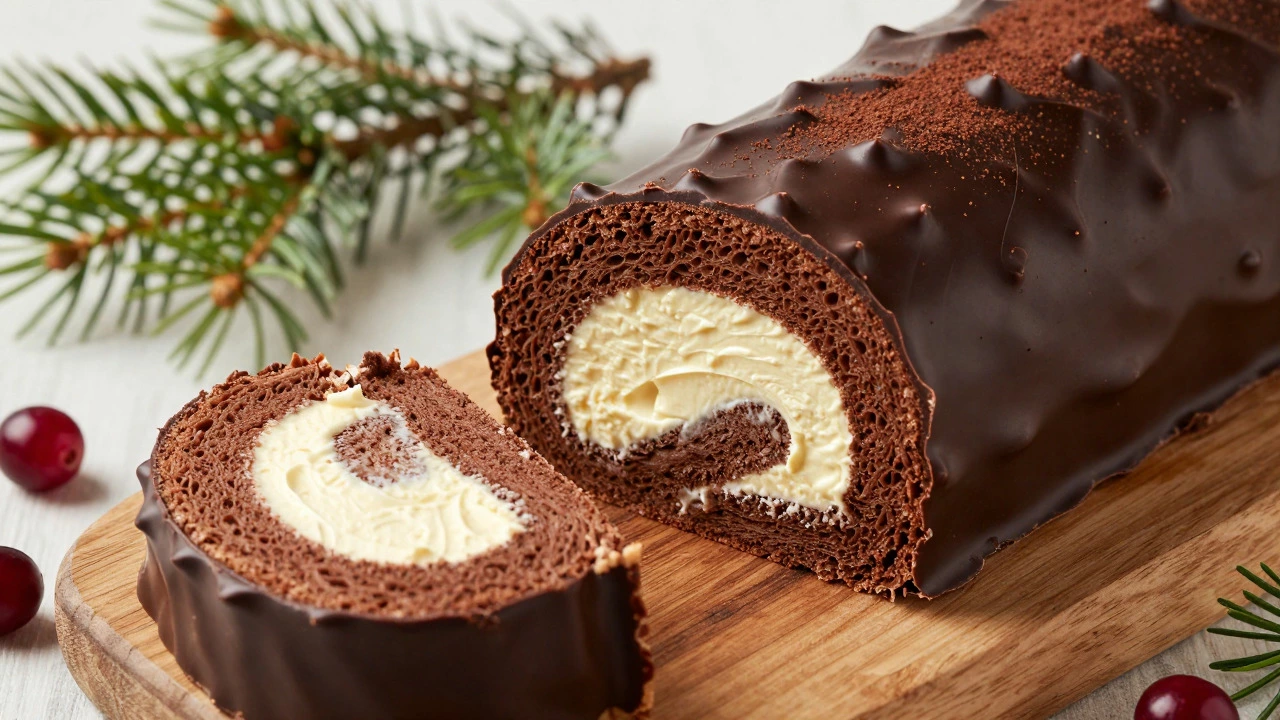
To create the bark effect, use a fork. Drag the tines of the fork across the frosting in random directions. For extra realism, pipe small dollops of white chocolate or meringue to look like snow-covered mushrooms. Dust with cocoa powder for shadows. The goal is deception. You want people to wonder if they’re looking at wood or dessert.
Variations on a Theme
While the chocolate Bûche is the classic, the concept of the "King of Cakes" allows for creativity. In some regions, the log is filled with frangipane (almond cream) instead of buttercream. Others use a red velvet sponge to mimic the color of wine-soaked fruits. There are even savory versions for dinner parties, though these are rare.
If you find the traditional method too intimidating, consider the "fake" Bûche. Slice a rectangular cake into logs, stack them, and frost the seams. It looks identical from a distance but saves you the stress of rolling. Is it cheating? Maybe. But it’s still delicious, and it still brings joy to the table.
Why the Title Matters
Calling a cake the "King" isn’t just about marketing. It’s about recognition of skill. Baking a perfect Bûche de Noël requires understanding chemistry (the sponge), physics (the rolling), and artistry (the decoration). It demands attention to detail. When you serve it, you’re serving a testament to your effort. That’s why it earns the title. It’s not just a cake; it’s an achievement.
Whether you choose the buttery richness of Brioche or the festive elegance of the Bûche de Noël, both deserve a place in your holiday repertoire. But if you want to impress guests and honor tradition, pick up your whisk and start whipping those eggs. The crown awaits.
Is Bûche de Noël the only cake called the King of Cakes?
No. While Bûche de Noël is widely referred to as the King of Cakes due to its prominence in French holiday traditions, Brioche is also frequently given this title because of its historical association with French royalty and its rich, buttery composition.
What is the difference between a Bûche de Noël and a regular Swiss Roll?
A Swiss Roll is typically a lighter, less dense sponge with a simple jam or cream filling, often served casually. A Bûche de Noël is a more elaborate dessert, usually featuring a richer Genoise sponge, complex fillings like buttercream or mousse, and decorative elements like chocolate ganache bark and meringue mushrooms to resemble a log.
Can I make a Bûche de Noël ahead of time?
Yes, it is actually recommended. The flavors meld better after resting. You can bake and roll the sponge a day in advance, wrap it tightly, and store it at room temperature. Assemble and frost it a few hours before serving, or freeze the assembled log for up to a month.
Why does my Bûche de Noël crack when I roll it?
Cracking usually happens because the cake was baked too long and became dry, or because it was allowed to cool completely before the initial roll. Always roll the cake while it is still warm and pliable, using a powdered sugar-dusted towel to set the shape.
What is the best filling for a Bûche de Noël?
Traditional fillings include Swiss Meringue Buttercream, Chocolate Ganache, or Frangipane (almond cream). Coffee-flavored buttercream is also a popular choice as it pairs well with chocolate sponge and adds depth of flavor.