Fudge Stirring Simulator
Simulate the fudge-making process to understand why timing is everything. Watch the temperature drop and learn exactly when to pick up your spoon.
Ready to Start
IdleBatch Complete!
You’ve just pulled your pot off the stove. The sugar mixture is bubbling away, smelling like heaven, and you’re staring at it with a wooden spoon in hand. Your instinct screams: stir it! But wait. If you start stirring now, you might ruin everything. Or if you don’t stir enough later, you’ll end up with a grainy mess that tastes more like sand than sweet chocolate. This is the classic fudge dilemma.
Fudge is deceptively simple on paper-sugar, milk, butter, flavoring-but chemically, it’s a high-wire act. It relies entirely on controlling how sugar crystals form. Stirring too early or too late changes the texture from creamy perfection to gritty disappointment. So, when exactly do you pick up that spoon? And once you start, how hard should you go?
The Science of Why We Stir
To know when to stir, you have to understand what’s happening inside the pot. When you boil sugar and milk together, you are dissolving solid sugar into liquid water. As the temperature rises, water evaporates, and the sugar concentration increases. This creates a supersaturated solution. In this state, the sugar wants to come out of the liquid and turn back into crystals.
Your goal isn't to stop crystallization; it's to control it. You want millions of tiny, microscopic crystals that create a smooth, creamy mouthfeel. If you allow large crystals to form, the fudge becomes grainy. Stirring introduces air and encourages crystallization, but timing is everything. Stir while the mixture is still boiling hot, and you risk seeding large crystals that will dominate the batch. Stir only after it cools slightly, and you encourage the rapid formation of those desired micro-crystals.
The Two Stages of Stirring
Most recipes divide the process into two distinct phases: the initial boil and the cooling phase. Confusing these two is where most home cooks go wrong.
Phase 1: The Initial Boil (Do Not Stir)
When you first combine your ingredients-typically condensed milk, sugar, and butter-and bring them to a boil, resist the urge to stir constantly. In fact, many professional confectioners recommend not stirring at all during the initial rise to the target temperature (usually around 114-116°C or 238-240°F).
Why? Because stirring while the sugar is still dissolving can cause crystals to form on the sides of the pan. These "seed" crystals fall back into the mix and act as anchors for larger crystals to grow. Instead of stirring, gently swirl the pan occasionally to ensure even heating. If you see crystals forming on the sides of the pot, use a pastry brush dipped in cold water to wash them down. This keeps the solution pure and prevents premature crystallization.
Phase 2: The Cooling Phase (The Big Stir)
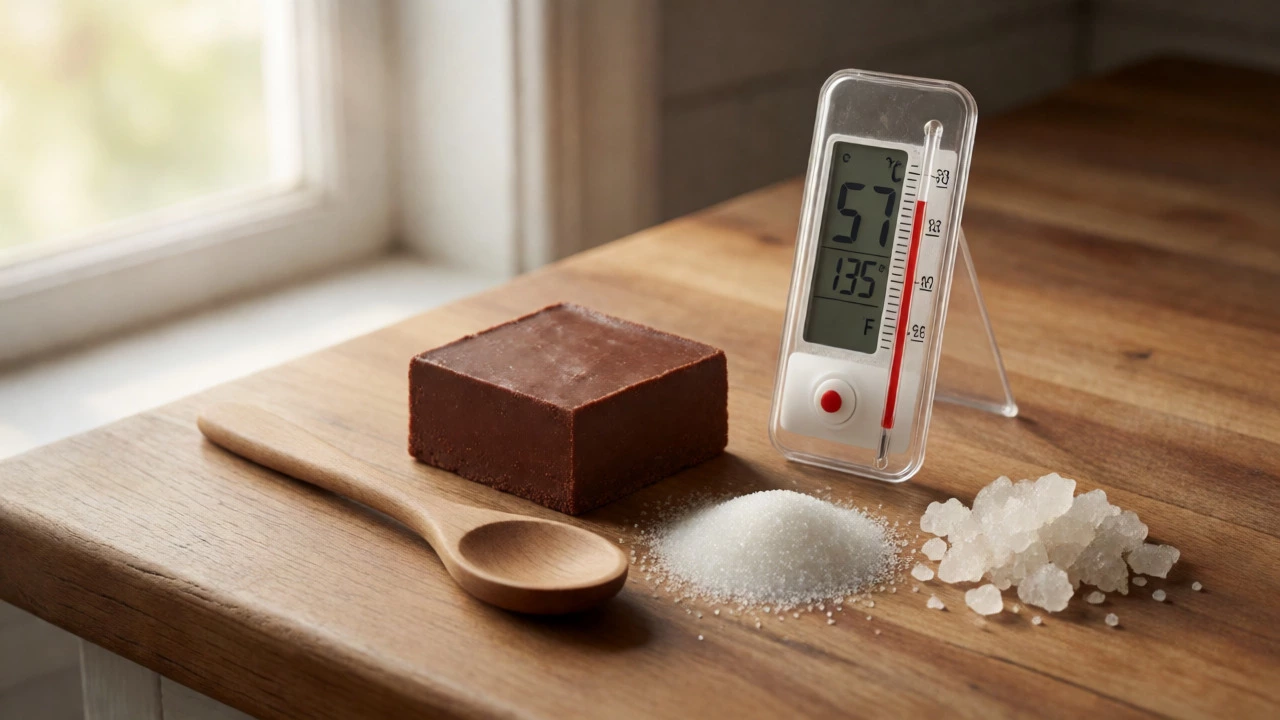
This is the moment of truth. Once your candy thermometer reads the correct temperature, remove the pot from the heat immediately. Now comes the hardest part: waiting. Do not touch the mixture. Let it cool undisturbed until it reaches approximately 57°C (135°F). This usually takes about 10 to 15 minutes, depending on the volume and ambient kitchen temperature.
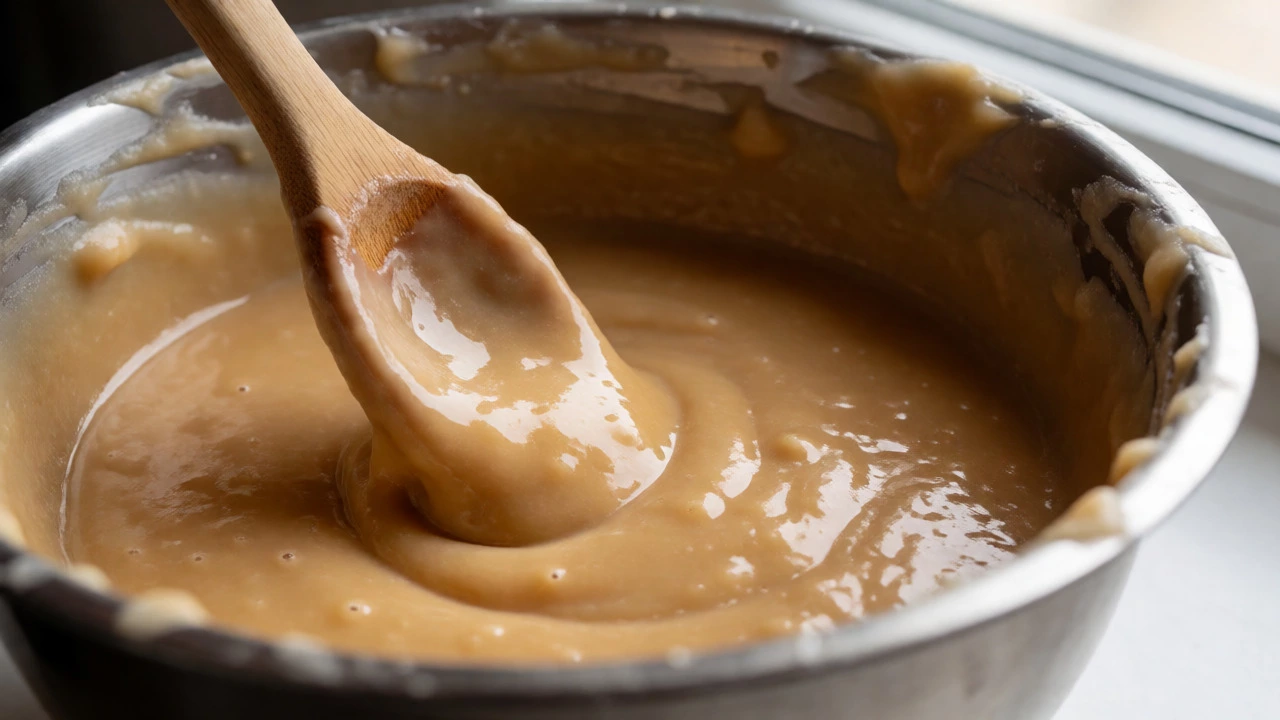
Once it hits that cooler temperature, grab your wooden spoon and start beating. This is the "big stir." You aren't just mixing; you are agitating the syrup to force rapid crystallization. Beat vigorously for 5 to 10 minutes. You’ll notice the glossy, translucent look of the syrup change to an opaque, matte finish. The color lightens slightly, and the texture thickens significantly. Stop when the fudge loses its shine and holds its shape on the spoon.
| Stage | Action | Reason | Time Estimate |
|---|---|---|---|
| Heating Up | No stirring / Gentle swirling | Prevents seed crystals on pan walls | Until boil reached |
| Boiling | No stirring | Maintains uniform saturation | Until 114°C (238°F) |
| Cooling Down | Rest completely | Lowers temp to trigger fine crystals | 10-15 mins |
| Beating | Vigorous stirring | Induces rapid micro-crystallization | 5-10 mins |
What Happens If You Get It Wrong?
Let’s say you panic and start stirring while the fudge is still piping hot at 90°C (194°F). What happens? You introduce air bubbles, sure, but more importantly, you encourage large crystal growth. The result is often "grainy" fudge. It feels sandy on the tongue. It might still taste good, but the texture is wrong. It lacks that melt-in-your-mouth quality.
On the flip side, what if you forget to stir it long enough after it cools? You might miss the window where the syrup is viscous enough to hold crystals but fluid enough to mix evenly. If you wait too long, the fudge sets up unevenly. You might get hard chunks mixed with soft goo. If you beat it too little, it remains shiny and sticky, failing to set firmly. If you beat it too much, it becomes dry and crumbly, losing moisture to evaporation.
Tips for Perfect Consistency Every Time
Getting the timing right is easier when you remove variables. Here are practical steps to ensure your stirring strategy works every time.
- Use a Candy Thermometer: Guessing temperatures is risky. A digital probe thermometer gives you real-time data. Aim for 114°C (238°F) for standard soft-set fudge. For firmer fudge, go to 116°C (240°F).
- Choose the Right Pot: Use a heavy-bottomed saucepan. Thin pots heat unevenly, leading to hot spots that burn sugar before the rest boils. Stainless steel is ideal because it doesn't react with the acidic components in some flavors.
- Don't Skip the Water Wash: Before you start boiling, wipe the inside walls of the pot with a damp cloth. Any stray sugar crystals there will fall in and ruin your smoothness.
- Patience During Cooling: Place the pot on a wire rack to speed up cooling. Do not put it in the fridge unless the recipe specifically says so, as rapid cooling can sometimes shock the crystals into forming incorrectly.
- Work Fast During Beating: Once you start beating, the fudge sets quickly. Have your parchment-lined pan ready. Pour it in immediately after beating stops. If you wait, it will harden in the pot.
Adjusting for Different Types of Fudge
Not all fudge behaves the same way. Chocolate fudge, vanilla fudge, and peanut butter fudge have different fat contents and viscosities, which affects how they respond to stirring.
Chocolate fudge contains cocoa solids and extra fat from cocoa butter. These fats coat sugar crystals, slowing down their ability to bond. Consequently, chocolate fudge often requires slightly longer beating times to achieve opacity. You might need 10-12 minutes of vigorous stirring instead of 5.
Peanut butter fudge is already semi-solid due to the nut butter. It tends to set faster. You should begin beating as soon as it reaches 57°C (135°F), and you may find it thickens within 3-5 minutes. Over-beating peanut butter fudge can make it oily, as the mechanical action separates the oil from the solids.
Vanilla or fruit-flavored fudges, which lack the stabilizing effect of cocoa or nuts, are the most sensitive. They require precise timing. If you over-stir these, they become dry and chalky. Stick strictly to the visual cue: when the shine disappears, stop immediately.
Troubleshooting Common Stirring Issues
Even with the best intentions, things go sideways. Here’s how to fix common problems related to stirring.
Problem: The fudge is grainy. Fix: You likely stirred too early or had seed crystals in the pot. Next time, ensure the pot is clean and avoid stirring until the mixture has cooled to 57°C (135°F). If it’s already made, you can try melting it down again with a splash of cream and re-cooling it properly, though results vary.
Problem: The fudge is too soft or won't set. Fix: You probably didn't cook it to a high enough temperature, meaning too much water remained. Or, you didn't stir it long enough to induce crystallization. Try placing it in the fridge to firm up, but next time, use a thermometer to hit the exact temperature and beat until it loses its gloss.
Problem: The fudge is dry and crumbly. Fix: You over-beat it. The friction caused too much moisture to evaporate. Next time, stop stirring the second it turns matte. Don't wait for it to feel "thick" in the bowl; trust the visual change from shiny to dull.
Can I stir fudge while it is boiling?
Generally, no. Stirring while the sugar mixture is actively boiling can cause large sugar crystals to form on the sides of the pan. These crystals can fall back into the mixture and cause the final fudge to be grainy. It is best to let it boil undisturbed or gently swirl the pan if necessary.
How do I know when to start stirring fudge?
You should start stirring after the fudge has been removed from the heat and cooled down to approximately 57°C (135°F). Using a candy thermometer is the most accurate method. Visually, the mixture will still look clear and glossy before you start stirring.
Why does my fudge turn grainy?
Graininess is caused by large sugar crystals forming instead of small ones. This usually happens if you stir the mixture while it is still too hot, if there were existing sugar crystals in the pot (seed crystals), or if you did not cook the mixture to the correct temperature to dissolve all the sugar initially.
How long should I beat fudge after it cools?
Beat the fudge vigorously for 5 to 10 minutes. The key indicator is visual: stop when the fudge loses its glossy shine and becomes matte and opaque. The color will also lighten slightly. Over-beating can make the fudge dry and crumbly.
Does the type of spoon matter for stirring fudge?
Yes, a wooden spoon is traditionally recommended because it provides better traction and helps incorporate air without introducing metal ions that might affect flavor or color. However, a sturdy silicone spatula can also work well, especially for scraping the sides of the pot efficiently during the beating phase.
Final Thoughts on Mastering the Spoon
Stirring fudge isn't just about moving liquid; it's about engineering texture. By respecting the science of sugar crystallization, you take control of the outcome. Remember: patience during the boil, precision during the cool-down, and vigor during the beat. Follow these rules, and you’ll never have to guess whether your fudge will be smooth or sandy again. Grab your thermometer, keep your eyes on the shine, and enjoy the process.