Bacon Gluten Risk Analyzer
Product Details
Safety Assessment
Enter product details to check for hidden gluten risks.
Recommendation:
Picture this: you’re making a hearty breakfast or topping your favorite salad with crispy strips of pork. It sounds simple enough. But if you are living with celiac disease or non-celiac gluten sensitivity, that innocent-looking strip of meat can suddenly feel like a minefield. You might be wondering, is bacon actually gluten-free? The short answer is yes, pure bacon is naturally gluten-free. However, the longer answer involves reading labels, understanding curing processes, and knowing which brands to trust.
For those of us navigating a gluten-free lifestyle, it’s not just about avoiding wheat, barley, and rye. It’s about spotting hidden ingredients and preventing cross-contamination. This guide breaks down exactly what to look for when buying bacon, why some processed meats contain gluten, and how to keep your meals safe without sacrificing flavor.
The Basic Science: Why Pork Doesn’t Have Gluten
Let’s start with the fundamentals. Gluten is a protein found in specific grains: wheat, barley, and rye. It acts as a binder in breads and pastas, giving them their chewy texture. Meat, on the other hand, comes from animals. Pigs do not eat grain-based diets that transfer gluten into their muscle tissue in a way that affects human digestion. Therefore, plain, unprocessed pork belly-the cut used for most bacon-is naturally free of gluten.
If you could buy raw pork belly directly from a butcher and cure it yourself at home using only salt, sugar, and nitrites, you would have a product that is 100% gluten-free. The problem arises when manufacturers step in. To enhance flavor, texture, and shelf life, many commercial producers add ingredients that may contain gluten. This is where the confusion starts.
Hidden Dangers: Flavorings and Binders
While the meat itself is safe, the additives are where things get tricky. Many mass-produced bacon brands use natural flavors, smoke flavorings, or sweeteners that might hide gluten. Here are the common culprits to watch out for:
- Maltodextrin is a thickening agent often derived from corn but sometimes made from wheat. In the US, maltodextrin made from wheat must be labeled as such, but regulations vary globally. If the source isn't specified, it’s safer to avoid it if you have severe celiac disease.
- Natural Smoke Flavoring is created by burning wood chips and capturing the vapor. While usually safe, some cheaper varieties use fillers or binders that could contain wheat starch.
- Soy Sauce is a common ingredient in Asian-style or teriyaki flavored bacons. Traditional soy sauce is brewed with wheat. Unless it explicitly says "tamari" or "gluten-free soy sauce," assume it contains gluten.
- Modified Food Starch is used to retain moisture in some processed meats. Like maltodextrin, this can be sourced from wheat, corn, or potatoes. Ambiguity here is a red flag.
It’s also worth noting that some "premium" or "artisanal" brands might use honey or maple syrup for sweetness. These are generally safe, but you still need to check for processing aids. Always remember: if an ingredient list includes vague terms like "natural flavors" without further clarification, contact the manufacturer or choose a different brand.
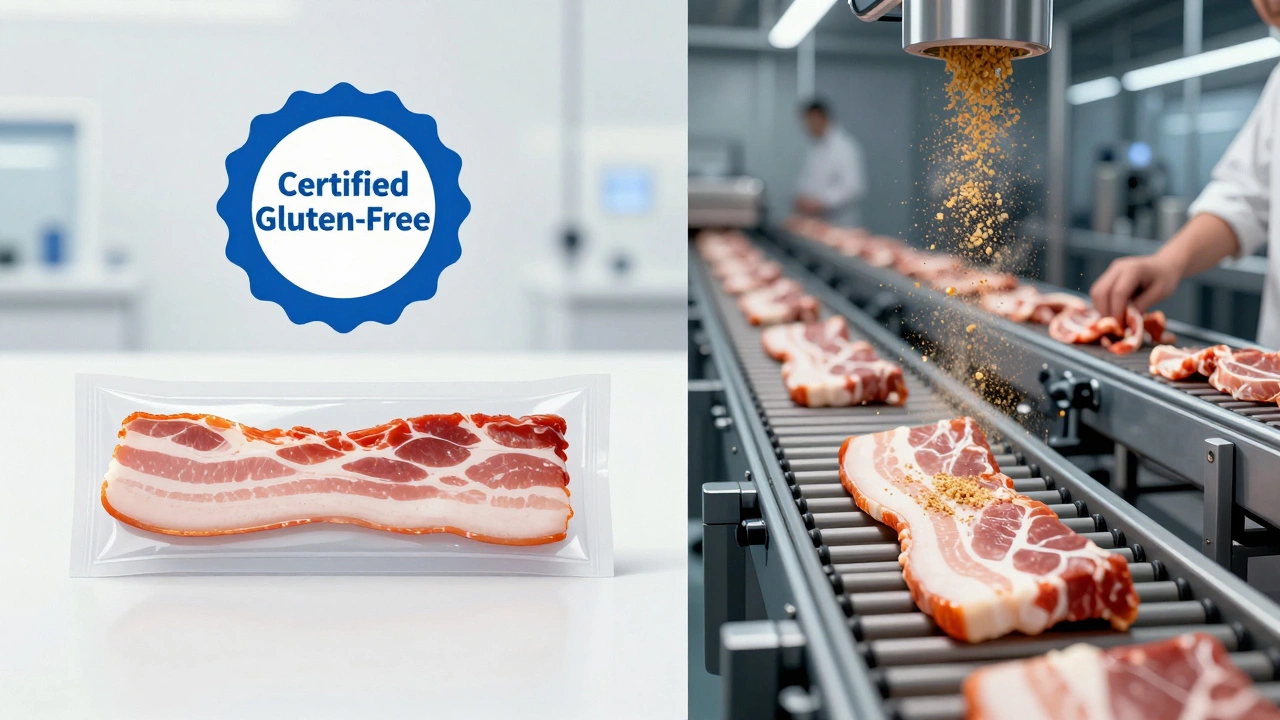
Cross-Contamination: The Factory Floor Risk
Even if the ingredients are clean, the environment matters. Cross-contamination happens when gluten-free products touch surfaces, equipment, or packaging that has previously handled gluten-containing foods. In large meat processing plants, this is a real concern. Imagine a facility that produces both gluten-free ham and regular sausage batters containing flour. If they share slicers, fryers, or conveyor belts, microscopic traces of gluten can end up on your bacon.
For people with celiac disease, even tiny amounts of gluten-less than 20 parts per million (ppm)-can trigger an immune response and damage the small intestine. That’s why looking for a certified gluten-free label is crucial. Certification means the product has been tested and verified to meet strict safety standards. Look for logos from organizations like the Gluten-Free Certification Organization (GFCO) or similar bodies in your region.
| Bacon Type | Typical Ingredients | Gluten Risk Level | Best For |
|---|---|---|---|
| Traditional Back Bacon | Pork, Salt, Sugar, Nitrites | Low | Most gluten-sensitive individuals |
| Applewood Smoked | Pork, Natural Smoke, Spices | Medium (Check smoke source) | Flavor seekers who read labels |
| Teriyaki/Honey Glazed | Pork, Soy Sauce, Honey, Corn Syrup | High (Soy sauce issue) | Avoid unless labeled GF |
| Turkey/Bacon Alternatives | Turkey Breast, Spices, Binders | Variable (Often higher risk) | Those watching fat intake |
Choosing Safe Brands: What to Look For
Not all bacon is created equal. Some brands prioritize transparency and safety, while others cut corners. When shopping, follow these steps:
- Read the Ingredient List First: Ignore the front-of-pack marketing claims like "All Natural" or "No Antibiotics." These don’t guarantee gluten-free status. Flip the package over and scan for wheat, barley, rye, malt, or ambiguous starches.
- Look for Certification: A certified gluten-free logo is your best friend. It tells you the company takes contamination seriously and tests its products.
- Stick to Simple Varieties: Plain, uncured, or traditionally cured bacon is less likely to have hidden gluten than complexly flavored varieties like jalapeño cheddar or maple bourbon.
- Contact the Manufacturer: If you’re unsure, call or email the company. Ask specifically: "Do you process wheat in the same facility?" and "Is this product tested for gluten cross-contact?" Most reputable companies will respond promptly.
In Australia, for instance, brands like Jamie Oliver’s No Nonsense is a line of food products that often highlights simple ingredients or local artisan butchers who cure their own meat tend to be safer bets. In the US, brands like Applegate and Hormel Black Label often provide clear gluten-free statements. Always verify current information, as formulations change.
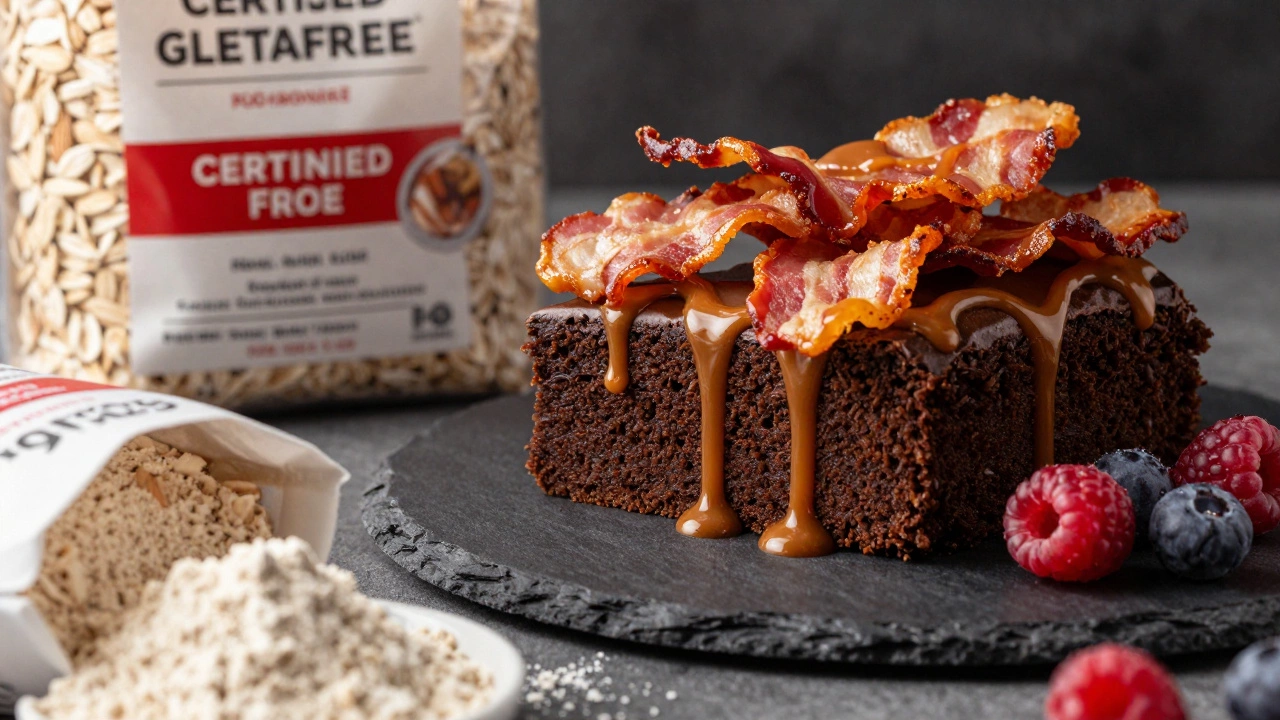
Bacon in Baking: Pairing with Gluten-Free Cakes
You mentioned gluten-free cakes in your search. Yes, bacon and cake might sound like an odd pair, but savory-sweet combinations are trending. Think bacon-infused caramel cheesecake or candied bacon atop a chocolate brownie. Since we’ve established that safe bacon is gluten-free, you can confidently use it in your baking projects.
However, remember that the cake itself needs to be gluten-free too. Using almond flour, oat flour (certified GF), or rice flour ensures the base is safe. When combining bacon with baked goods, ensure your kitchen tools are clean to prevent cross-contamination from previous wheat-based baking sessions. A quick wipe-down of your mixing bowls and counters goes a long way.
FAQ: Common Questions About Gluten and Bacon
Is all bacon gluten-free?
No. While pure pork is gluten-free, many commercial bacon products contain additives like maltodextrin, soy sauce, or natural smoke flavorings that may include gluten. Always check the label or look for a certified gluten-free logo.
Can I eat bacon if I have celiac disease?
Yes, but only if it is certified gluten-free or clearly labeled as such. Cross-contamination in processing facilities is a significant risk for celiacs, so choosing trusted brands is essential for safety.
What is the safest type of bacon to buy?
The safest option is plain, traditionally cured bacon with minimal ingredients (pork, salt, sugar, nitrites). Avoid flavored varieties like teriyaki or honey-glazed unless they are explicitly marked gluten-free.
Does smoking bacon add gluten?
Natural smoking does not add gluten. However, some manufacturers use liquid smoke or smoke flavorings that might contain wheat-based fillers. Check the ingredient list for "natural smoke flavor" sources.
Is turkey bacon gluten-free?
Turkey bacon often contains more binders and fillers than pork bacon, increasing the risk of hidden gluten. It requires careful label checking. Look for brands that certify their turkey bacon as gluten-free.