Cheesecake Style Finder
Find Your Perfect Cheesecake Style
Answer a few quick questions about your preferences to discover whether New York style or regular cheesecake is right for you.
Ever bitten into a cheesecake and wondered why one feels dense and rich while another is light and airy? It’s not just the toppings or the crust-it’s the base recipe. The difference between New York style cheesecake and what most people call "regular" cheesecake comes down to ingredients, technique, and texture. If you’ve ever tried to replicate a bakery-style slice at home and ended up with something too soft or too crumbly, this is why.
What Makes New York Style Cheesecake Different?
New York style cheesecake isn’t just a fancy name-it’s a specific formula that’s been locked in for over a century. It starts with a heavy dose of full-fat cream cheese, usually at least 24 ounces for a 9-inch cake. That’s more than double the amount you’d find in a typical "regular" version. Then come eggs-lots of them. Three to four whole eggs, sometimes with an extra yolk, give it structure without needing flour or cornstarch. Sour cream or heavy cream gets stirred in for richness, and vanilla or lemon zest adds a quiet brightness.
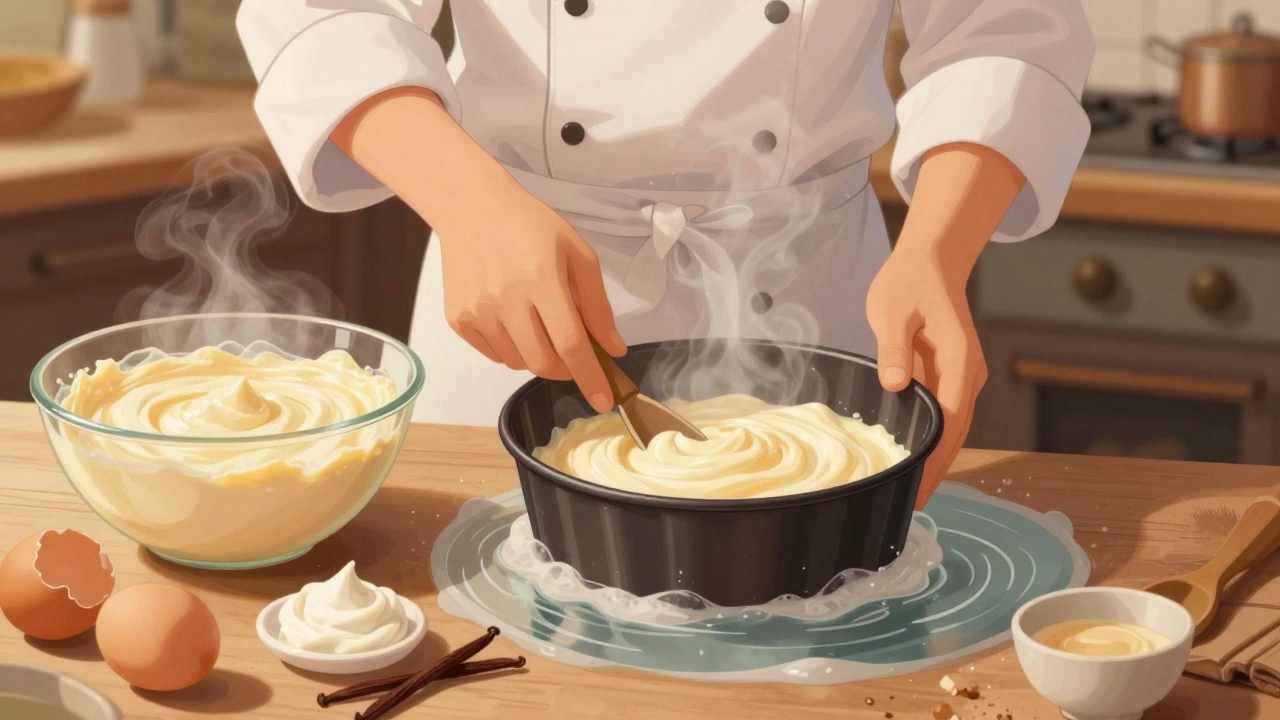
Unlike other styles, it’s baked in a water bath, which gently steams the cake from the outside in. This keeps the surface from cracking and the center from overcooking. The result? A dense, velvety texture that holds its shape when sliced but melts slowly on your tongue. It doesn’t need fruit sauce or whipped cream to shine. It’s meant to be served plain, maybe with a sprinkle of sea salt or a drizzle of caramel.
What Do People Mean by "Regular" Cheesecake?
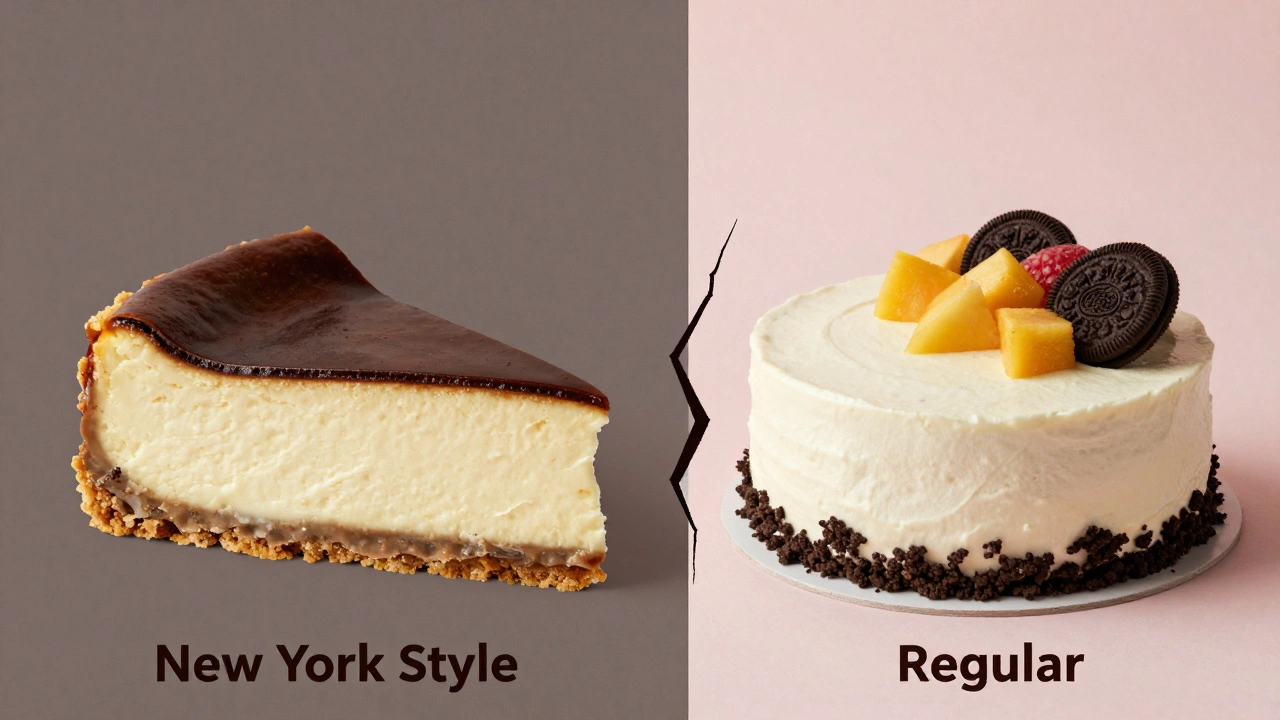
When most home bakers say "regular cheesecake," they’re usually thinking of a lighter, easier version-often based on a boxed mix or a simplified recipe from a 1980s cookbook. These versions cut corners: they use less cream cheese, add flour or cornstarch to thicken, and skip the water bath entirely. Some even use Greek yogurt or cottage cheese to reduce fat. The texture ends up more like a custard or a soft pudding. It’s still delicious, but it lacks the heft and depth that defines New York style.
These "regular" cheesecakes are often baked directly in a springform pan without insulation. Without the water bath, the edges cook faster than the center, leading to cracks and a slightly rubbery texture. They’re also more likely to be topped with fruit compote, chocolate ganache, or crushed cookies-because they need the extra flavor to stand out.
Texture: Dense vs. Airy
Texture is the biggest giveaway. New York style cheesecake feels substantial. You can hold a slice in your hand without it wobbling. It doesn’t jiggle like jelly-it moves like thick honey. That’s because of the high ratio of cream cheese to eggs and the absence of air-whipped ingredients like meringue or whipped cream.
"Regular" cheesecake, on the other hand, tends to be lighter and fluffier. That’s often because it includes whipped cream, egg whites, or even sponge cake crumbs. Some recipes even use ricotta or mascarpone, which add moisture but reduce density. These versions are great for summer picnics or if you prefer a less rich dessert, but they don’t have the same luxurious mouthfeel.
Crust: Graham Cracker vs. Anything Else
New York style cheesecake almost always uses a graham cracker crust. It’s pressed firmly into the pan, baked briefly, and then forgotten-because the filling is the star. The crust is meant to be slightly crunchy, buttery, and neutral enough not to compete.
Other cheesecakes might use Oreo crumbs, digestive biscuits, shortbread, or even crushed pretzels. These are flavorful choices, but they change the whole character of the dessert. A chocolate crust with a light filling might taste like a chocolate mousse pie. A pretzel crust with a tangy filling turns it into a sweet-and-salty snack. New York style doesn’t play around-it sticks to tradition.
Why Does the Water Bath Matter?
The water bath isn’t optional in New York style. It’s non-negotiable. When you bake a cheesecake without one, the edges get too hot too fast. The proteins in the eggs tighten up, pulling moisture away and causing cracks. The center might stay runny while the edges turn rubbery.
A water bath creates a humid, even heat that lets the cheesecake cook slowly from all sides. The pan sits in a larger baking dish filled with hot water-usually halfway up the sides. It’s not hard to do. Just wrap the bottom of your springform pan in foil so no water leaks in, place it in a roasting pan, and pour in boiling water. You’ll need about 30-45 minutes longer to bake, but the payoff is a flawless surface and a perfectly set center.
Many home bakers skip this step because they’re afraid of water spills or extra cleanup. But if you want that classic New York slice, there’s no shortcut.
Temperature and Baking Time
New York style cheesecake is baked at a lower temperature-usually 325°F (160°C)-for a long time. Most recipes call for 60 to 90 minutes. You know it’s done when the edges are set but the center still jiggles slightly, like Jell-O. It continues to cook from residual heat as it cools.
"Regular" cheesecakes often bake at 350°F (175°C) or higher, for 40 to 50 minutes. They’re done when a toothpick comes out clean. That’s fine for lighter versions, but if you use that method on a New York recipe, you’ll end up with a dry, overbaked cake that cracks all over.
Chilling: The Secret Step
No matter which style you make, chilling is critical. New York style cheesecake needs at least 8 hours in the fridge-overnight is better. This lets the proteins fully set and the flavors meld. If you cut into it too soon, it’ll crumble or smear.
Lighter cheesecakes can be ready in 4 to 6 hours, but they still benefit from a long chill. The difference? New York style gets better over time. The next day, it’s even richer, smoother, and more flavorful.
Which One Should You Make?
If you want a dessert that feels like an indulgence-something you savor slowly, with a cup of coffee or after a big meal-go with New York style. It’s the kind of cake you serve at holidays, birthdays, or when you’re treating yourself.
If you’re looking for something quick, lighter, or kid-friendly-maybe with a fruit topping or a fun twist-then a "regular" version works fine. It’s easier to make, less intimidating, and still satisfying.
But if you’ve ever tasted a perfect New York cheesecake and wondered how to get that same experience at home, don’t settle for shortcuts. Use the full-fat cream cheese. Add the sour cream. Bake it in a water bath. Chill it overnight. That’s the real deal.
Quick Comparison: New York Style vs. Regular Cheesecake
| Feature | New York Style | Regular Cheesecake |
|---|---|---|
| Main Cheese | Full-fat cream cheese only | Often mixed with ricotta, yogurt, or cottage cheese |
| Thickener | None-eggs provide structure | Flour, cornstarch, or gelatin |
| Water Bath | Required | Usually skipped |
| Baking Temp | 325°F (160°C) | 350°F (175°C) or higher |
| Texture | Dense, creamy, velvety | Light, airy, custard-like |
| Crust | Graham cracker only | Varied (Oreo, shortbread, pretzel) |
| Chill Time | 8+ hours, preferably overnight | 4-6 hours |
Can I make New York style cheesecake without a water bath?
You can, but you won’t get the same result. Without a water bath, the cheesecake is more likely to crack, overcook on the edges, and develop a rubbery texture. The water bath ensures even, gentle cooking. If you’re short on time, try placing a pan of hot water on the bottom rack of your oven-it helps add some humidity, but it’s not as effective as surrounding the cake pan.
Why is New York cheesecake so expensive in restaurants?
It’s not just the price of cream cheese-it’s the labor. New York style cheesecake uses more high-quality ingredients, takes longer to bake, and requires careful chilling. Many bakeries make it in small batches, and the water bath process means they can’t bake multiple cakes at once. That adds to the cost. You’re paying for texture, not just flavor.
Can I use low-fat cream cheese for a lighter version?
It’s not recommended. Low-fat or reduced-fat cream cheese has more water and stabilizers, which change how the proteins set during baking. The result is often grainy, less creamy, and prone to cracking. If you want a lighter cheesecake, try using a different recipe designed for lower fat-like one with Greek yogurt or cottage cheese-but don’t try to cut corners on a New York style recipe.
What’s the best way to slice New York cheesecake cleanly?
Use a sharp, thin-bladed knife and dip it in hot water before each cut. Wipe it dry between slices. Cold, clean cuts give you smooth edges. Don’t saw back and forth-just press down gently and pull the knife through. Chilling the cake overnight makes this much easier.
Can I freeze New York style cheesecake?
Yes, and it freezes beautifully. Wrap the whole cake or individual slices tightly in plastic wrap, then in foil. It keeps well for up to 2 months. Thaw overnight in the fridge. The texture stays creamy-no ice crystals or sogginess if you wrap it properly.