Have you ever taken a bite of a dense, creamy slice in Manhattan and then tried a light, airy version in London or Berlin, wondering why they taste like completely different desserts? It’s not just your imagination. American cheesecake is a rich, dense dessert made primarily with cream cheese, eggs, and sugar, known for its smooth texture and tangy flavor. While the word "cheesecake" sounds universal, the execution varies wildly across borders. The American version, specifically the New York-style cheesecake, stands out because it treats the filling like a custard rather than a sponge.
If you’ve ever stared at a recipe calling for pounds of cream cheese and felt intimidated, you’re not alone. But understanding *why* it’s different helps you bake it better. Let’s break down the ingredients, techniques, and history that make this dessert unique.
The Star Ingredient: Cream Cheese vs. Other Cheeses
The biggest reason American cheesecake tastes different is the type of cheese used. In Europe, traditional cheesecakes often use quark, ricotta, cottage cheese, or fresh goat cheese. These cheeses have higher moisture content and lower fat percentages compared to the staple of the American kitchen: cream cheese is a soft, mild-tasting fresh cheese with a high fat content, typically around 33% milkfat.
Cream cheese was actually invented in the United States. While there are claims about its origins in Chester, New York, in the 1870s, it became commercially viable thanks to companies like Kraft. This high-fat cheese creates a structure that is stable yet incredibly smooth when baked. Unlike ricotta, which can feel grainy, or quark, which is lighter and fluffier, cream cheese provides that signature dense, velvety mouthfeel. When you blend cream cheese properly, the fats coat the proteins, creating an emulsion that sets firmly but remains tender.
| Style | Primary Cheese | Texture | Fat Content |
|---|---|---|---|
| American (NY Style) | Cream Cheese | Dense, Smooth, Rich | High (~33%) |
| German (Käsekuchen) | Quark | Light, Airy, Custard-like | Low to Medium |
| Italian (Ricotta) | Ricotta | Grainy, Rustic, Light | Medium |
| Swedish (Ostkaka) | Farmer's Cheese/Curd | Sweet, Soft, No Crust | Low |
The Science of Density: Why It’s So Heavy
You might wonder why American cheesecake feels so heavy on the plate. It comes down to the ratio of solids to liquids. A classic New York cheesecake uses a lot more cheese and less liquid than other varieties. There’s no whipped egg whites folded in to create air pockets, and there’s no baking powder to make it rise like a cake.
Instead, the structure relies on the coagulation of proteins in the eggs and the melting of the cheese fats. This process requires precise temperature control. If you overmix the batter, you incorporate too much air, leading to cracks and a soufflé-like texture that collapses as it cools. The goal is a homogeneous mixture where the cheese is fully integrated with the sugar and eggs without aerating it. This results in a slice that holds its shape perfectly and has a satisfying weight.
The Role of the Water Bath
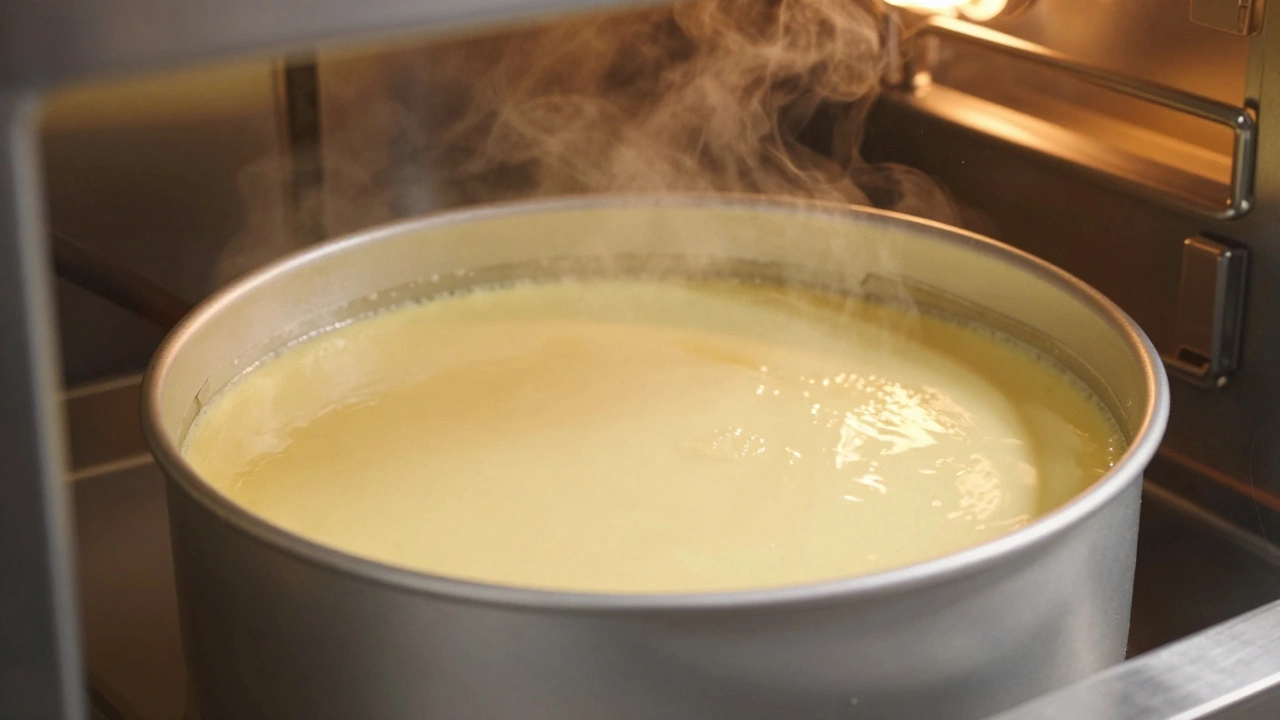
If you’ve looked up recipes for authentic American cheesecake, you’ve likely seen instructions for a water bath is a method of baking where the cake pan is placed inside a larger pan filled with hot water. This isn’t just a fancy technique; it’s essential for the texture. Baking a cheesecake directly in a dry oven exposes it to harsh, direct heat. This causes the edges to cook faster than the center, leading to uneven rising and those dreaded cracks on top.
The water bath acts as a buffer. Water boils at 212°F (100°C), which means the temperature surrounding your cheesecake cannot exceed that point, even if your oven is set to 325°F (163°C). This gentle, humid heat ensures the custard cooks evenly from edge to center. It also prevents the surface from drying out, keeping that glossy, smooth finish we all love. Without it, you risk a rubbery exterior and a raw middle.
The Crust: Graham Crackers vs. Digestives
Another major difference lies in the base. European cheesecakes often skip the crust entirely or use a simple pastry shell. American cheesecake almost always features a crumb crust. The standard ingredient is graham crackers are sweet, unleavened square-shaped crackers made from flour, sugar, honey, and cinnamon.
Graham crackers bring a distinct sweetness and a hint of spice that complements the tangy cream cheese. They bind well with melted butter and sugar, creating a sturdy foundation that can support the dense filling. If you’re outside the US, you might substitute digestive biscuits or Marie biscuits, but the flavor profile will shift slightly. Digestives are less sweet and lack the cinnamon note, so you may need to adjust the sugar and add a pinch of spice to mimic the classic taste.
Tanginess and Sweetness Balance
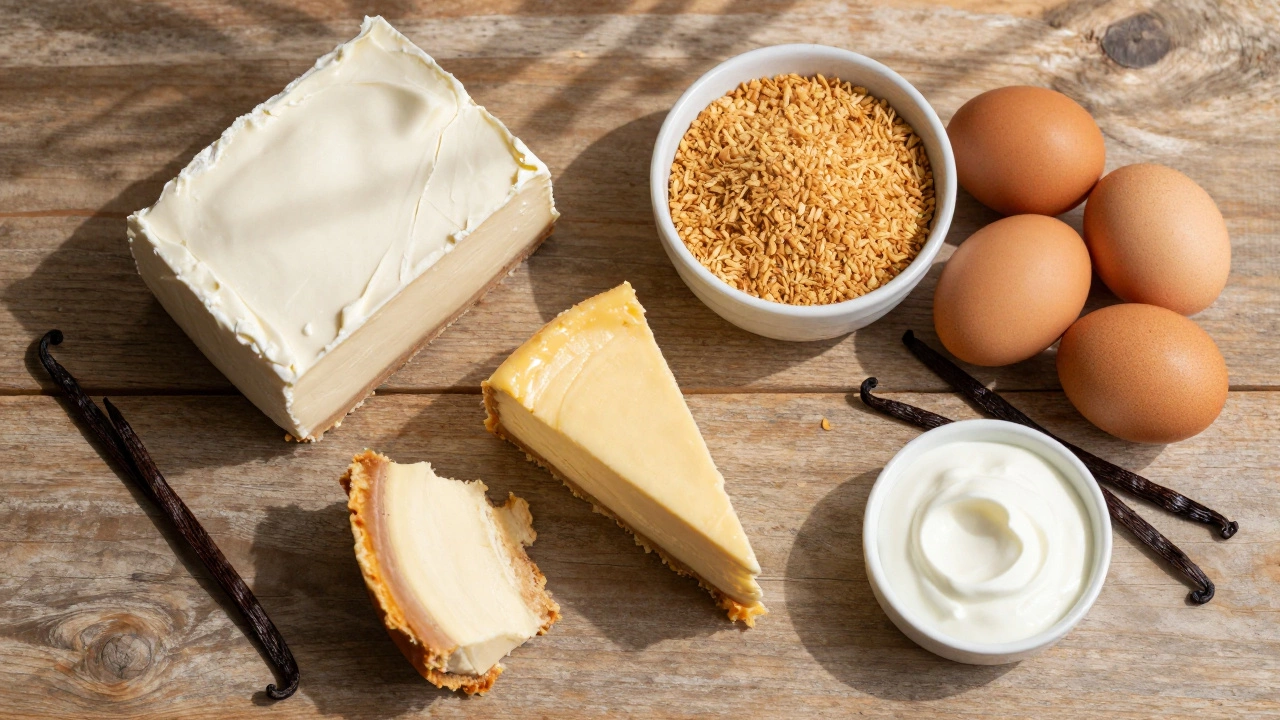
American palates generally prefer sweeter desserts, but good cheesecake balances sugar with acidity. The tang comes from two sources: the natural lactic acid in the cream cheese and added sour cream or yogurt. Many bakers fold in a cup of sour cream or Greek yogurt into the batter. This doesn’t just add tang; it adds moisture and fat, contributing to the creamy texture while cutting through the richness of the sugar and cheese.
Vanilla extract is another non-negotiable ingredient. It rounds out the flavors and enhances the perception of sweetness without adding more sugar. Some recipes even include lemon zest or juice to brighten the profile. The result is a dessert that is rich but not cloying, with a complex flavor that invites you to take another bite.
Historical Context: From Greece to New York
While the modern American cheesecake is a relatively recent invention, its roots go back thousands of years. Ancient Greeks served simple cakes made with cheese, wheat, and honey to Olympic athletes. The Romans adopted the concept, and it spread throughout Europe. However, the transformation into the dense, cream-cheese-based dessert we know today happened in the early 20th century.
The invention of commercial cream cheese and the availability of reliable refrigeration allowed bakeries in New York City to experiment with larger, denser cakes. Delmonico’s Restaurant in New York is often credited with serving one of the first versions of what we now call New York cheesecake in the late 1800s. By the mid-20th century, it had become a staple of American delis and pizzerias, often served alongside pizza as a contrasting sweet finish.
Common Mistakes to Avoid
Making American cheesecake can be tricky. Here are a few pitfalls to watch out for:
- Using cold ingredients: Always bring cream cheese, eggs, and sour cream to room temperature before mixing. Cold cheese won’t blend smoothly, leading to lumps in your final product.
- Overmixing: Once you add the eggs, mix on low speed just until combined. Overbeating incorporates air, which expands in the oven and then collapses, causing cracks.
- Opening the oven door: Sudden changes in temperature can cause the cheesecake to sink. Wait until the last hour of baking before checking it, and do so quickly.
- Skipping the cool-down: After baking, turn off the oven and crack the door open. Let the cheesecake cool slowly inside for an hour. This gradual temperature drop prevents thermal shock and cracking.
Serving Suggestions
Because American cheesecake is so rich, it pairs well with toppings that add acidity or freshness. A drizzle of berry compote, a sprinkle of fresh strawberries, or a dollop of whipped cream can balance the density. Some people enjoy it plain, appreciating the pure flavor of the cheese and vanilla. For a savory twist, try serving it with a side of caramelized onions or bacon, though this is less common in home kitchens.
Whether you’re a fan of the dense New York style or prefer lighter European variations, understanding the mechanics behind American cheesecake helps you appreciate its uniqueness. It’s a testament to how a few key ingredients-cream cheese, graham crackers, and careful technique-can create a dessert that stands apart from the rest.
Can I make American cheesecake without a water bath?
Yes, but the texture may be slightly drier and more prone to cracking. To mitigate this, place a pan of hot water on the rack below the cheesecake to create steam, and ensure you don't overbake it. However, for the best results, a water bath is highly recommended.
What is the best brand of cream cheese for cheesecake?
Philadelphia is widely considered the gold standard for American cheesecake due to its consistent fat content and smooth texture. Other brands like Kraf or local equivalents can work, but check the fat percentage; aim for at least 33% milkfat for the best density.
Why did my cheesecake crack on top?
Cracks usually occur due to overmixing (incorporating too much air), baking at too high a temperature, or cooling too quickly. Ensure you mix gently, use a water bath, and let the cake cool gradually in the turned-off oven.
How long does American cheesecake last in the fridge?
Properly stored in an airtight container, American cheesecake can last up to 5-7 days in the refrigerator. It can also be frozen for up to 3 months. Thaw overnight in the fridge before serving.
Can I substitute sour cream with yogurt?
Yes, full-fat Greek yogurt is an excellent substitute for sour cream. It provides similar tang and thickness. Just ensure it’s strained well to avoid adding excess liquid to the batter.